Product Description
Michael Powolny / Wiener Keramik / Wiener Werkstaette / Vienna Secession “Putto mit Hahn” c. 1910

MICHAEL POWOLNY (1871-1954) Austria
BERTOLD LÖFFLER (1874-1960) Austria
WIENER KERAMIK Vienna
Putto mit Hahn c. 1910
Glazed white earthenware handpainted with black enamel
Marks: MP (impressed artist’s monogram), WK (impressed company logo in a square), original Wiener Keramik paper label
Exhibited: Frühjahrsausstellung Österreichischer Kunstgewerbe in Österreichisches Museum für Kunst und Industrie (MAK museum), Vienna, 1912.
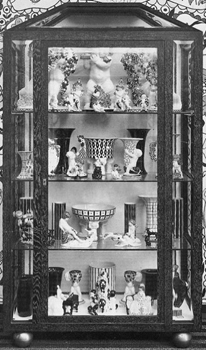
Model illustrated: Deutsche Kunst und Dekoration, Vol. XXXI, October 1912 – March 1913, n.p.; Michael Powolny: Keramik und Glas aus Wien 1900 bis 1950, Elisabeth Frottier (Vienna: Böhlau Verlag, 1990) 1912 photograph with the cock sculpture displayed in vitrine from Frühjahrsausstellung Österreichischer Kunstgewerbe, illus. 4, p. 15 and illus. 27, p. 54, cat. no. WV92.
H: 9 1/8″
Price: $7,950
Michael Powolny / Wiener Keramik / Wiener Werkstaette / Vienna Secession “Putto mit Hahn” c. 1910
Michael Powolny (1871-1954) Austria.
Bertold Löffler (1874-1960) Austria.
Vereinigte Wiener Und Gmundner Keramik.
Pedestal centerpiece bowl, circa 1906.
Hand-painted faience with a black and white diamond pattern on three pedestal legs on a black base with an edge of repeat white triangles and all supporting a black bowl with a white interior.
Marked: Conjoined WK (in a square), KG (with flower cipher in square), 43 (incised under glaze) / 3,1P (painted).
Another example of this same model can be found in the National Gallery of Victoria in Melbourne, Australia.
Illustrated: Wiener Werkstätte Period Photo Archiv, MAK Museum, Vienna, p. 42.Vienna 1900-1930: Art in the Home, Historical Design, Inc., exhib. cat. (New York: 1996) p. 45; Viennese Design and the Wiener Werkstätte, J. Kallir (New York: Galerie St. Etienne, 1986), p. 80; Wiener Keramik, Historismus, Jugendstil, Art Déco, Waltraud Neuwirth (Braunschweig: Klinkhardt & Biermann, 1974), p. 349.
H: 8 1/2″ x Dia: 9 7/8″
Price: $10,500
WALTER BOSSE (1904 – 1979) Austria
Bookends c. 1930
Hand-painted and glazed earthenware
For more information see: Walter Bosse: Leben, Kunst, und Handwerk, 1904-1979, Cherica Schreyer-Hartmann, Hans Hagen & Johanna Hottenroth (Vienna: Verlag Christian Brandstätter, 2000), Wiener Keramik: Historismus, Jugendstil, Art Déco, Waltraud Neuwirth, (Braunschweig: Klinkhardt & Bierman, 1974), pp. 114-115.
H: 5″ x D: 4 1/2″ x W: 5 1/4″
Price: $2,250
Walter Bosse (November 13, 1904–December 13, 1979) was a Viennese artist, designer, ceramist, potter, metalworker, and craftsman noted for his modernist bronze animal figurines and grotesques.
Walter Bosse, born November 13, 1904, in Vienna, was the son of artists Luise and Julius Bosse. His father worked as a portrait painter at the imperial court. Walter Bosse attended the Wiener Kunstgewerbeschule (Vienna School of Applied Arts) from 1918 to 1921, where he studied ceramics under Michael Powolny, and ornament under Franz Cižek. He then attended the Münchner Kunstgewerbeschule (Munich School of Applied Arts). During his schooling he was given the opportunity to sell his work at the Wiener Werkstätte by Josef Hoffmann, who became a mentor to Bosse. Bosse opened his own shop in Kufstein in 1923.
Bosse’s work grew in popularity and a number of his pieces were shown at the International Exposition of Modern Industrial and Decorative Arts in 1925. He started designing for Augarten Porcelain Works (1924) as well as Goldscheider (1926) and Metzler and Ortloff (1927). In 1931, to meet increasing demand (especially in America), Bosse opened up a bigger shop in Kufstein, but by 1933 he started to feel the effects of the economic depression. By 1937, the Kufstein works were closed.
In 1938, now divorced, Bosse moved back to Vienna where he founded Bosse-Keramik (Bosse Ceramics), which expanded under the new name “Terra” to include glass, toys, textiles. and a variety of craft items for the gift market. In the late 1940s, Bosse began experimenting with brass by giving his ceramic figures a metal coating to protect them from breakage. In the early 1950s, Bosse began his “Black Golden” line of brass figurines. He transitioned all of his efforts to brass. The figures became popular worldwide.
Despite Bosse’s success with his brass figures, it was still a difficult time for him financially. In 1953, partly fleeing from financial troubles, he moved to Iserlohn where he set up a new shop and continued production. Bosse also collaborated with Karlsruhe State Majolika Works on a number of pottery animal figures. In 1958, he designed for Achatit Schirmer in Cologne. Bosse also turned his efforts to small, everyday items such as letter openers, keyrings, corkscrews, and pencil holders, all of which bear his distinctive “black and gold” look. A number of these Bosse designs began to gain widespread popularity internationally.
GISELA VON FALKE (b. 1874) Austria
SCHOOL OF KOLO MOSER Austria
BERNDORFER METALLWARENFABRIK Berndorf, Austria
E. BAKALOWITS & SÖHNE Vienna, Austria [retailer]
Covered box c. 1902
Silver plate mounts and cover, blown “meteor” glass.
Marks: BEPWF 1481, maker’s touch marks
For more information on Berndorfer Metallwarenfabrik see: Blühender Jugendstil – Österreich (Art Nouveau in Blossom – Austria), Firmen und Marken (Companies and Marks), Waltraud Neuwirth, II (Vienna: Selbstverlag Neuwirth, 1991), p. 221; Metallkunst, Kunst vom Jugendstil zur Moderne (1889-1939), Karl H. Bröhan (Berlin: Bröhan Museum, 1990) pp. 20-44.
H: 7″ x W: 8″
Price: $9,000
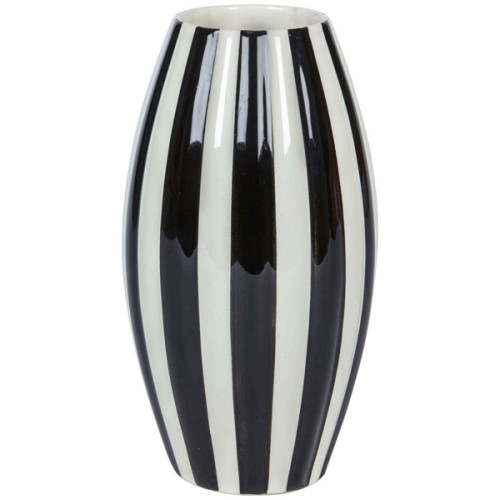
STEINGUTFABRIKEN VELTEN-VORDAMM Werk Velten, Germany
Vase c. 1920
Handpainted and glazed earthenware
Marks: VELTEN-VORDAMM company logo, 42
Similar work illustrated: Keramik und Bauhaus, Klaus Weber et al., exhib. cat. (Berlin: Bauhaus-Archiv, 1989), p. 229, illus. 289.
H: 7″