Whiting / Late 19th Century Sterling dish with pomegranate motif c. 1890
More Information
Whiting / Late 19th Century Sterling dish with pomegranate motif c. 1890
WHITING MANUFACTURING CO. No. Attleboro, MA
Footed dish with pomegranate motif c. 1890
Sterling silver with a hand hammered honey comb surface, applied pomegranate and pomegranate blossom motif
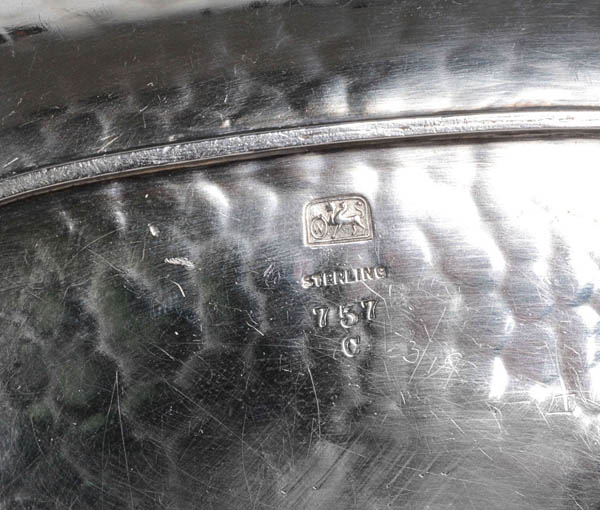
Marks: Whiting logo (lion with W in oval (manufacturer’s insignia)), STERLING, 757, C
L: 5″ x D: 4″
In 1840 Albert Tifft and William Whiting started their business in No. Attleboro MA as a jewelry manufacturing company and then in 1866 created the Whiting Mfg. Co. and expanded production into small hollowware as well. The Gorham Company bought Whiting in 1926 and all operations were then moved to Providence, R.I.
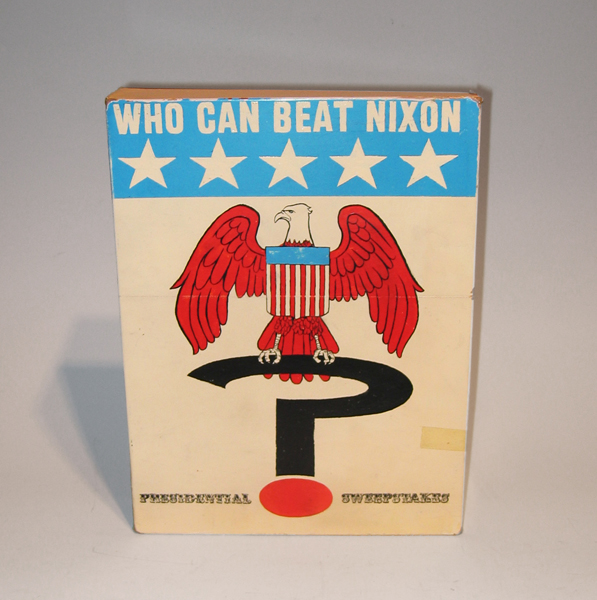
Tim Liddy Who Can Beat Nixon (1970) Presidential Sweepstakes 2006 Oil and enamel on copper, plywood back
TIM LIDDY
“Who Can Beat Nixon” (1970) Presidential Sweepstakes 2006
Oil and enamel on copper, plywood back
Signed in script: Tim Liddy “circa 1970” 2006, red circular ring
Provenance: William Shearburn Gallery (St. Louis, MO)
H: 11 ¾” x W: 9” x D: 2”
With his recent paintings, Liddy has both reasserted the construct of hyperrealist painting and developed a thoroughly unique advancement of that mode by extending the cultural reality of the indexed original. Based on the illustrated box lids of vintage board games, Liddy has recontextualized a subject, which evokes the underlying rules of life. Painted on copper or steel in the precise dimensions of the original, the metal is then manipulated to demonstrate the exact rips and tears from years of usage and includes trompe-l’oeil renditions of the scotch tape that might be holding the cardboard box together, the assorted stains, or the various graffiti of time. Liddy leaves no possibility of ambivalence, these works speak to a concurrent understanding of their original object identity and to themselves as works of art engaged in historical and psychological dialogue.
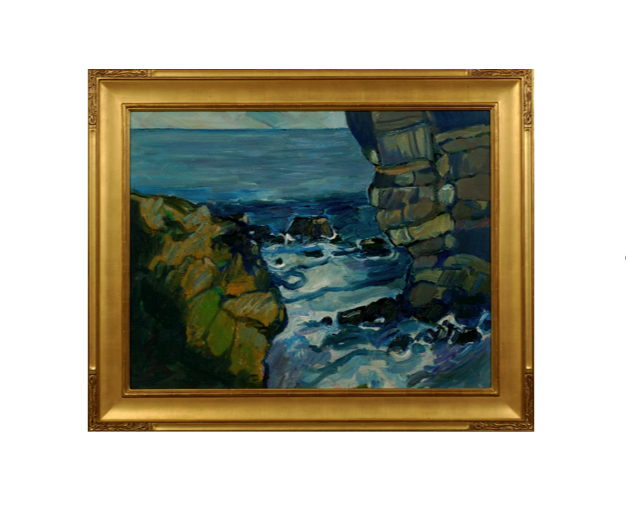
Peter Canty received his BA in art from the Chouniard Art Institute, Los Angeles (now California Institute of the Arts) and an MA from the University of California, Santa Cruz in 1969. Heavily influenced by the Post-Impressionist masters Van Gogh, Gauguin and Cezanne, in his own he words he describes his interest in landscapes, believing they are, “the best vehicle for motion, force, and color dynamics.” Although his work reference realistic subjects, Canty’s imagery is drawn strictly from his own imagination.







 @hd_jewels