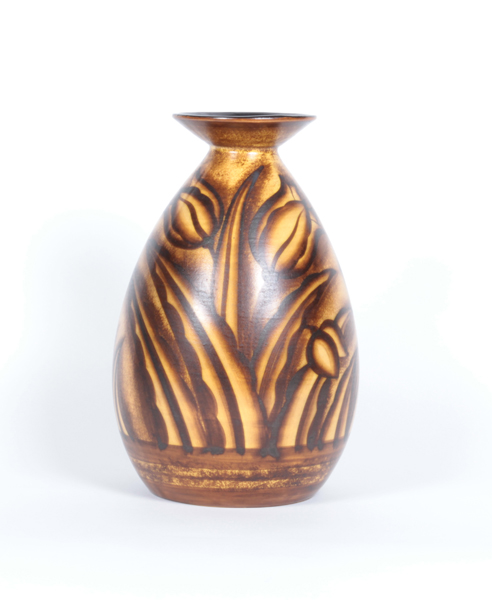
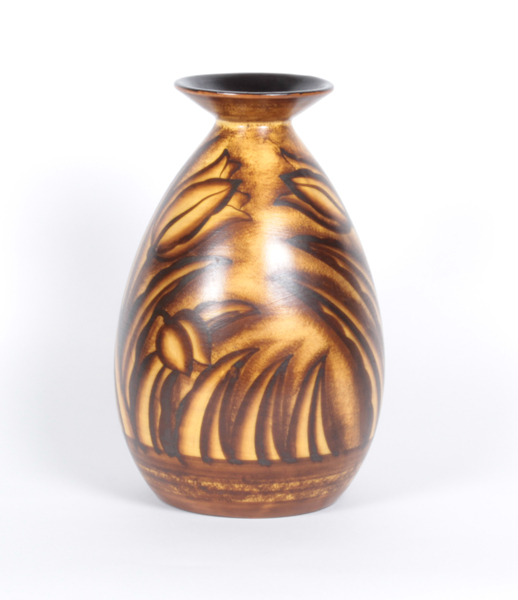
Charles Catteau / Boch Freres Keramis Belgium Glazed pottery vase c. 1930
More Information
Charles Catteau / Boch Freres Keramis Belgium Glazed pottery vase c. 1930
CHARLES CATTEAU (1880-1966)
BOCH FRERES KERAMIS La Louviere Belgium
Tulip vase c. 1930
Glazed earthenware
Marks: “Keramis” Made in Belgium , D. 2524 B, 945
H: 10 1/4″ x D: 6 1/2″
Charles Catteau could be regarded as one of the most versatile ceramic artists of his generation, especially for the style of Art Deco. Catteau advanced the forms, techniques and decoration of modern ceramics, creating an exceptionally original, new and decorative genre.
Hired as a ceramic decorator in Ecole Nationale de Sèvres from 1903 to 1904, he began producing designs that were rather traditional, based on the observation of nature, and showing the influence of Japonisme, characterized by pure lines and meticulous details. From 1904 to 1906, he worked in Nymphenburg Porzellan Manufaktur near Munich, a factory specializing in new hand painting procedures under a slip, as well as Art Nouveau.
In 1907 he finally moved to Louvière in Belgium where he was promoted to head of the decoration department at Boch Freres Keramis at the age of 27. This is where most of his exceptional talent came to the fore especially during the period between the two World Wars. Influenced by the great creative art movements of the time (Africanism, Japonisme, Cubism, Abstraction) and his observation of nature gave him inspiration for his designs, with the integration of plants, stylized animals and geometric motifs. The international avant-garde movements were also an influence leading to his use of purely abstract, geometric designs and intense colors. Charles Catteau was incredibly resourceful and explored various harmonies of form, techniques, designs, colors, shades, topics, variants and influences. In this way Catteau became a representative par excellence of Art Deco designs, giving it his personal touch. He was instrumental in introducing technical innovations during the 20’s and 30’s to aid mass production of ceramic products and expand availability of affordable products. During difficult times in Europe, he created vivid, colorful, original and uplifting ceramic wares.
Charles Cotteau motto was “Art for All” and he also taught decorative painting at the School of Industrial in Louvière. In 1925 he obtained international recognition in the exhibition of Decorative Arts in Paris. which helped raise the profile of Boch Freres. He remained at the company until he retired to Nice in 1946 .
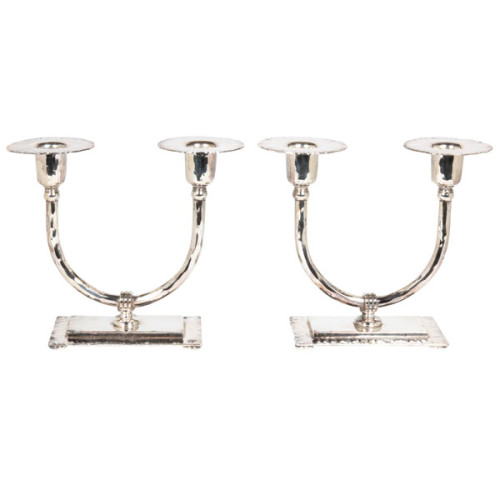
Roycroft / American Arts & Crafts Pair of Candlesticks c. 1915
ROYCROFT COPPER SHOP East Aurora, N.Y.
Pair of candlesticks c. 1915.
Hand wrought and textured copper, silver-plated.
Marks: impressed R, in orb with cross, ROYCROFT
For more information see: The American Arts & Crafts Movement in Western New York 1900-1928, Bruce A. Austin (Rochester Institute of Technology, 1992); Arts & Crafts Movement in New York State 1890’s – 1920’s, Coy Ludwig (Hamilton, N.Y.: Gallery Association of New York, 1983).
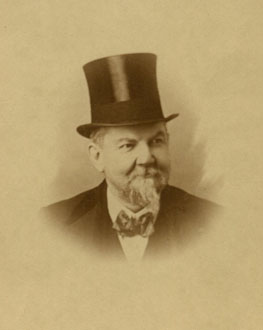
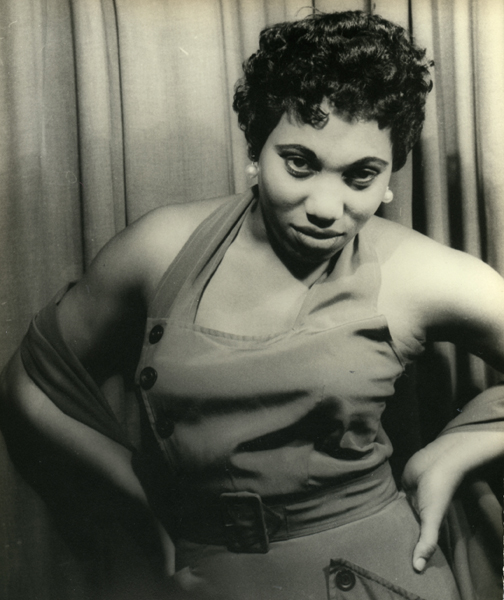
Signed: Leontyne Price as Bes, Porgy & Bess, XVII KK 20, May 19, 53 (in ink on back); PHOTOGRAPH BY CARL VAN VECHTEN, 101 CENTRAL PARK WEST, CANNOT BE REPRODUCED WITHOUT PERMISSION (ink stamp on back)







 @hd_jewels