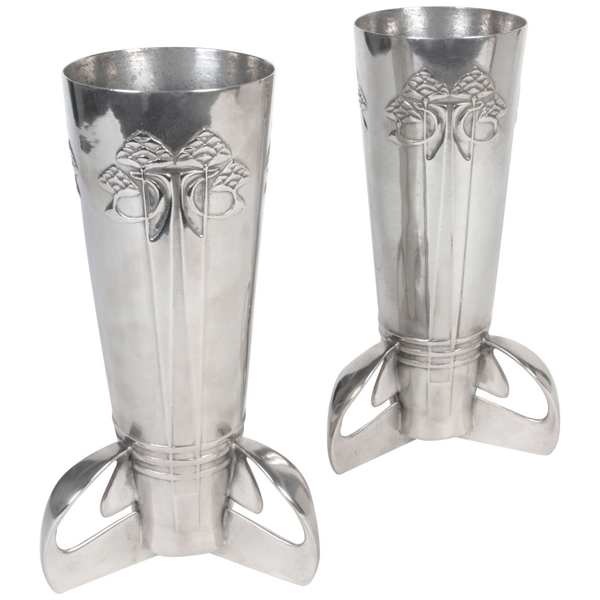
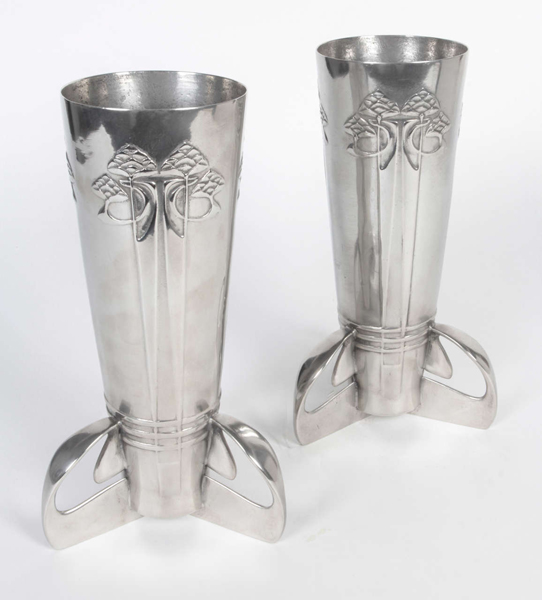
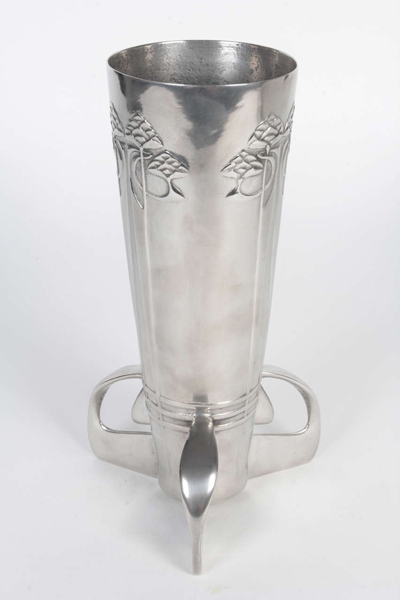
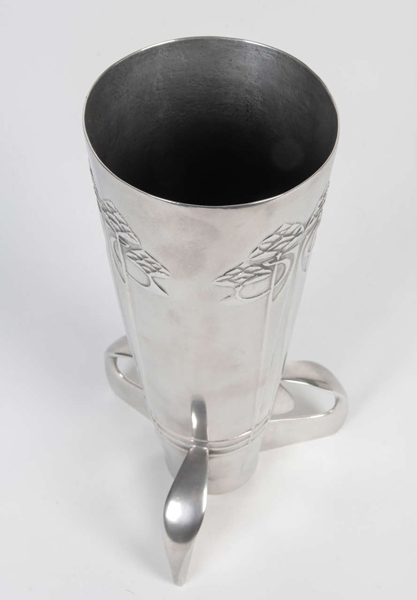
Archibald Knox / Liberty & Co. Pair of tri-footed vases c. 1902-05
More Information
Archibald Knox / Liberty & Co. Pair of tri-footed vases c. 1902-05
ARCHIBALD KNOX (1864-1933) UK
LIBERTY & CO. London
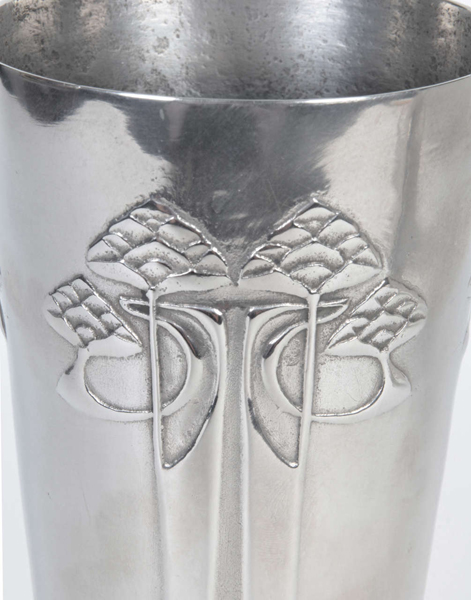
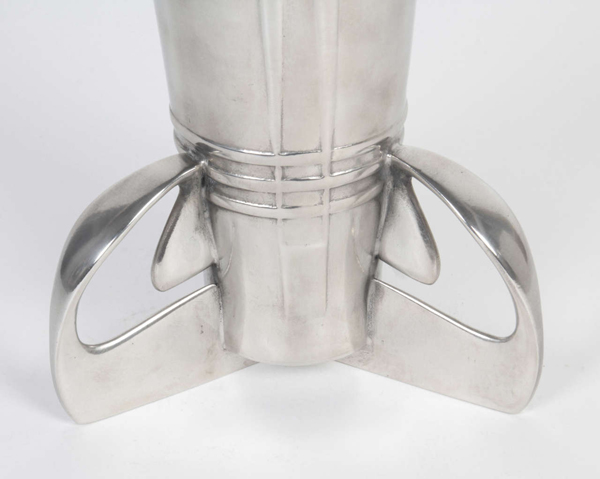
Pair of tri-footed vases c. 1902-05
Pewter with abstract Celtic floral design in bas-relief on tri-footed base
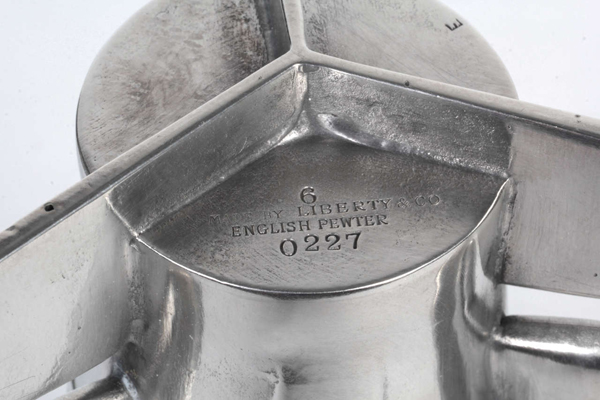
Marks: 6, MADE BY LIBERTY & CO.., ENGLISH PEWTER 0227
Illustrated: Archibald Knox, ed. by Stephen A. Martin (London: Academy Editions, 1995) ; Liberty Design 1874-1914, Barbara Morris (London: Pyramid Books, 1989) p. ; The Designs of Archibald Knox for Liberty & Co., A.J. Tilbrook (London: Ornament Press Ltd., 1976)
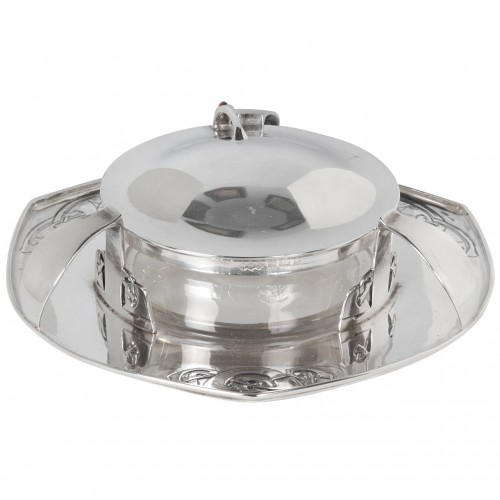
Archibald Knox / Liberty & Co. Rare Sterling and Opal caviar server 1904
ARCHIBALD KNOX (1864-1933) UK
LIBERTY & COMPANY London, UK
Cymric tri-handled covered server 1904
Sterling silver with repoussé Celtic knot motifs and three buttress handles; the handle of the domed lid inset with a jelly opal, cylindrical crystal bowl.
Marks: No. 5199, Liberty & Co., CYMRIC and Birmingham assay marks for 1904 (all the marks appear both on the underside of the base and on the cover)
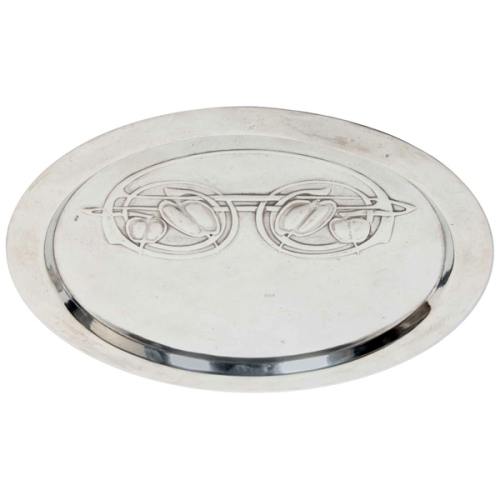
Archibald Knox / Liberty & Co. Tudric charger / tray c. 1902-05
ARCHIBALD KNOX (1864-1933) UK
LIBERTY & CO. London
Tudric charger c. 1902-05
Pewter with abstract Celtic design in bas-relief
Marks: TUDRIC, 0163, Made in England
Illustrated: Archibald Knox, ed. Stephen A. Martin (London: Artmedia Press, 2001) p 203
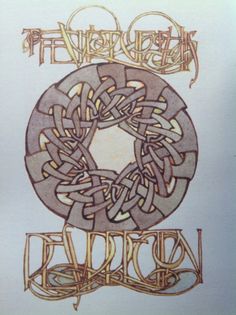
Drawing illustrated: Archibald Knox, ed. by Stephen A. Martin (London: Academy Editions, 1995) p 137;
D: 9 9/10”
This British avant-garde charger demonstrates the profound influence of Celtic ornament upon Knox and his highly individual and sophisticated use of these ancient graphic devices of interlocking loops and tendrils.
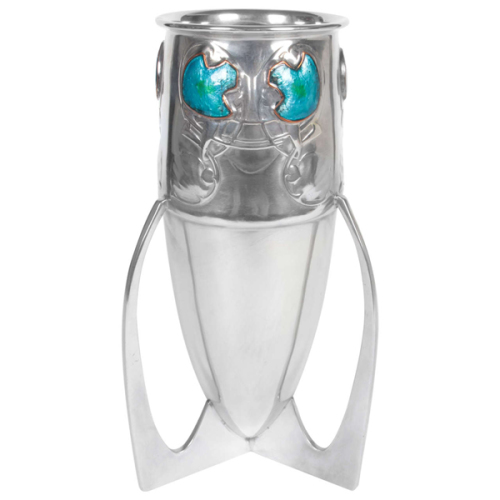
Archibald Knox / Liberty & Co. Tri-footed pewter vase with blue enamel c. 1902-05
ARCHIBALD KNOX (1864-1933) UK
LIBERTY & CO. London
Tri-footed vase c.1902-05
Pewter with blue enamel
Marks: Liberty & Co., ENGLISH PEWTER, 0927
Model illustrated: Liberty’s 1875-1975, An Exhibition to mark the Firm’s Centenary (London: Victoria & Albert Museum, 1975) p. 76; The Liberty Style, introduction by Victor Arwas (NY: Rizzoli, 1979) cat. no. 36


 @hd_jewels