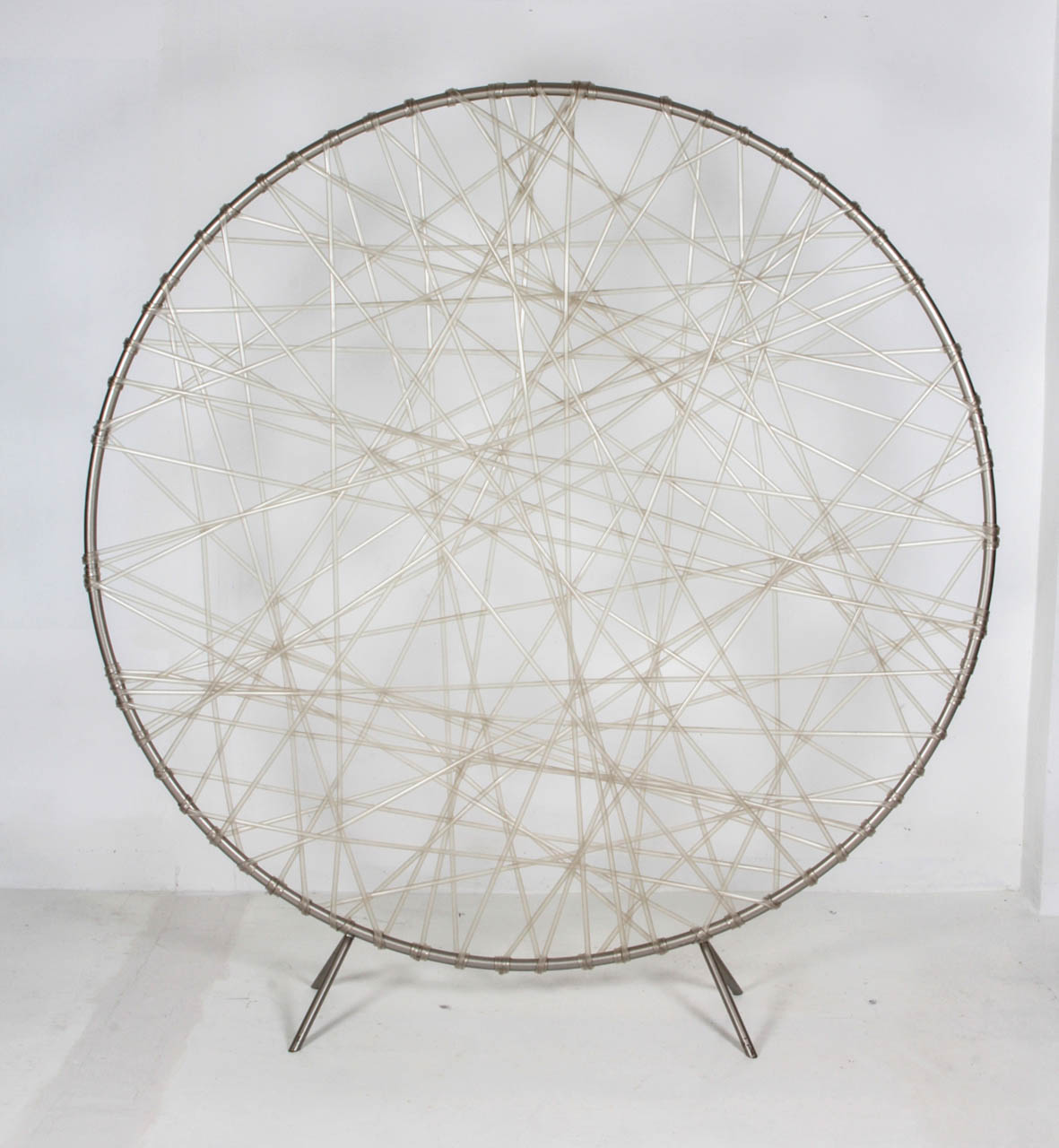
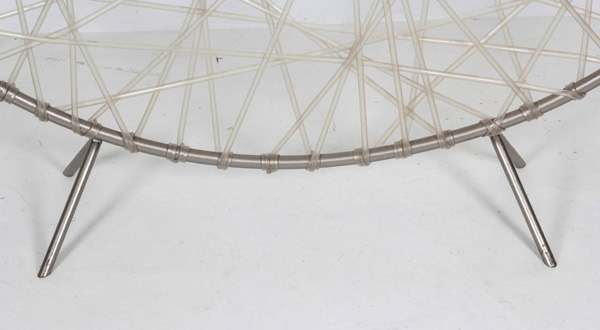
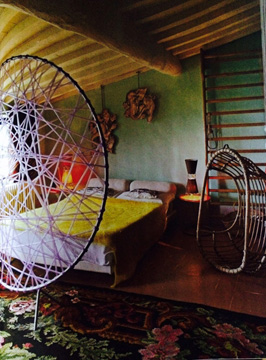
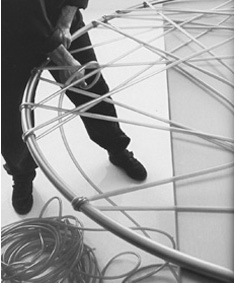
Fernando and Humberto Campana, Zig Zag Screen 2001
Humberto Campana (1953 – ) Brazil
Fernando Campana (1961 – ) Brazil
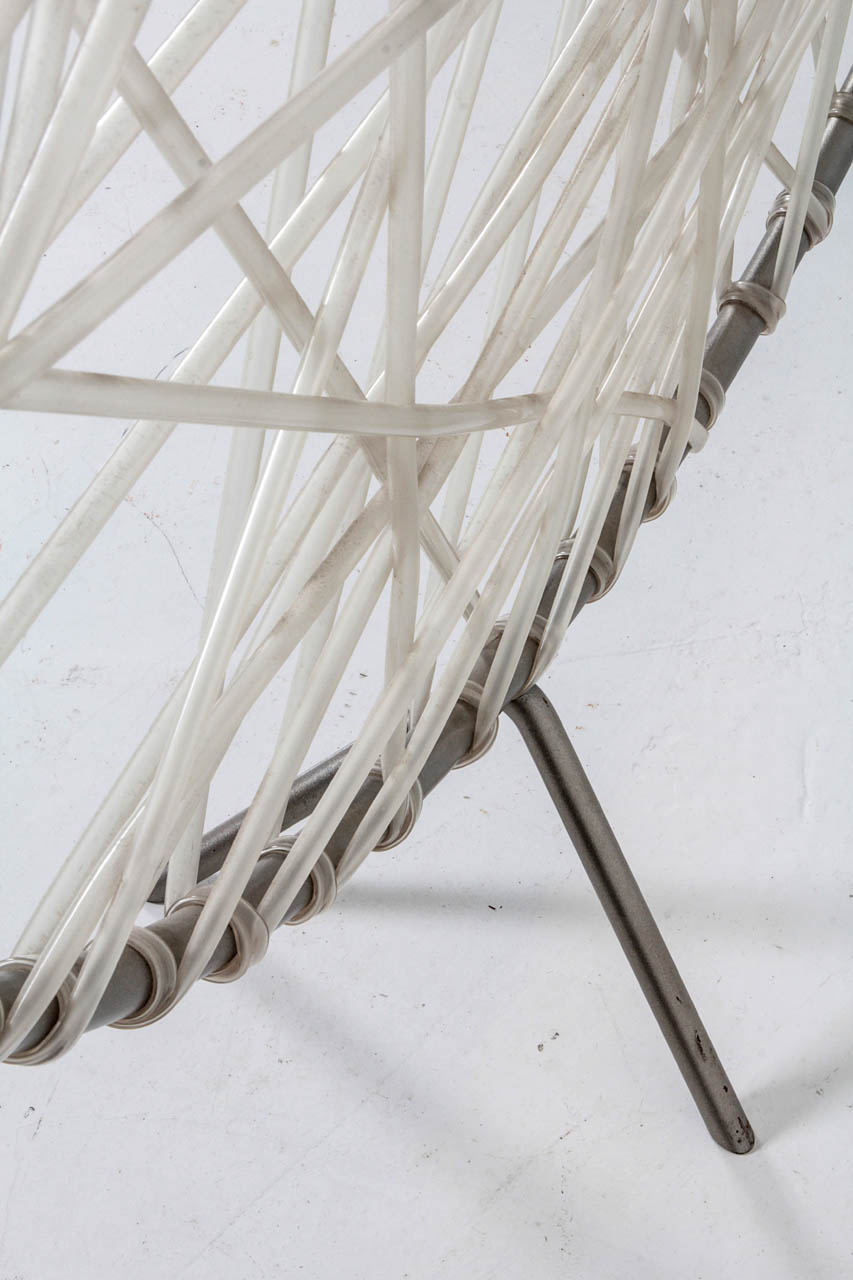
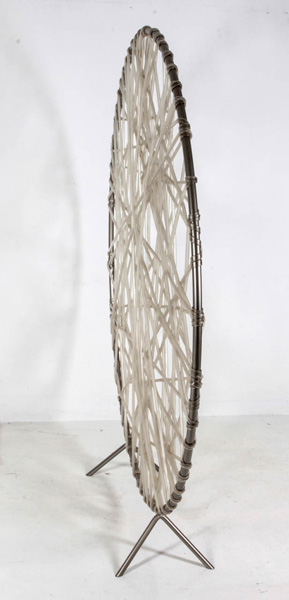
Zig Zag Screen, 2001
Circular iron frame with electrostatic silver painted surface, translucent PVC hose stretched in a web pattern.
Illustrated: Campanas, Humberto and Fernando Campana (Sao Paulo: Bookmark 2003) p. 240; Mood River, February 3 – June 26, 2002, exh. cat. Jeffrey Kipnis and Annetta Massie (Ohio: Wexner Center, 2002)
Archibald Knox / Liberty & Co. Tri-footed pewter vase with blue enamel c. 1902-05
ARCHIBALD KNOX (1864-1933) UK
LIBERTY & CO. London
Tri-footed vase c.1902-05
Pewter with blue enamel
Marks: Liberty & Co., ENGLISH PEWTER, 0927
Model illustrated: Liberty’s 1875-1975, An Exhibition to mark the Firm’s Centenary (London: Victoria & Albert Museum, 1975) p. 76; The Liberty Style, introduction by Victor Arwas (NY: Rizzoli, 1979) cat. no. 36
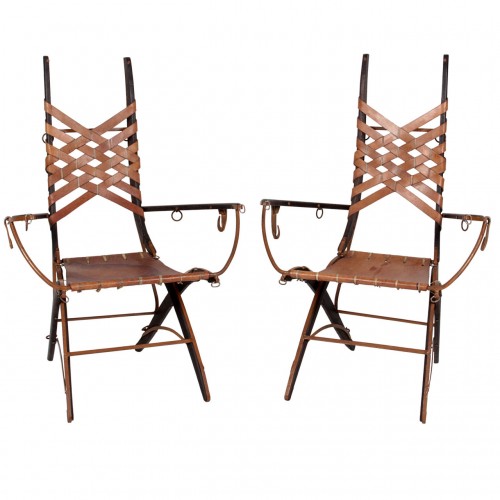
Alberto Marconetti / Italian Post-War Design Armchairs c. 1960’s
ALBERTO MARCONETTI Milan, Italy (active Argentina)
Armchairs (Two available) c. 1960’s
Oak, painted iron, leather strapwork and seat
Marks: by Alberto Marconetti (script signature)
H: 40 1/2” x W: 27” x D: 21”
Seat height: 19″
Price: $7,450 (each)
This pair of armchairs nods to the influence of such Italian designers as Carlo Bugatti and Carlo Mollino yet are their own unique creation. They have an unusual anthropomorphic quality in that the frame suggests a skeletal structure. In addition, the leather strapwork, iron loops and hooks allude to the equipage of the ancient Roman equestrian order.
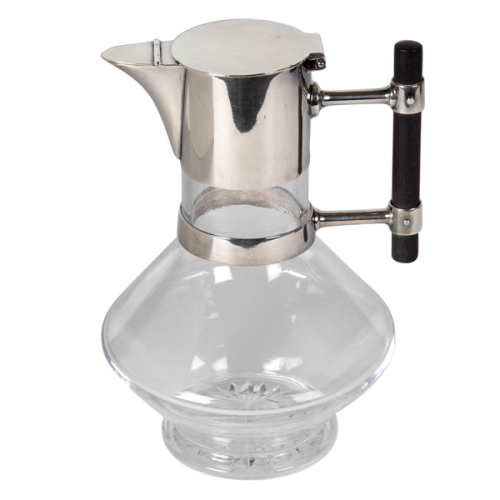
Christopher Dresser / Heath & Middleton Petite claret jug 1887
CHRISTOPHER DRESSER (1834-1904) UK
HEATH & MIDDLETON Birmingham, England
Petite claret jug 1887
Sterling silver mounts with hinged covers to both top and spout, glass, ebony handle
Marks: JTH & JHM in a four-lobed cartouche, London assay marks for 1887 (“M” in a shield), Vienna import mark (conjoined AV in a 6-sided cartouche)
Illustrated: Industrial Design Unikate Serienerzeugnisse, Die Neue Sammlung ein neuer Museumstyp des 20. Jahrhunderts, Hans Wichmann (Munich: Prestel-Verlag, 1985), p. 131; Christopher Dresser, ein Viktorianischer Designer, 1834-1904 (Cologne: Kunstgewerbemuseum der Stadt Köln, 1981), p. 73, ill. 86, cat. no. 23; Industrial Design, John Heskett (New York and Toronto: Oxford University Press, 1980), p. 24, illus. 9; Christopher Dresser 1834-1904, Michael Collins (London: Camden Arts Centre, 1979), p. 171, cat.no.12.
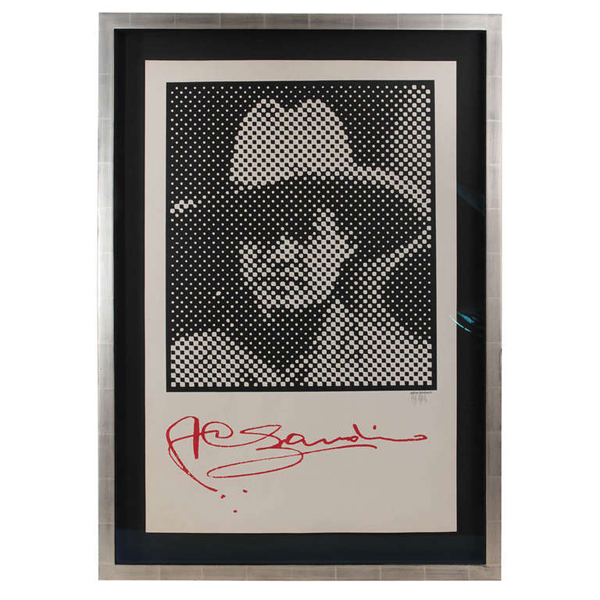
George Manupelli “AC Sandino” Silk screen poster c. 1970
GEORGE MANUPELLI (1931-2014) USA
“AC Sandino” Silk screen poster c. 1970
Silk-screen with black and red ink.
This stylized “Ben-Day dot” technique image of Augusto Cesar Sandino (AC Sandino (1895-1934) was a Nicaraguan revolutionary and guerrilla leader), the poster is float mounted in a white gold leaf edged frame.
Signed: george manupelli (in ink below image) and in pencil script below black inked printed name
Poster dimensions: H: 35″ x W: 23″
Framed dimensions: H: 41 1/2″ x W: 29 1/2″ x D: 2 1/2″
George Manupelli was born in Boston’s North End in 1931. A pioneer in experimental film since 1955, he has exhibited and won awards internationally including the 1964 Venice and 1965 Sao Paulo Biennials. He recently received and Avant- Garde Master Award for his Dr. Chicago films. He holds a Doctorate Degree from Columbia University (1959), and has taught at the University of Michigan, York University, was Dean of the San Francisco Art Institute, and was a Fellow at the University of Illinois Center for Advanced Studies. Manupelli founded the Ann Arbor Film Festival in 1963 and directed it for 17 years. He was also a member of the music theatre ONCE Group. His many films are in the archive of the Anthology Film Archives in New York City.
***This print is made from a 1930s photo of revolutionary Augusto Sandino.





 @hd_jewels