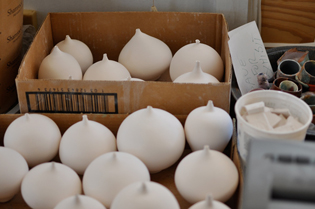
Rose Cabat/American Studio Ceramics "Feelie" Porcelain Vessel, circa 1980-85
More Information
Rose Cabat / American Studio Ceramics “Feelie” Porcelain Vessel, c. 1980-85
ROSE CABAT (1914-2015) USA
“Feelie” c. 1980-85
Thin walled porcelain vessel with a silky satiny matte drip glaze
Signed: incised CABAT on bottom
For more information on Rose Cabat see: Rose Erni Cabat Retrospective 1936-1986 (Tuscon, AZ: Tuscon Museum of Art, 1986)
H: 4 3/4″
Price: $2,500
Rose Cabat is an American studio ceramicist living in Tucson. Considered one of the most important ceramic artists of the Mid-century Modernist movement, Cabat is best known for her innovative glazes on small porcelain pots called “feelies” which she developed in the 1960s. Her organic forms often resemble the shape of onions and figs, and her glazes range from organic to jewel tones. Cabat was born in 1914 in the Bronx, New York, began to work in ceramics in the late 1930′s, and moved to Arizona in 1942, where she continued to make innovative ceramics.
Feelies:
Feelies are described as onion, fig, cucumber, and saucer-shaped ceramic vases terminating in an upward closed neck. Bruce Block, an avid collector, has described them as sensual and tactile with a very specific unforgettable texture, spiritual seeming to contain a type of energy. Rose Cabat had developed a silky satiny glaze, and it wasn’t until around 1960 that she had hit upon the first of the appropriate form, svelte and sleek to match the glaze. She exclaimed, “Now this one’s a feelie.”, coining the term. Upon developing the new glazes, she felt that she needed new forms to apply the glazes to, different from what she made before, “craft fair” style coiled heads and wind bells. She is quoted as saying, “The old things did not look good … I wanted simpler shapes that went with the glazes.”They are typically globular in shape, tightening down to a minuscule neck glazed to a satin surface. The tactile experience is most important. The nature of the neck is such that it is closed, so narrow that it cannot hold anything. Cabat would reply when asked why the necks of her feelies are so narrow, “A vase can hold weeds or flowers, but can’t it just be a spot of beauty?”
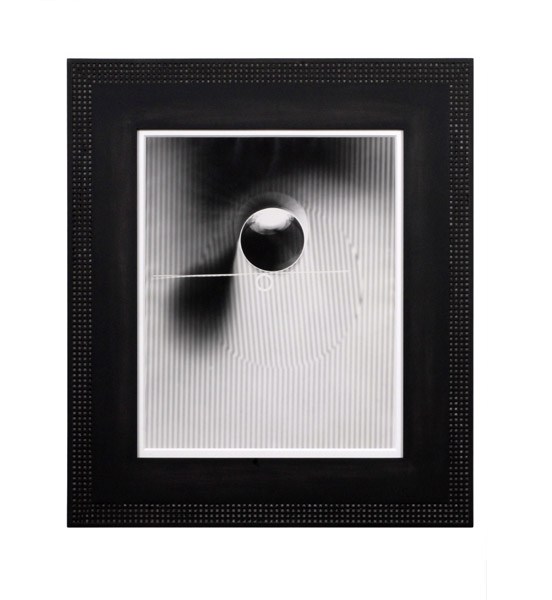
György Kepes, Abstraction, Gelatin silver print, 1942
GYÖRGY KEPES (1906-2001) Hungary/USA
Abstraction 1942
Silver gelatin print
Signed: 9 (in a circle, on back); Gyorgy Kepes 1942 (in ink on back)
György Kepes was a Hungarian-born painter, designer, educator and art theorist. After emigrating to the U.S. in 1937, he taught design at the New Bauhaus (later the School of Design, then Institute of Design, then Illinois Institute of Design or IIT) in Chicago. In 1947 He founded the Center for Advanced Visual Studies at the Massachusetts Institute of Technology (MIT) where he taught until his retirement in 1974.
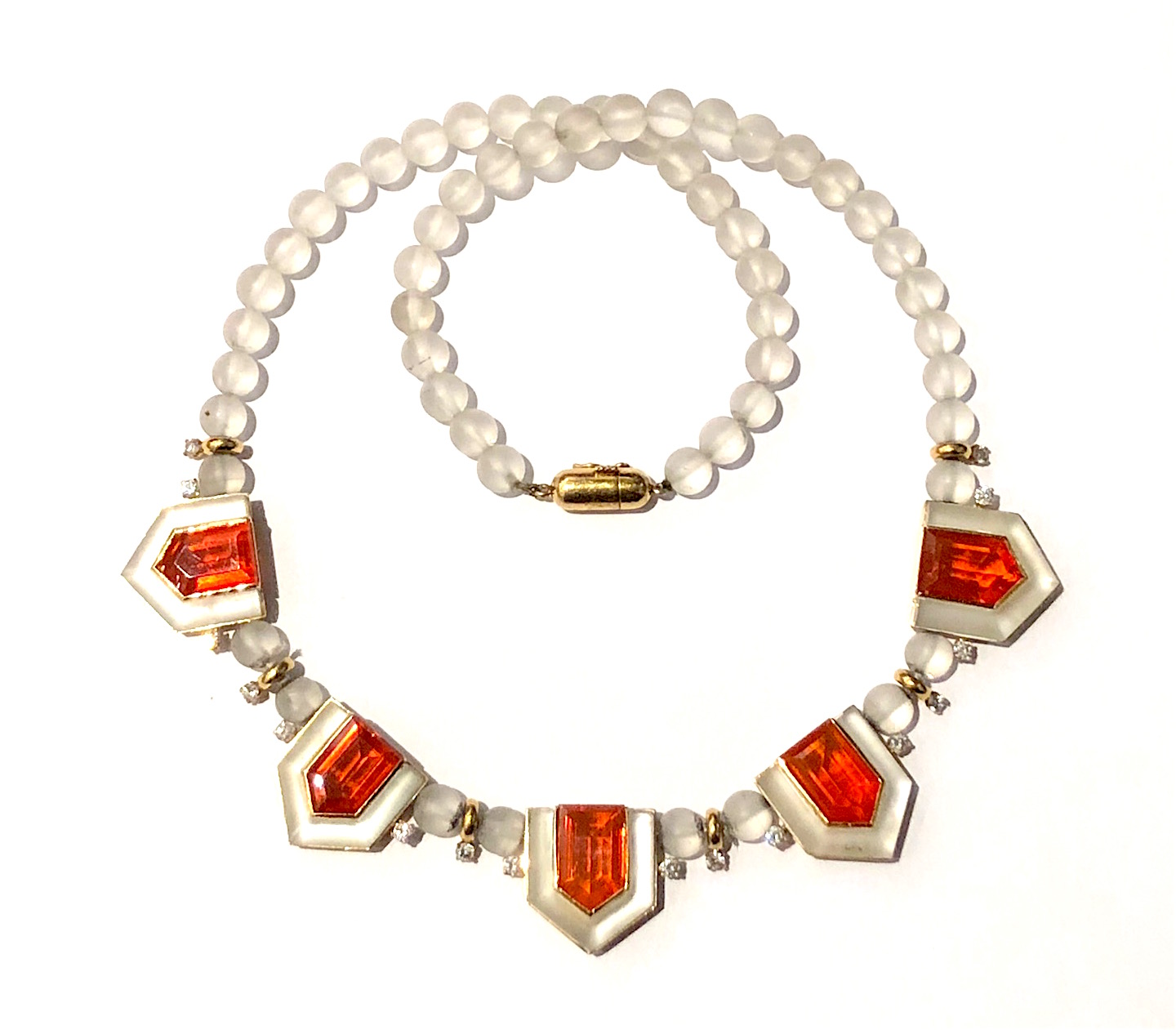
Art Deco “Fire Opal” necklace, frosted rock crystal round beads and four sided custom rock crystal bezels set in 18K yellow gold with 16 round–cut accent diamonds featuring five large natural fire opals (G.I.A certificate, dimension of each fire opal, 13.00 x 8.15 x 6.20mm for a TW of approx. 17.50 carats), c. 1940’s





 @hd_jewels