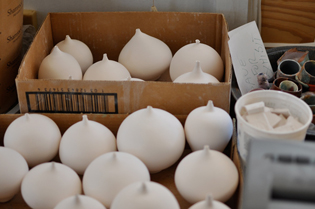
Rose Cabat/American Studio Ceramics "Feelie" Porcelain Vessel, circa 1980-85
More Information
Rose Cabat / American Studio Ceramics “Feelie” Porcelain Vessel, c. 1980-85
ROSE CABAT (1914-2015) USA
“Feelie” c. 1980-85
Thin walled porcelain vessel with a silky satiny matte drip glaze
Signed: incised CABAT on bottom
For more information on Rose Cabat see: Rose Erni Cabat Retrospective 1936-1986 (Tuscon, AZ: Tuscon Museum of Art, 1986)
H: 4 3/4″
Price: $2,500
Rose Cabat is an American studio ceramicist living in Tucson. Considered one of the most important ceramic artists of the Mid-century Modernist movement, Cabat is best known for her innovative glazes on small porcelain pots called “feelies” which she developed in the 1960s. Her organic forms often resemble the shape of onions and figs, and her glazes range from organic to jewel tones. Cabat was born in 1914 in the Bronx, New York, began to work in ceramics in the late 1930′s, and moved to Arizona in 1942, where she continued to make innovative ceramics.
Feelies:
Feelies are described as onion, fig, cucumber, and saucer-shaped ceramic vases terminating in an upward closed neck. Bruce Block, an avid collector, has described them as sensual and tactile with a very specific unforgettable texture, spiritual seeming to contain a type of energy. Rose Cabat had developed a silky satiny glaze, and it wasn’t until around 1960 that she had hit upon the first of the appropriate form, svelte and sleek to match the glaze. She exclaimed, “Now this one’s a feelie.”, coining the term. Upon developing the new glazes, she felt that she needed new forms to apply the glazes to, different from what she made before, “craft fair” style coiled heads and wind bells. She is quoted as saying, “The old things did not look good … I wanted simpler shapes that went with the glazes.”They are typically globular in shape, tightening down to a minuscule neck glazed to a satin surface. The tactile experience is most important. The nature of the neck is such that it is closed, so narrow that it cannot hold anything. Cabat would reply when asked why the necks of her feelies are so narrow, “A vase can hold weeds or flowers, but can’t it just be a spot of beauty?”
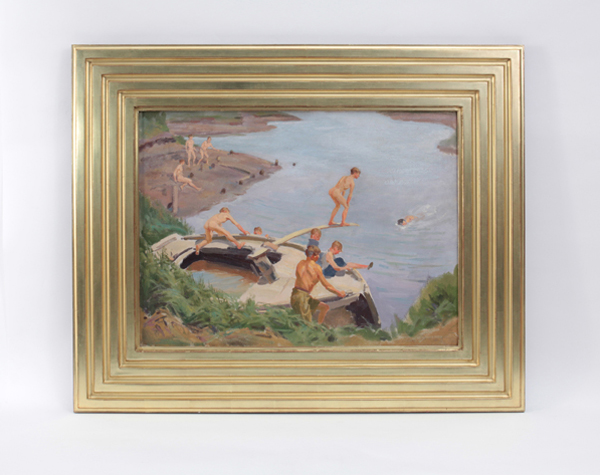
Edmund F. Ward “The Swimming Hole” Oil on canvas c. 1930
EDMUND F. WARD (b. 1892 – 1991) USA
“The Swimming Hole” c. 1930
Oil on canvas
Marks: signed Edm. F. Ward (lower right); partial labels verso:Westchester Arts and Crafts Guild; 4 Edmund F. Ward
For more information on the artist see: Who Was Who in American Art,Peter Hastings Falk, ed. (Madison, Conn.: Sound View Press, 1985), p. 658.
Canvas H: 18” x W: 24”
Framed H: 27 9/16” x W: 33 9/16”
Price: $14,000
Ward studied at the Arts Student’s League with Edward Dufner, George Bridgeman, and Thomas Fogarty. He was an illustrator for several national magazines and books. In 1925, Ward exhibited an award winning work at the Art Institute of Chicago. He is perhaps best known for his WPA mural in the Federal Building, White Plains, New York.
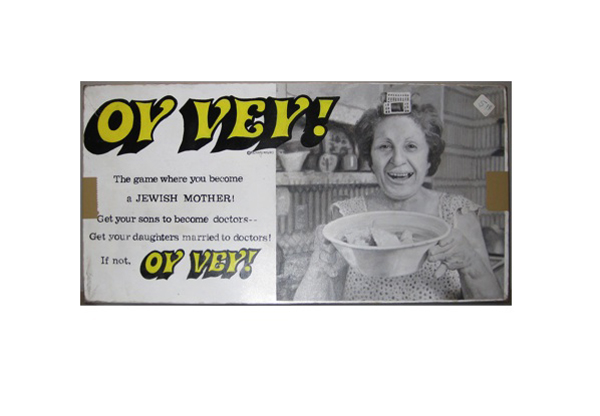
Tim Liddy Oy Vey (1979) The game where you become a JEWISH MOTHER! Get your sons to become doctors—Get your daughters married to doctors! If not, OY VEY! 2008 Oil and enamel on copper, plywood back
TIM LIDDY
“Oy Vey” (1979) The game where you become a JEWISH MOTHER! Get your sons to become doctors—Get your daughters married to doctors! If not, OY VEY! 2008
Oil and enamel on copper, plywood back
Signed in script: Tim Liddy, red circular ring, “circa 1979”, 2008
Provenance: William Shearburn Gallery, St. Louis, MO
H: 10 ¼” x W: 20 ½” x D: 1 ¾”
With his recent paintings, Liddy has both reasserted the construct of hyperrealist painting and developed a thoroughly unique advancement of that mode by extending the cultural reality of the indexed original. Based on the illustrated box lids of vintage board games, Liddy has recontextualized a subject, which evokes the underlying rules of life. Painted on copper or steel in the precise dimensions of the original, the metal is then manipulated to demonstrate the exact rips and tears from years of usage and includes trompe-l’oeil renditions of the scotch tape that might be holding the cardboard box together, the assorted stains, or the various graffiti of time. Liddy leaves no possibility of ambivalence, these works speak to a concurrent understanding of their original object identity and to themselves as works of art engaged in historical and psychological dialogue.
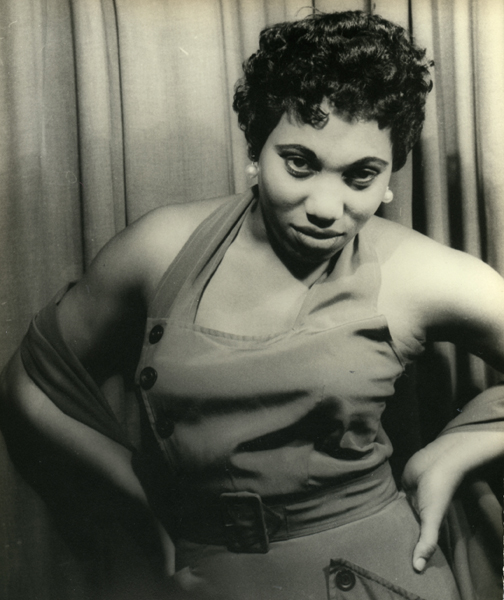
Signed: Leontyne Price as Bes, Porgy & Bess, XVII KK 20, May 19, 53 (in ink on back); PHOTOGRAPH BY CARL VAN VECHTEN, 101 CENTRAL PARK WEST, CANNOT BE REPRODUCED WITHOUT PERMISSION (ink stamp on back)
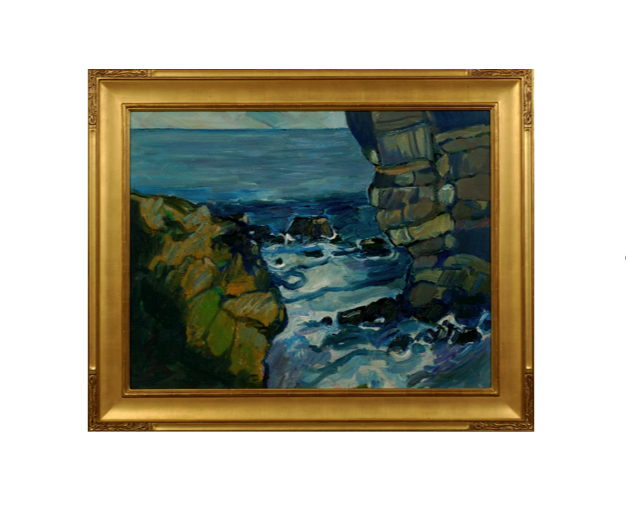
Peter Canty received his BA in art from the Chouniard Art Institute, Los Angeles (now California Institute of the Arts) and an MA from the University of California, Santa Cruz in 1969. Heavily influenced by the Post-Impressionist masters Van Gogh, Gauguin and Cezanne, in his own he words he describes his interest in landscapes, believing they are, “the best vehicle for motion, force, and color dynamics.” Although his work reference realistic subjects, Canty’s imagery is drawn strictly from his own imagination.




 @hd_jewels