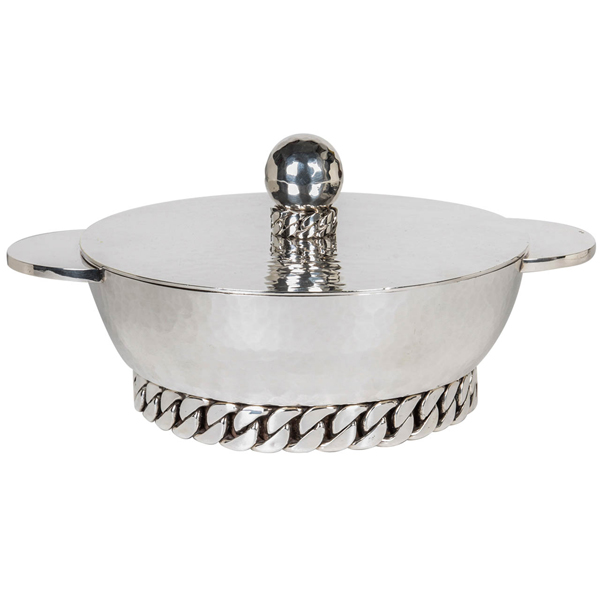
Jean Despres, French Art Deco Modernist Covered Centerpiece c. 1940
More Information
Jean Despres, French Art Deco Modernist Covered Centerpiece c. 1940
Jean Despres (1889-1980) France.
Modernist covered centerpiece, circa 1940.
Hand-wrought and hand-hammered silver plate.
Marks: J. Despres (script incised signature on the edge on one handle),
JD French Jean Despres touchmark (2x).
For related works see: Jean Després: Maestro Orafo Tra Art Déco e Avanguardie, Melissa Gabardi (Milano: IDEA Books, 1999) Metallkunst: Kunst vom Jugendstil zur Moderne (1889-1939) Band IV, Karl H. Brohan (Berlin: Brohan-Museum, 1990); Silver of a New Era: International Highlights of Precious Metalwork from 1880 to 1940 (Rotterdam: Museum Boymans van-Beuningen, 1992)
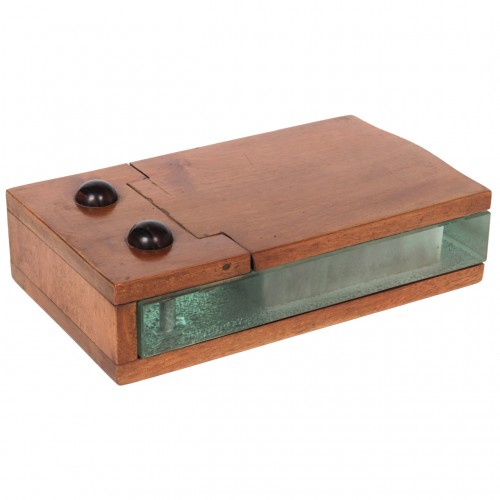
Alexandre Noll rare and early Art Deco mahogany and glass box c. 1930
ALEXANDRE NOLL (1890-1970) France
Covered box c. 1930
Mahogany with ebony peg details and 1 ¼ inch thick Saint-Gobain glass.
Marks: ANoll
Provenance: Private Collection New York, Galerie de Beyrie Paris, Odile Noll (A. Noll’s daughter), Alexandre Noll Estate
For more information see: Alexandre Noll, Olivier Jean-Elie, Pierre Passebon (Paris:Edition du Regard, 1999); Alexandre Noll: Les Matres de L’ Art Decoratif Contemporain, Collection dirigée par R. Moutard-Uldry edited by (Geneve: Pierre Cailler, 1954); Le Mobilier du Xxe Siécle: Dictionnaire des
Créateurs, Pierre Kjellberg (Paris: Les Éditons de l’Amateur, 1994) p. 455-456.
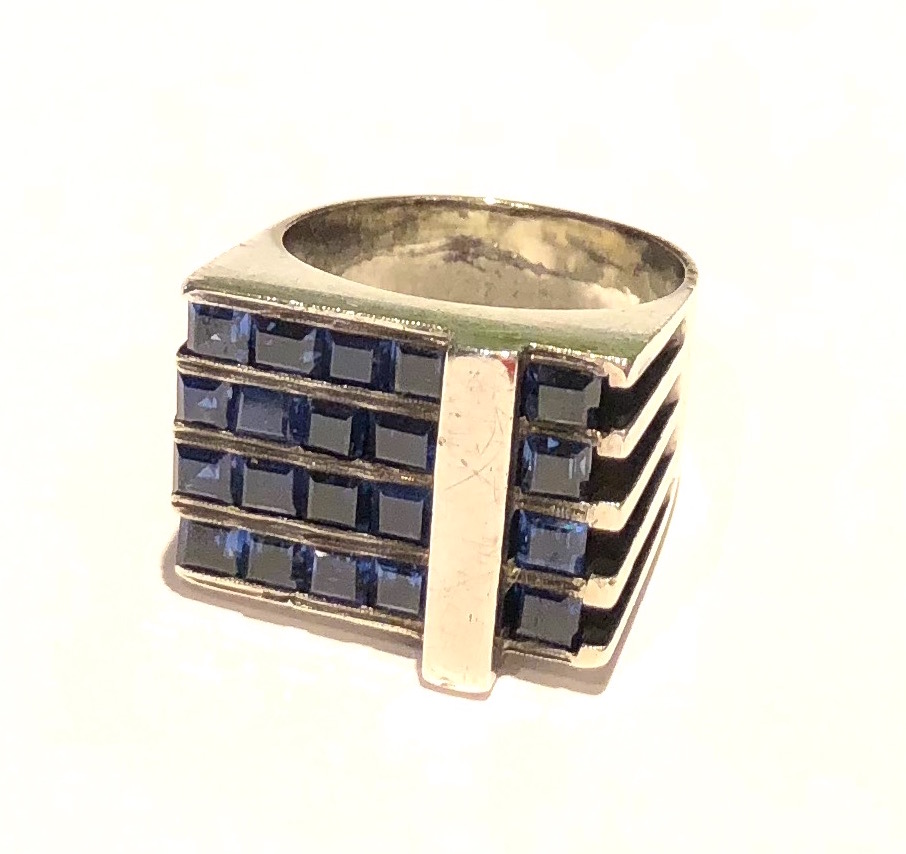
Margaret De Patta (1903-1964) Modernist asymmetric sterling ring set with twenty square cut sapphires (approx. 9 carats TW ), signed: DePatta, Chevron mark of MDP, Sterling, c.1947
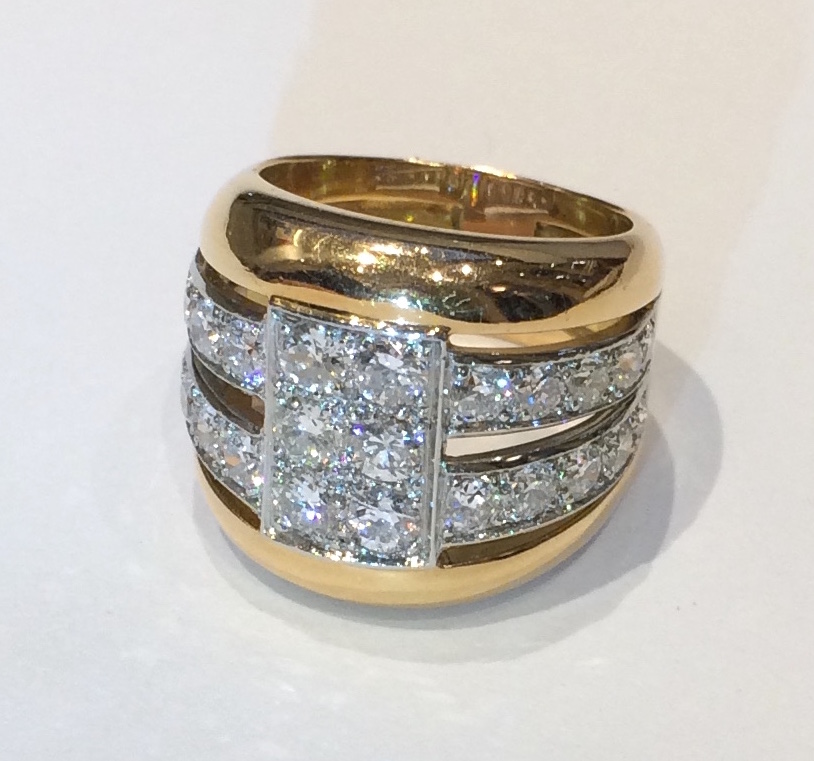
French Art Deco/Modernist diamond ring set with 26 round cut diamonds (approx. 6 carats TW) mounted in platinum and further set in an 18k gold four-tier contoured ring mounting, marked, c.1930’s




 @hd_jewels