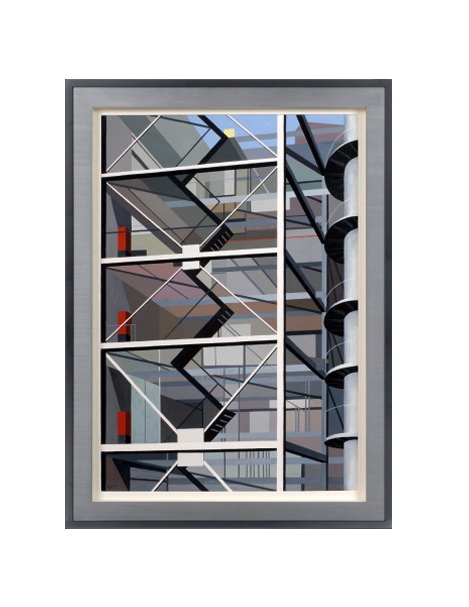
Richard Harold Redvers Taylor, “Modernist building staircase”, Gouache on paper c. 1949
RICHARD HAROLD REDVERS TAYLOR (1900-1975) United Kingdom
Modernist building staircase c. 1949
Gouache on paper, metal and wood frame
Signed: RHRT (lower left)
Marks: Gimpel Fils exhibition label (on back)
Exhibited: “An Exhibition in the Kettle’s Yard Loan Gallery: Sculpture & Painter,
14 February – 10 March, 1972” Gimpel Fils, London
Framed: H: 41 7/16” x W: 30 5/16”
Richard Harold Redvers Taylor (1900-1975) was born in Brighton on March 14th, 1900 and educated at Brighton College and Heatherleys School of Fine Art, Chelsea. His father, Harold Taylor, was a headmaster. Redvers Taylor retired from the Army (where he specialized in topographical surveying in Africa) in 1937 but was recalled for war service. In 1946 he began a new career as a professional painter. Between 1948 and 1958 Taylor was given a series of six one-man shows by Lefevre and Gimple Fils in London. In the 1960’s he turned to sculpture, and in 1972 an exhibition of his sculpture and paintings was held at the Kettle’s Yard Loan Gallery in Cambridge. His work is held in the permanent collection at the Beith Uri V Rami Museum in Israel. Louise Taylor (née Hayden), his wife, was an American and the adopted daughter and heiress of Alice B. Toklas, the companion of Gertrude Stein. Louise Taylor died on 21 July 1977.
Purism, otherwise known as l’esprit nouveau was directly inspired by a spare, functionalist aesthetic and is closely associated with the work of Le Corbusier and his circle in Paris in the second quarter of the 20th Century. In America this purist style was known as Precisionism, which explored similar imaginary during the late 1920’s and 30’s with artists like Charles Sheeler, Charles Demuth and Ralston Crawford at the forefront of this movement. In England, the Vorticist movement (1912-1915) was founded by Wyndham Lewis and others and was the precursor to the Purist movement in Great Britain in the 1930’s and 1940’s. Redvers Taylor created geometrical landscapes while reducing volumes to colored planes and outlines to ridges. His artwork combines depth and perspective with flattened cubist fields of color. Architecture of industrial buildings was his favorite subject, whereas people and nature were usually absent from his compositions.
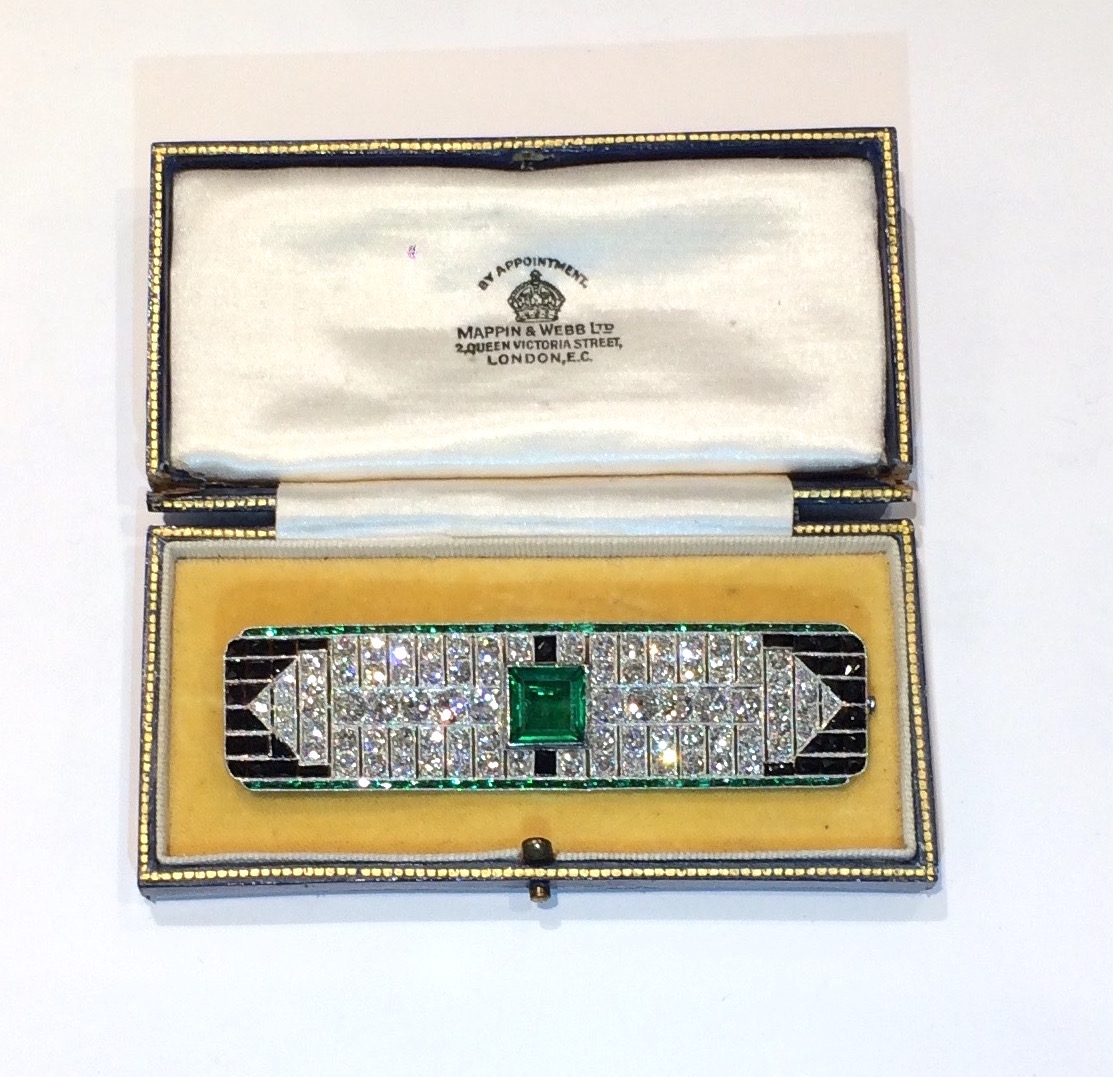
Mappin & Webb Art Deco / Modernist diamond brooch (84 count approximately 14 carats TW), further set with fully faceted onyx and emeralds with a central square synthetic emerald all set in an elaborate platinum mount, c.1930
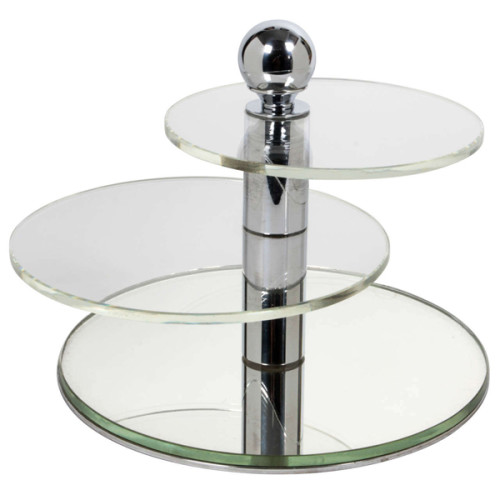
Donald Deskey (attr.) / American Streamline Modernist store display c. 1928-30
DONALD DESKEY attributed (1894-1989) USA
DESKEY-VOLLMER, INC. (maker)
Modernist intersecting-circles store display c.1928-30
Chrome-plated sphere and cylindrical shaft and details, original plate glass shelves and mirrored base
***This store display piece is exceptional quality and survives in mint condition.
For more information and related designs see: Donald Deskey: Decorative Designs and Interiors, David A. Hanks and Jennifer Toher, E.P. Dutton: New York, 1987, pages 12-17 and 96-98 (Abby Rockefeller table centerpiece)




 @hd_jewels