Product Description
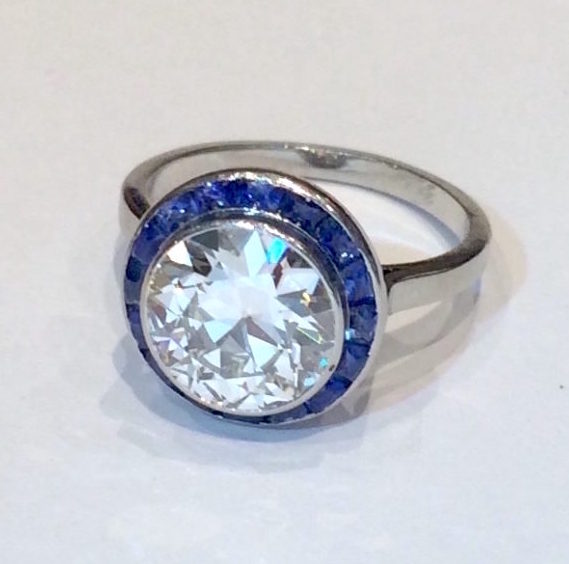
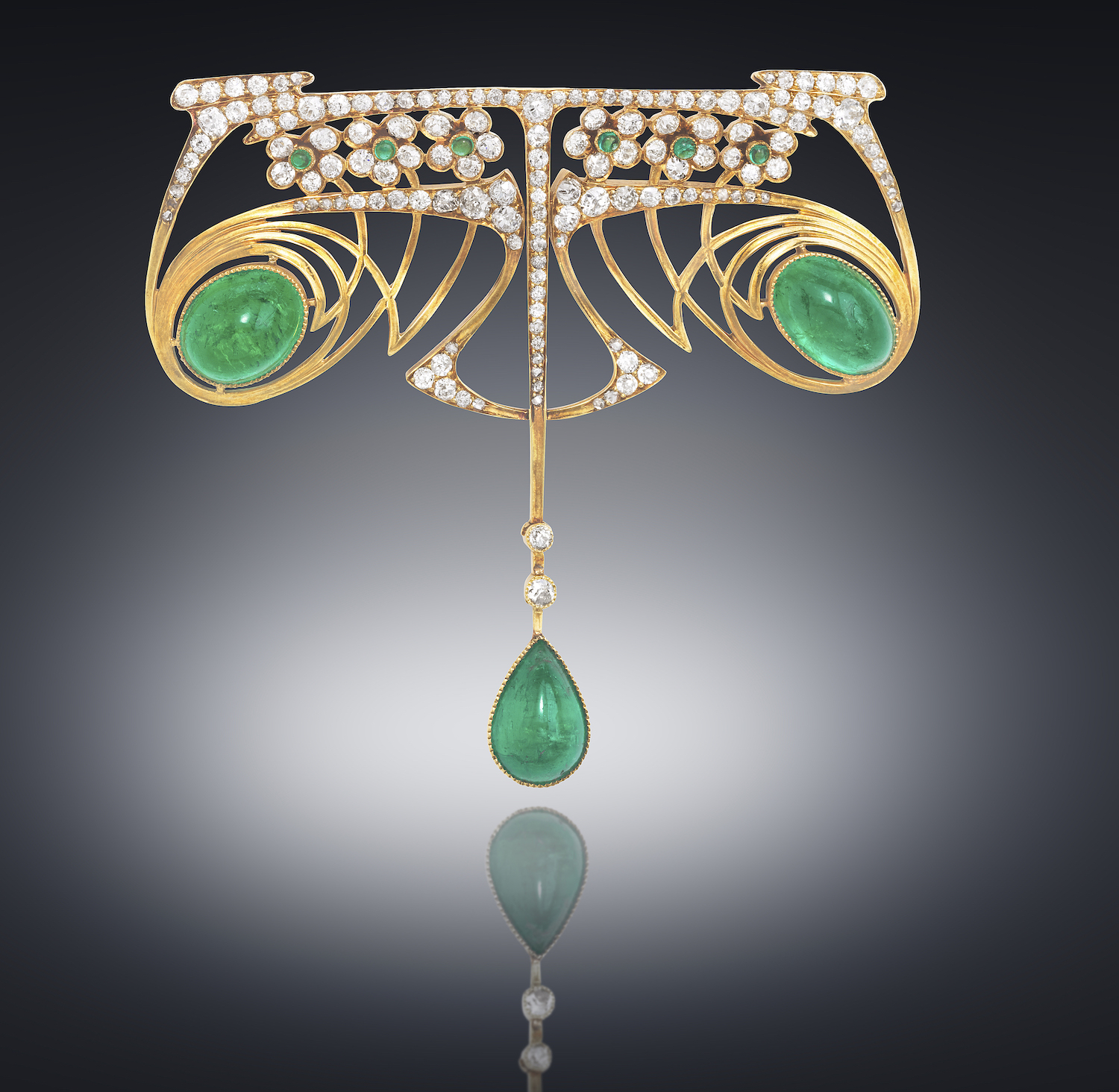
Cartier, London lapel brooch, calibre-cut sapphires in platinum in the shape of The Star of David, 18k gold yellow gold sculptural Lion Rampant Brochant, commissioned by Lord Nathan from Cartier London in 1946, signed

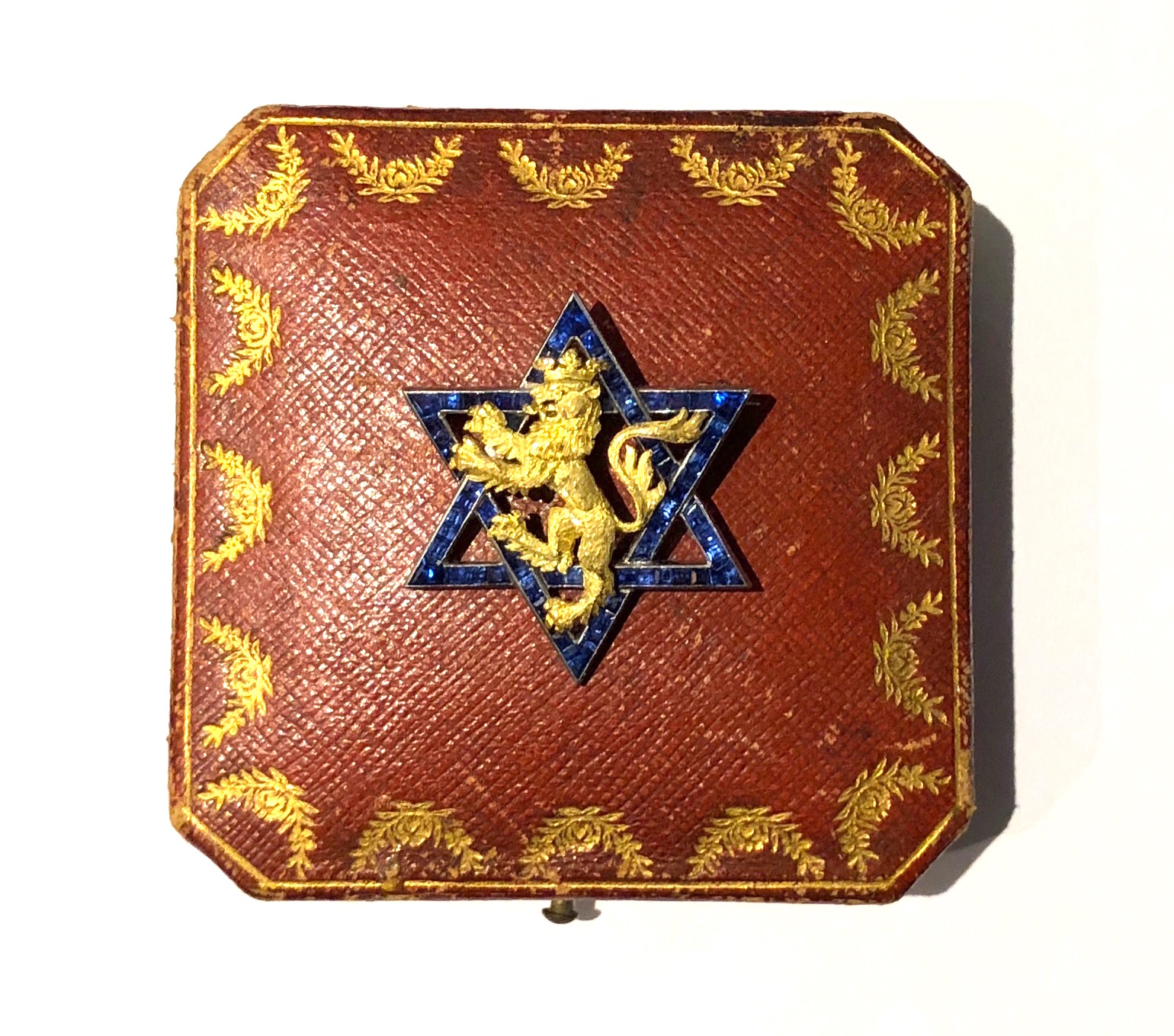
Lord Nathan (1889-1963), Harry Louis Nathan, 1stBaron Nathan, was born in London in 1889 and was the son of Michael Henry Nathan, a fine art publisher and J.P. (Justice of Peace) He was educated at St. Paul’s School and became honorary secretary of the Brady Working Lads’ Club, the oldest and largest of the London Jewish Lads’ Clubs (J.L.G.B). Nathan served in World War I, leaving with the rank of Major. He was first elected in 1929 as M.P. (Member of Parliament) for Bethnal Green North East and was re-elected in 1931. Along with many other Anglo-Jewish communal leaders, Nathan was a founding member of the Central British Fund for German Jewry (now World Jewish Relief Fund). He was created a hereditary peer as Baron Nathan of Churt in the County of Surrey on June 28th, 1940. He continued in active politics from the House of Lords, serving as Under-Secretary of State for War (1945-1946) and Minister for Civil Aviation (October 4, 1946-May 31st, 1948). He was made a Privy Counsellor in 1946. This lapel brooch was commissioned by Lord Nathan from Cartier London in 1945/46 and descended in his family.
Cartier, London lapel brooch, calibre-cut sapphires in platinum in the shape of The Star of David, 18k gold yellow gold sculptural Lion Rampant Brochant, commissioned by Lord Nathan from Cartier London in 1946, signed
W.C. HANDY ed. (1973-1958) USA
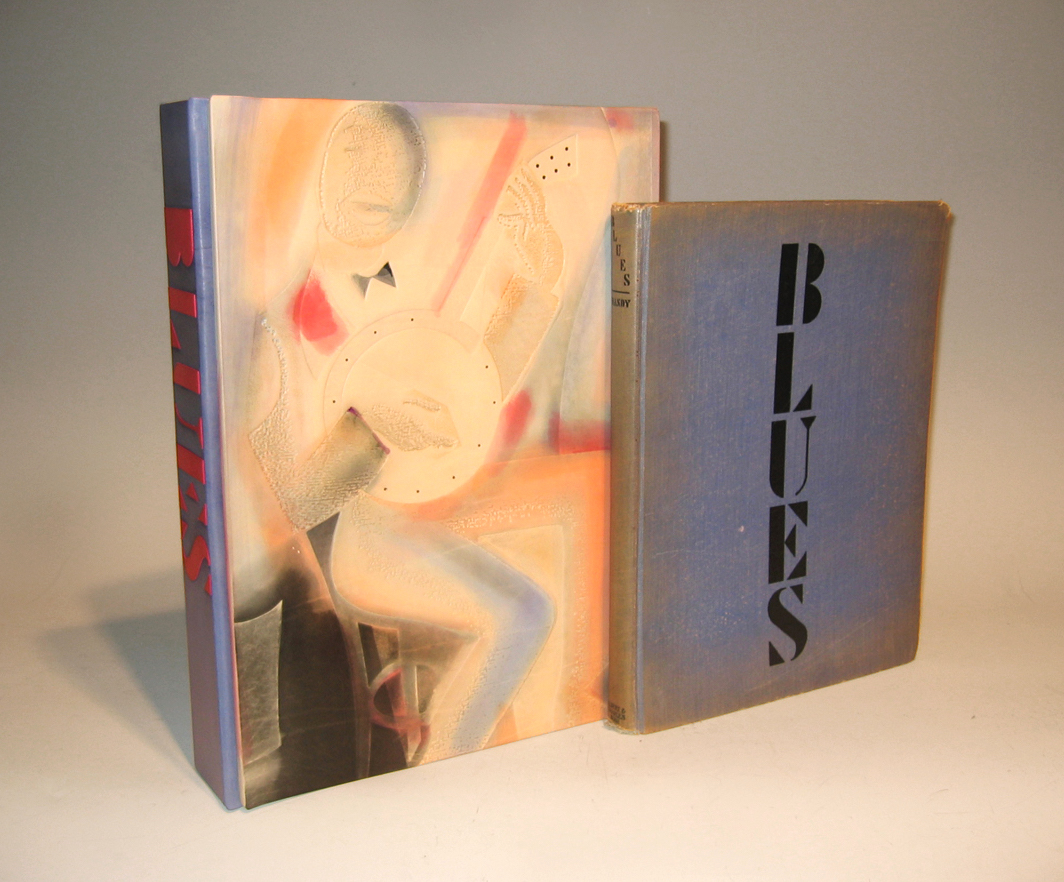
“Blues – An Anthology” 1926
180pp. bound in blue cloth with original dust jacket. Very scarce work, considered the most famous blues collection in history, it includes historical notes, tunes and arrangements, notes for each song, a bibliography, and a chart of guitar chords.
With an introduction and notes by Abbe Niles
Illustrations by Miguel Covarrubias
Published by Albert & Charles Boni, New York
Dimensions:
Book: H: 11 ¾” x W: 9 1/8” x D: 1”
Custom leather box 2008: H: 13 13/16” x W: 10 3/8” x D: 2 7/16”
Custom silk slipcase: H: 15” x W: 11 1/8” x D: 3 3/8”
William Christopher Handy was a composer, musician and a music publisher. He was sometimes called the “Father of the Blues” and was credited with helping popularize blues music. Handy was a seminal figure in the development of American songwriting. His compositions assimilated folk tunes, blues, spirituals, minstrel songs, and elements of European music and forged a new sound in American popular commercial music. Born in Florence, Alabama, Handy began arranging music when in grade school. By the turn of the century, he had toured or was touring with a number of minstrel acts and bands. He became a leading bandleader in Memphis, Tennessee, and eventually wrote such classics as “The Memphis Blues” (1912), “The St. Louis Blues” (1914), and “Beale Street Blues” (1916). In addition to his songwriting, Handy also founded an important and influential music publishing concern, the Pace and Handy Music Company, in 1913. Finally, Handy’s books and writings, such as his autobiography, Father of the Blues (1941), and Blues: An Anthology (1926), comprise an important contribution to American culture. In 1979, New York City joined the list of institutions and municipalities to honor Handy by naming a stretch of West 52nd Street in Manhattan “W.C. Handy Place.”
JAIPUR, MUGHAL INDIA
Enameled and gem set gold Cup and Saucer c. mid-19th Century
High carat yellow gold (22-24 carat) cup and saucer set with a fine emerald, ruby and diamonds, the cup with a high foot with rounded sides and handle formed of two snakes intersecting at three points and biting the rim. The exterior is decorated with red, green, blue and white enamels with roundels containing combatant animals on a ground of floral sprays, the saucer with gently rounded sides decorated with lobed cartouches containing warriors combating tigers and birds, the underside with a series of oval panels containing peacocks and hummingbirds.
Provenance: a gift from a European diplomat in the 1930’s-40’s, and thence by descent.
Saucer: Dia: 5 1/4;
Cup: H: 2 3/4″ (with handle) x Dia: 2 5/8″
Similar animal decoration can be found in an epaulette attributed to Rajesthan, probably Jaipur, in the Khalili Collection (Pedro Moura Carvalho, Gems and Jewels of Mughal India, London, 2010, p. 225, no. 120. A related cup and saucer with similar animal depictions was sold at Christie’s (Islamic Art, Indian Miniatures, Rugs and Carpets, London, 21st October 1993, lot 350.