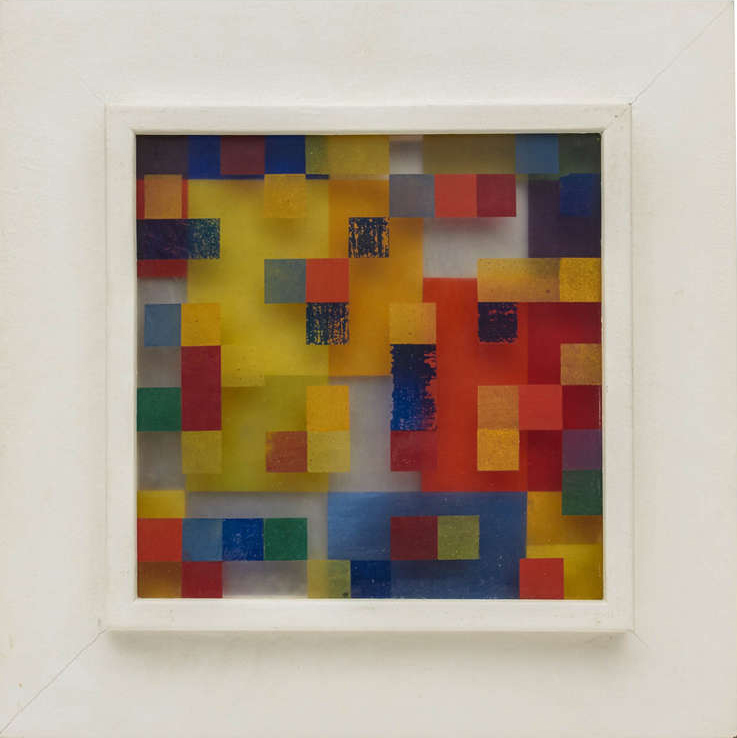
Charles W. Hess "Abstraction" Resin-oil on plexiglas, sheet aluminum 1948
More Information
Charles W. Hess, “Abstraction”, Resin-oil on plexiglas, sheet aluminum 1948
CHARLES W. HESS (1921-1998) USA
Abstraction 1948
Resin-oil on plexiglas, sheet aluminum
Signed: CH (in a circle)
Exhibited: Solo Exhibition, Modernism, San Francisco, CA, 1981; Charles Hess and Leta English Hess: Joint Retrospective, University Art Gallery, University of California, Riverside, October 1 – November 10, 1985; Charles Hess: Neoplastic Works, Modernism, Art of the 20th Century, San Francisco, CA; June 6 – 29, 1991.
Painting illustrated: “On Transparency and Reflection,”
The Structurist No. 27/28, 1987/1988.
Painting H: 12” x W: 12” x D: 1”
Framed H: 22” x W: 22” x D: 1 1/2”
Price: $58,000
Born in 1921 in Long Beach, California, Charles Hess studied painting at UCLA, University of Chicago and University of California, Berkeley. In 1962 he joined the faculty of San Francisco State University where he taught until 1983. Hess’s paintings have been shown in numerous solo and group exhibitions including shows at the Pasadena Art Museum, the Corcoran Gallery of Art and the Art Institute of Chicago where his work is also in the permanent collection.
Working in the neo-plasticist style for over thirty years, Hess’s work explored the three-dimensional relationship between the basic elements of painting: color, form, and space. Abstraction is one of the few works to survive from this period; most pieces from this period were lost due to the 1991 fire in the Oakland, CA hills.
***Charles and Leta English Hess papers, 1895-1987 can be found at the Smithsonian Archives of American Art.
Included are ten letters from Stanton Macdonald-Wright to Hess (1954-1965) relating to his views of the relationship between patrons and artists, the 1956 Paris art scene, contemporary art criticism, the art market, and his break with the Duveen Graham Gallery.
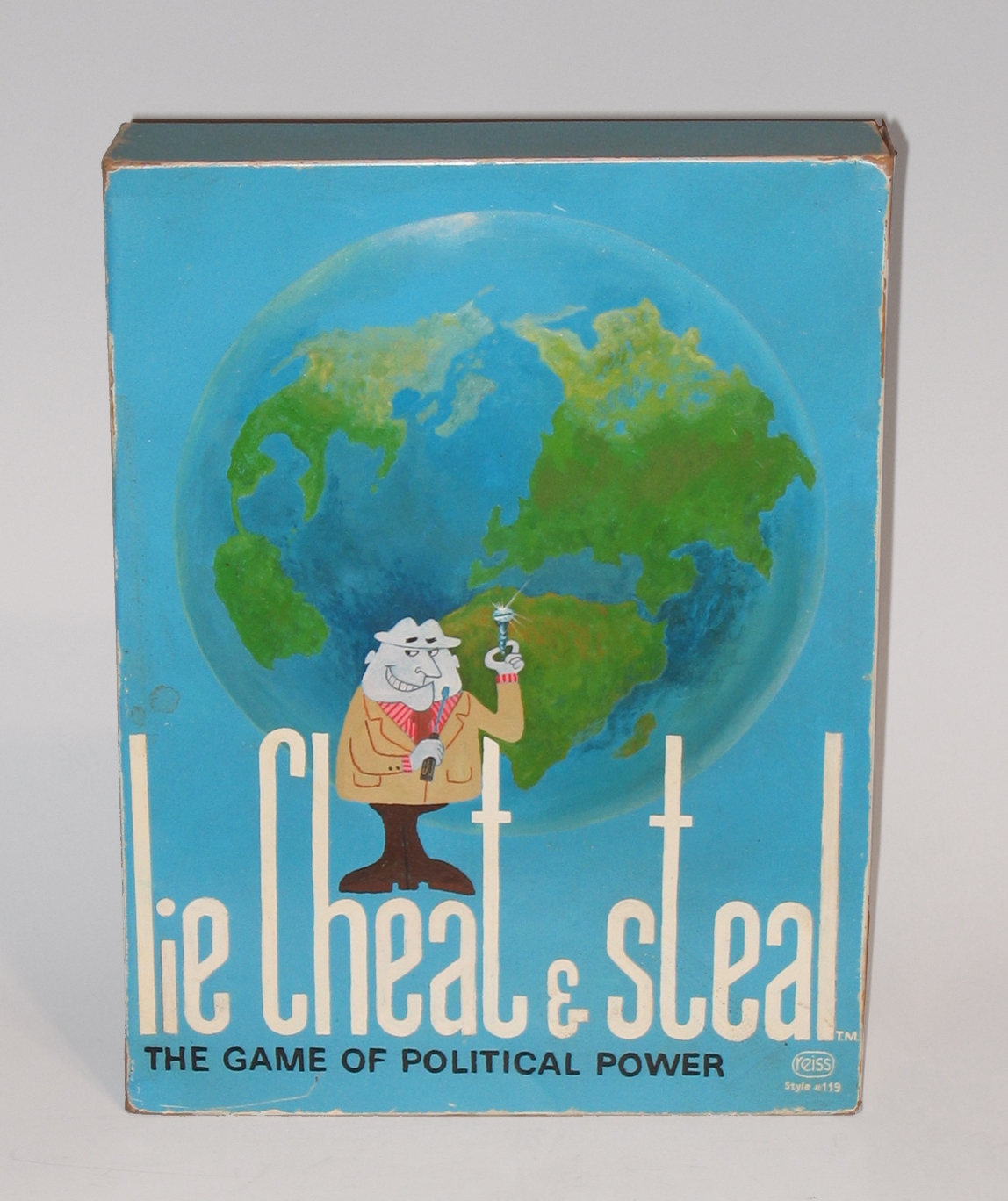
Tim Liddy, Lie Cheat and Steal (1971) The Game of Political Power Oil and enamel on copper, plywood back 2006
TIM LIDDY (b. 1963) Missouri
“Lie Cheat and Steal” (1971) The Game of Political Power 2006
Oil and enamel on copper, plywood back
Signed in script: Tim Liddy “circa 1971” 2006, red circular ring
Provenance: William Shearburn Gallery (St. Louis, MO)
H: 12” x W: 9” x D: 2”
With his recent paintings, Liddy has both reasserted the construct of hyperrealist painting and developed a thoroughly unique advancement of that mode by extending the cultural reality of the indexed original. Based on the illustrated box lids of vintage board games, Liddy has recontextualized a subject, which evokes the underlying rules of life. Painted on copper or steel in the precise dimensions of the original, the metal is then manipulated to demonstrate the exact rips and tears from years of usage and includes trompe-l’oeil renditions of the scotch tape that might be holding the cardboard box together, the assorted stains, or the various graffiti of time. Liddy leaves no possibility of ambivalence, these works speak to a concurrent understanding of their original object identity and to themselves as works of art engaged in historical and psychological dialogue.
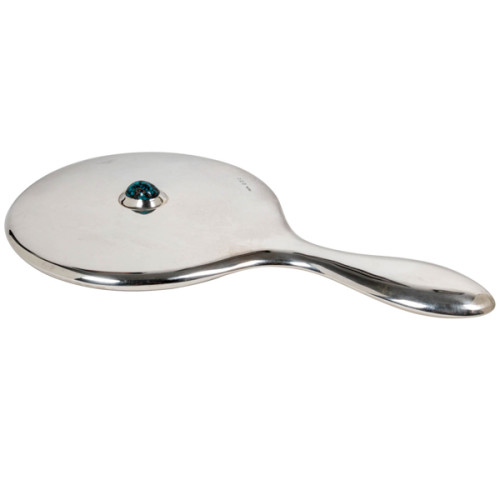
Archibald Knox / Liberty & Co. Sterling hand mirror 1908
ARCHIBALD KNOX (1864-1933) UK
LIBERTY & CO. London, UK
Hand mirror 1908
Sterling with large matrix cabochon turquoise
Marks: L & Co. cipher, Birmingham assay marks for 1908
Similar works with turquoise Illustrated: Archibald Knox, ed. by Stephen A. Martin (London: Academy Editions, 1995) ; Liberty Design 1874-1914, Barbara Morris (London: Pyramid Books, 1989) p. ; The Designs of Archibald Knox for Liberty & Co., A.J. Tilbrook (London: Ornament Press Ltd., 1976)




 @hd_jewels