Product Description
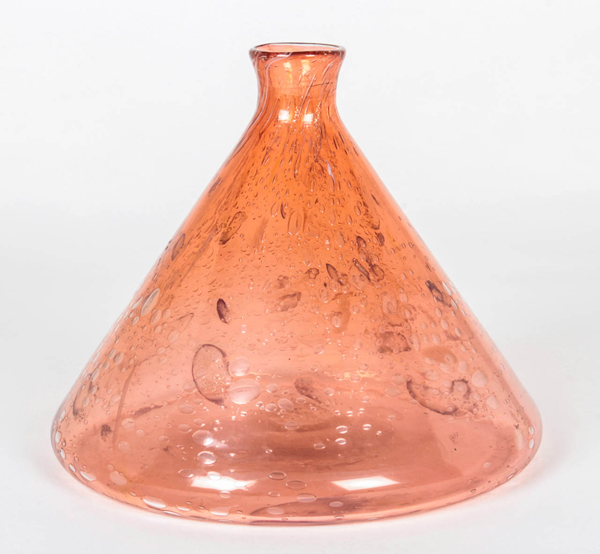
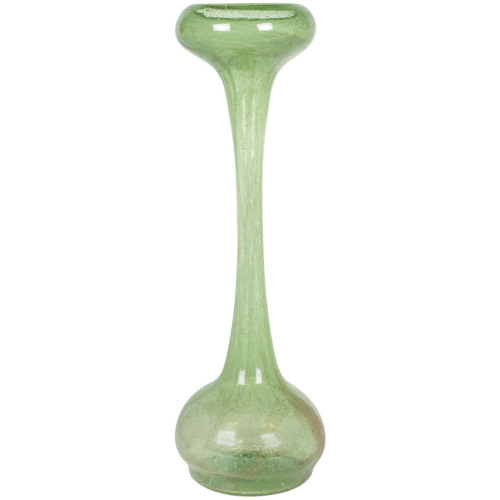
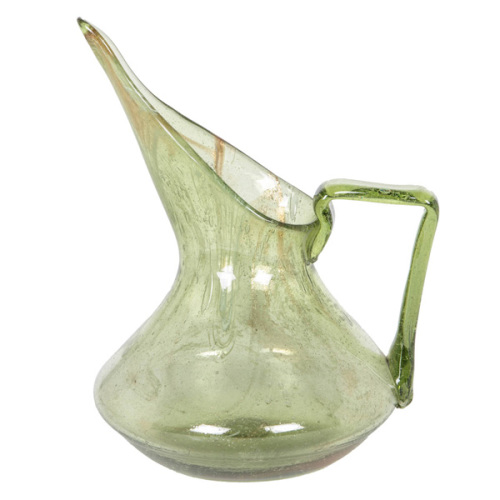
Christopher Dresser / James Couper & Sons Rare Clutha vase c. 1890

CHRISTOPHER DRESSER (1834-1904) UK
JAMES COUPER & SONS Glasgow, Scotland
“Clutha” vase c. 1890
Blown strawberry glass
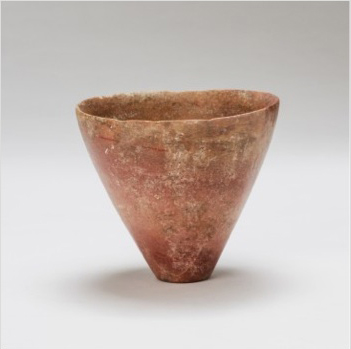
This Dresser form appears as Linthorpe Pottery model no. 114.
Illustrated: Truth, Beauty, Power: Dr. Christopher Dresser 1834-1904,exhib. cat. Historical Design, Inc. (New York, 1998) p. 70.
Rare model.
H: 5 1/8” x W: 6”
Christopher Dresser / James Couper & Sons Rare Clutha vase c. 1890
CHRISTOPHER DRESSER (1834-1904) UK
JAMES DIXON & SONS Sheffield, England
Teaset 1880
Sterling silver
Marks: JD&S, Chr. Dresser (facsimile signature), 2272,
Sheffield assay marks for 1880 (“P” in an octagonal rectangle), Reg. mark for November 25, 1880
Illustrated: J. Dixon & Sons’ 1885 catalogue, p. 96.
Teapot illustrated: Christopher Dresser, by Widar Halén (Oxford: Phaidon, 1990), illus. 204, p. 181.
Teaset illustrated: Truth, Beauty, Power: Dr. Christopher Dresser 1834-1904, exhib. cat. Historical Design, Inc. (New York, 1998) p. 30/31.
Teapot: H: 4” x W: 7 ¼” ; Sugar bowl: H: 2 3/4” ; Creamer: H: 3 1/8”
Plated teapot in the permanent collection of the British Museum, London. Extremely rare model.
CHRISTOPHER DRESSER (1834-1904) UK
HUKIN & HEATH Birmingham, England
Spoon warmer c. 1881
Silver-plate with ebony handle
Made by Hukin & Heath, Birmingham
Marks: H&H, 2693
Illustrated: Truth, Beauty, Power: Dr. Christopher Dresser 1834-1904, exhib. cat. Historical Design, Inc. (New York, 1998) p. 57.
H: 5 1/4” x W: 6 1/2”
Very rare model.
CHRISTOPHER DRESSER (1834-1904) UK
OLD HALL EARTHENWARE CO. (1861-1886) Staffordshire, UK
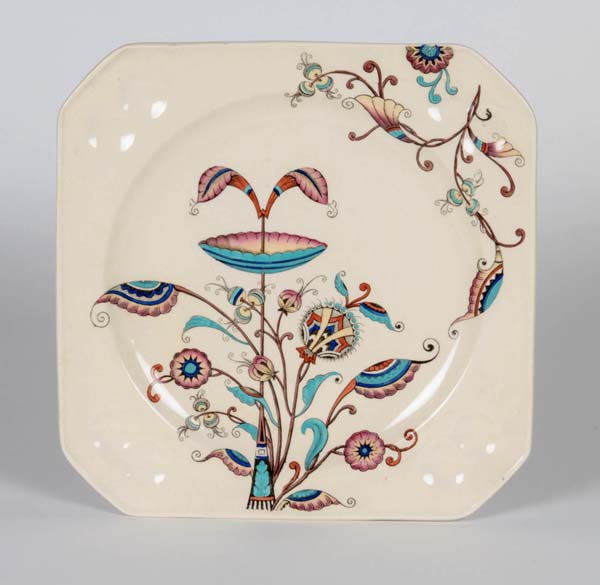
“Persia Pattern” dinner plate c. 1861-1886
Overall cream gloss glazed octagonal-shaped earthenware dinner plate from the “Persian” pattern with transfer-printed and over-glazed ornate foliate motif; each corner contains two shallow indentations for condiment use.
Marks: Old Hall and Persia Marks
W: 9 15/16″
The identical plate in the “Persia Pattern” can be found in the collection of the Wolfsonian. A soup plate in the identical “Persia Pattern” can be found in the collection of the Brooklyn Museum.
FLAVIO POLI (1900-1984) Italy
SEGUSO VETRI D’ARTE Italy
Vase c. 1950’s
Blue and clear Murano glass
H: 10″ x D: 3″ x W: 4 1/2″
Price: $1,850
Designer, businessman, ceramic artist. Born in Chioggia, he attended the Istituto d’Arte di Venezia and began work as a designer in ceramics. in 1929 he switched to glass and for Libero Vitali’s I.V.A.M. he designed animals, splendid Novecento-style nude figures in massiccio glass, as well as bowls and urns with figures resting on the inside, on lids or as handles. He subsequently collaborated with the Compagnia di Venezia e Murano, with the furnace of Mario and Lino Nason and with the engraver Gino Francesconi. in 1934 he accepted the artistic direction of Barovier, Seguso & Ferro, later to become Seguso Vetri d’Arte, and became partner three years later. Together with the master of the principal team Archimede Seguso, Poli was the author of grandiose lighting installations, of corroded vessels, of sculptures in bulicante glass, of animals in massiccio glass shaped while hot, productions which represented a milestone in the development of Murano glass. At the height of his artistic maturity, in the years between 1950 and 1960 he designed a series of sommerso glass pieces in a Nordic style, essential forms and sharp cold colors, which were awarded prestigious prizes (Compasso d’Oro). After leaving Seguso in 1963, between 1964 and 1966 he organized the artistic glass division at the Societˆ Veneziana di Conterie e Cristallerie.