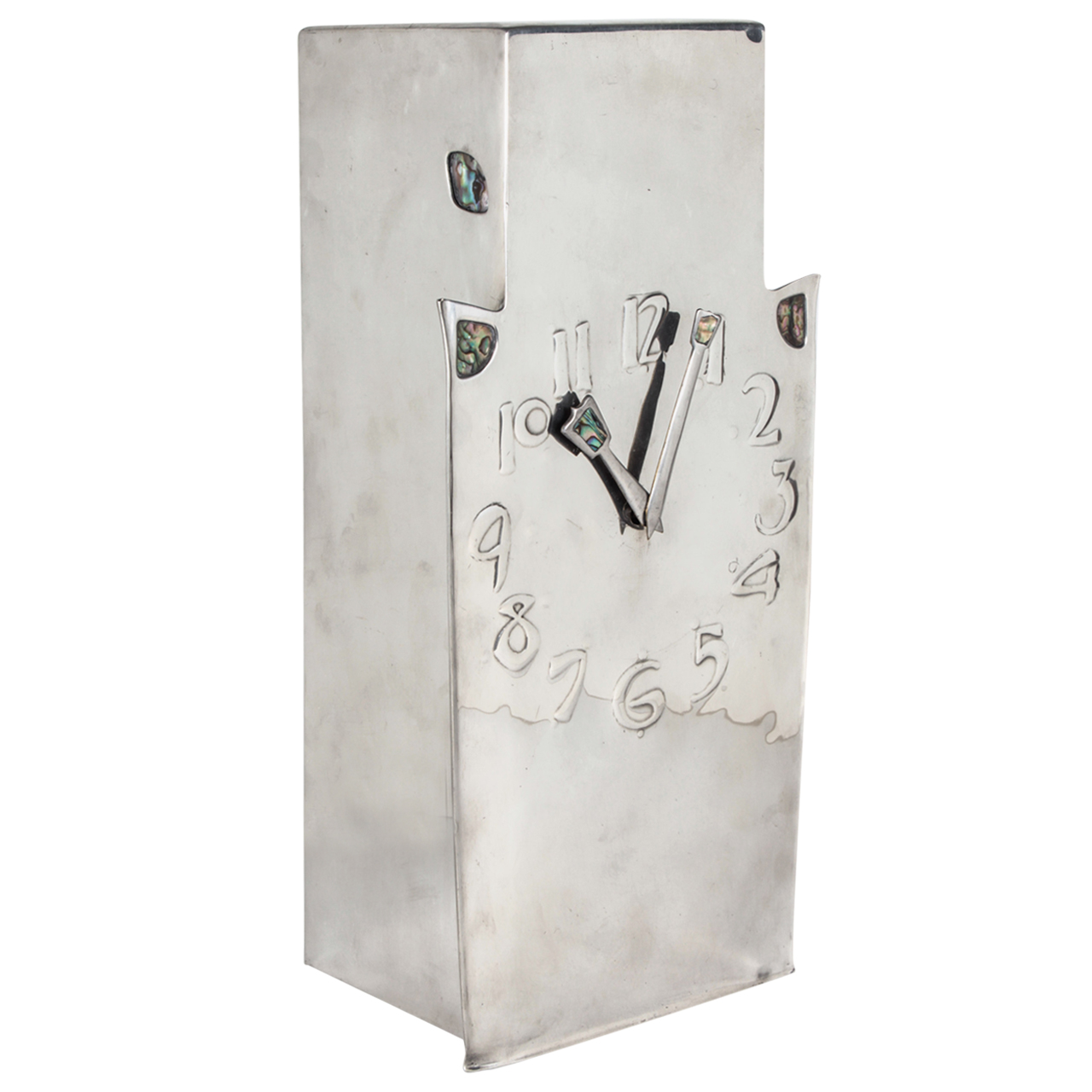
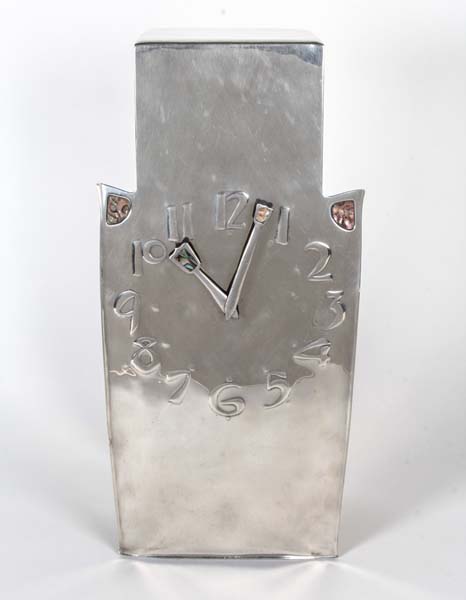
Archibald Knox / Liberty & Co. Important and Rare Tudric Clock 1902
More Information
Archibald Knox / Liberty & Co. Important and Rare Tudric Clock 1902
ARCHIBALD KNOX (1864-1933) UK
LIBERTY & CO. London
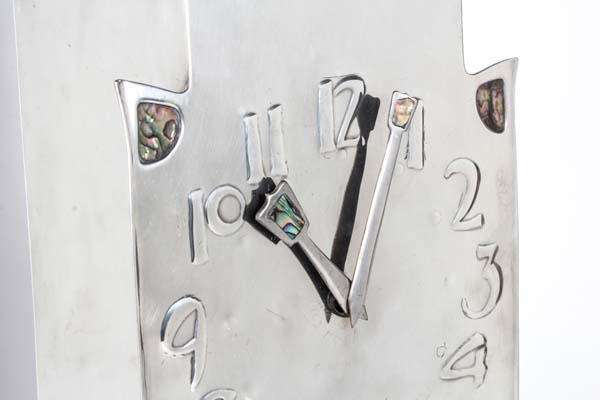
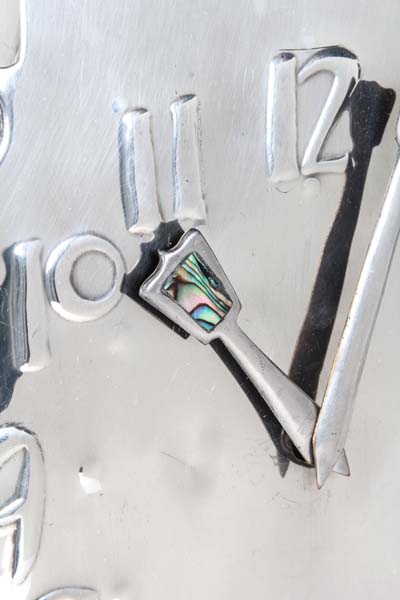
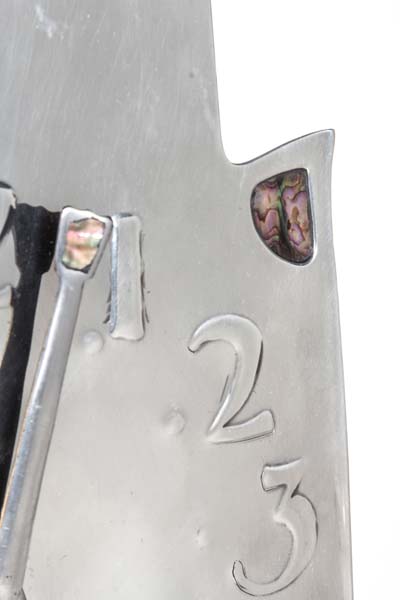
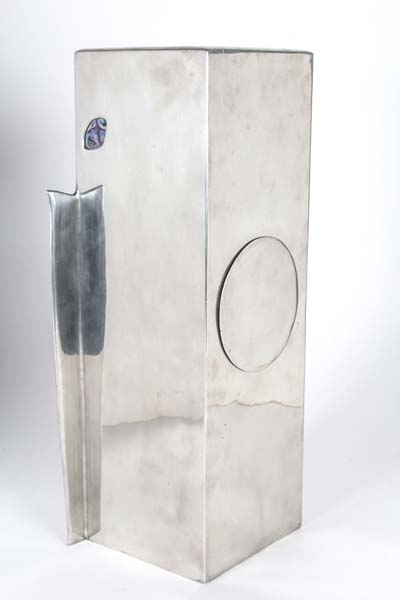
Extremely rare and important grand clock by Archibald Knox for Liberty & Co. This is the largest of all of the Tudric models designed and is inset with abalone shell on the sides, the front corners and on the hands of the clock.
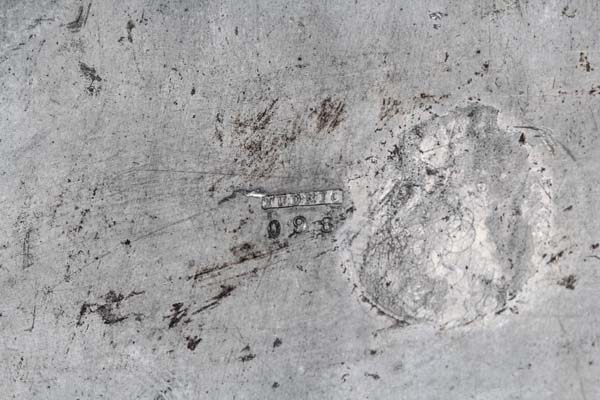
Marks: TUDRIC, 098
Illustrated: The Designs of Archibald Knox for Liberty & Co., A..J. Tilbrook (London: Ornament Press Ltd., 1976) pg. 88; The Liberty Style, (Japan: Hida Takayama Museum of Arts, 1999) fig. 168, p 114; Archibald Knox, ed. by Stephen A. Martin (London: Academy Editions, 1995) p. 88.
H: 15″ x W: 7″ x D: 5″
***This is the largest clock designed by Archibald Knox for
Liberty & Co. and one of only three models known.
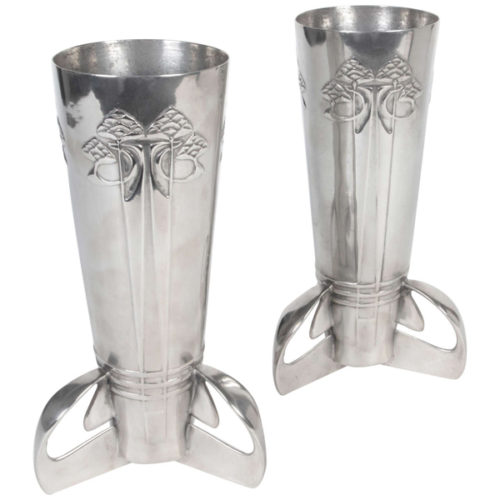
Archibald Knox / Liberty & Co. Pair of tri-footed vases c. 1902-05
ARCHIBALD KNOX (1864-1933) UK
LIBERTY & CO. London
Pair of tri-footed vases c. 1902-05
Pewter with abstract Celtic floral design in bas-relief on tri-footed base
Marks: 6, MADE BY LIBERTY & CO.., ENGLISH PEWTER 0227
Illustrated: Archibald Knox, ed. by Stephen A. Martin (London: Academy Editions, 1995) ; Liberty Design 1874-1914, Barbara Morris (London: Pyramid Books, 1989) p. ; The Designs of Archibald Knox for Liberty & Co., A.J. Tilbrook (London: Ornament Press Ltd., 1976)
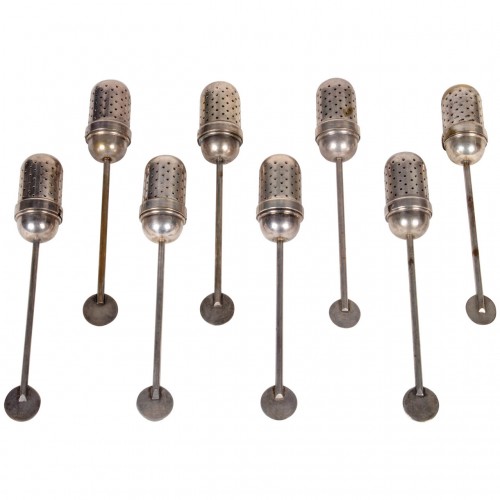
Christian Dell / Bauhaus “Tee-Ei” Tea infusers (Rare set of eight) 1924
CHRISTIAN DELL (1893-1974) Germany
BAUHAUS (1919-1933) Germany
“Tee-Ei” (tea ball) 1924 (rare set of 8)
Silvered brass.
***These are all in fine original, untouched condition.
Illustrated: Christian Dell: Silberschmied und Leuchtengestalter im 20. Jahrhundert, Beate Alice Hofmann, Museum Hanau (Hanau: Heller Druck,1996) illus. 15, p.56; Modernist Design 1880-1940, Alastair Duncan, The Norwest Collection (Woodbridge, Suffolk: The Antique Collectors’ Club, 1998), p. 173; Decorative Arts 1850-1950, Judy Rudoe, (London: British Museum Press, 1991) cover, p. 276; Die Metall Werkstatt am Bauhaus, (Berlin: Bauhaus-Archiv, Museum für Gestaltung, 1992) pp. 140-141 Silver of a New Era, (Rotterdam: Museum Boymans-van Beuningen, 1992) p. 157; cat. no. 140.
Length: 5 1/4″
Price: $9,600
Christian Dell, metal artist and industrial designer, played a formative role in shaping the Bauhaus style. Dell was the master of the metal workshop at the Bauhaus, 1922-25, in Weimar, working closely with László Moholy-Nagy.
Born the son of a locksmith in Offenbach in 1893, he had a great impact as a teacher on the curriculum of the Weimar metal workshop. He had done an apprenticeship as a silversmith in Hanau before and had also attended the drawing academy, followed by a stay at the Weimar School of Applied Art. Henry van de Velde, director of this institution, coined Christian Dell’s early works with his organic-flowing use of forms, a feature that can also be observed on Dell’s later works.
Metal workshop at the Bauhaus in Weimar:
From 1922, the former goldsmith, silversmith and coppersmith workshops of the Weimar phase became a laboratory for design where metal vessels and lamps were made. This is also where the designs for industry, as well as metal furniture, were ultimately created. In 1922, the silversmith Christian Dell took over as master of works. Following Itten’s departure in 1923, the workshop developed in a new direction with the Hungarian Constructivist László Moholy-Nagy. Instead of individual pieces, prototypes were now made for mass production. In order to manufacture the individual models, a production line was established.
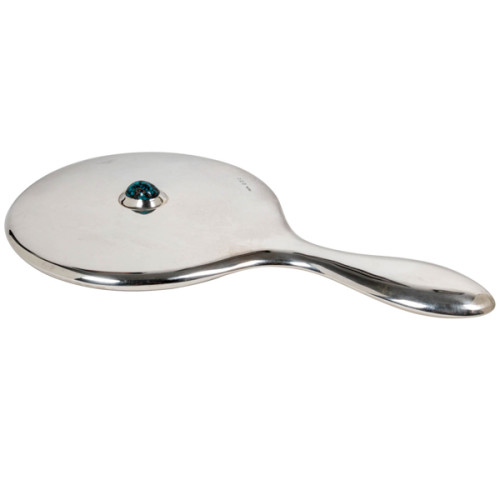
Archibald Knox / Liberty & Co. Sterling hand mirror 1908
ARCHIBALD KNOX (1864-1933) UK
LIBERTY & CO. London, UK
Hand mirror 1908
Sterling with large matrix cabochon turquoise
Marks: L & Co. cipher, Birmingham assay marks for 1908
Similar works with turquoise Illustrated: Archibald Knox, ed. by Stephen A. Martin (London: Academy Editions, 1995) ; Liberty Design 1874-1914, Barbara Morris (London: Pyramid Books, 1989) p. ; The Designs of Archibald Knox for Liberty & Co., A.J. Tilbrook (London: Ornament Press Ltd., 1976)

 @hd_jewels
Reviews
There are no reviews yet, would you like to submit yours?