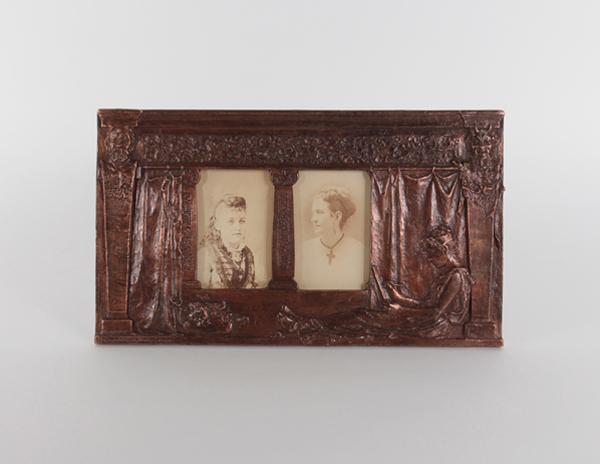
Sir William Reynold Stephens / British Arts & Crafts Bronze / Copper photo frame 1886
More Information
Sir William Reynold Stephens / British Arts & Crafts Bronze / Copper photo frame 1886
SIR WILLIAM REYNOLD STEPHENS (1862–1943) London, UK
BRITISH ARTS & CRAFTS
Photo frame 1886
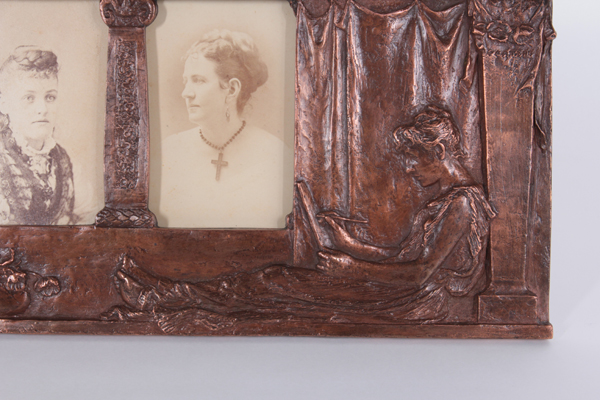
Bronze / copper lost wax casting with an elaborate stage set with a seeded figure and two capitals with mythological telamons, easel back
Marks: 18 December 1886, W Reynold Stephens London (signature and markings in the cast, bottom left front)
H: 6 5/8″ x W: 11 1/2″
Sculptor of decorative works, portraits and monumental figures, goldsmith and painter. Born 8 August 1862 in Detroit, U.S.A., of British parents; his father’s name was Stephens. Educated in England and Germany, then studied at the R.A. Schools and won prizes for sculpture and painting 1887. Assumed the additional name of Reynolds 1890. Exhibited at the R.A. 1886–1942, solely as a sculptor after 1894. Influenced to some extent by Alfred Gilbert and Pre-Raphaelite medievalism. Made many memorials, including those to Sir William Q. Orchardson, R.A., in St Paul’s, and to Archbishop Lord Davidson in the courtyard of Lambeth Palace. In 1904 he designed the chancel screen, reredos and other decorations for the Church of St Mary the Virgin, Great Warley, Essex. F.R.B.S. 1904, P.R.B.S. 1921–33, awarded R.B.S. gold medal 1928; knighted 1931. Died at Tunbridge Wells 23 February 1943.
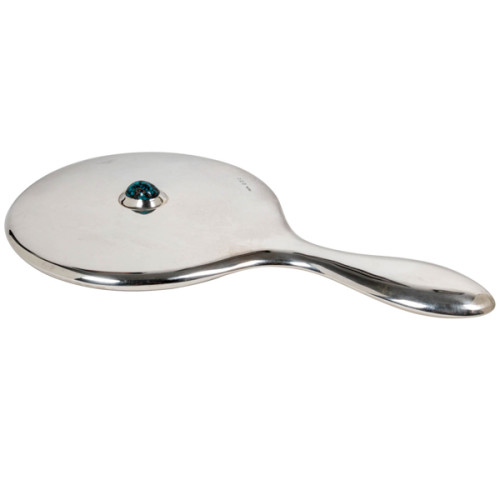
Archibald Knox / Liberty & Co. Sterling hand mirror 1908
ARCHIBALD KNOX (1864-1933) UK
LIBERTY & CO. London, UK
Hand mirror 1908
Sterling with large matrix cabochon turquoise
Marks: L & Co. cipher, Birmingham assay marks for 1908
Similar works with turquoise Illustrated: Archibald Knox, ed. by Stephen A. Martin (London: Academy Editions, 1995) ; Liberty Design 1874-1914, Barbara Morris (London: Pyramid Books, 1989) p. ; The Designs of Archibald Knox for Liberty & Co., A.J. Tilbrook (London: Ornament Press Ltd., 1976)
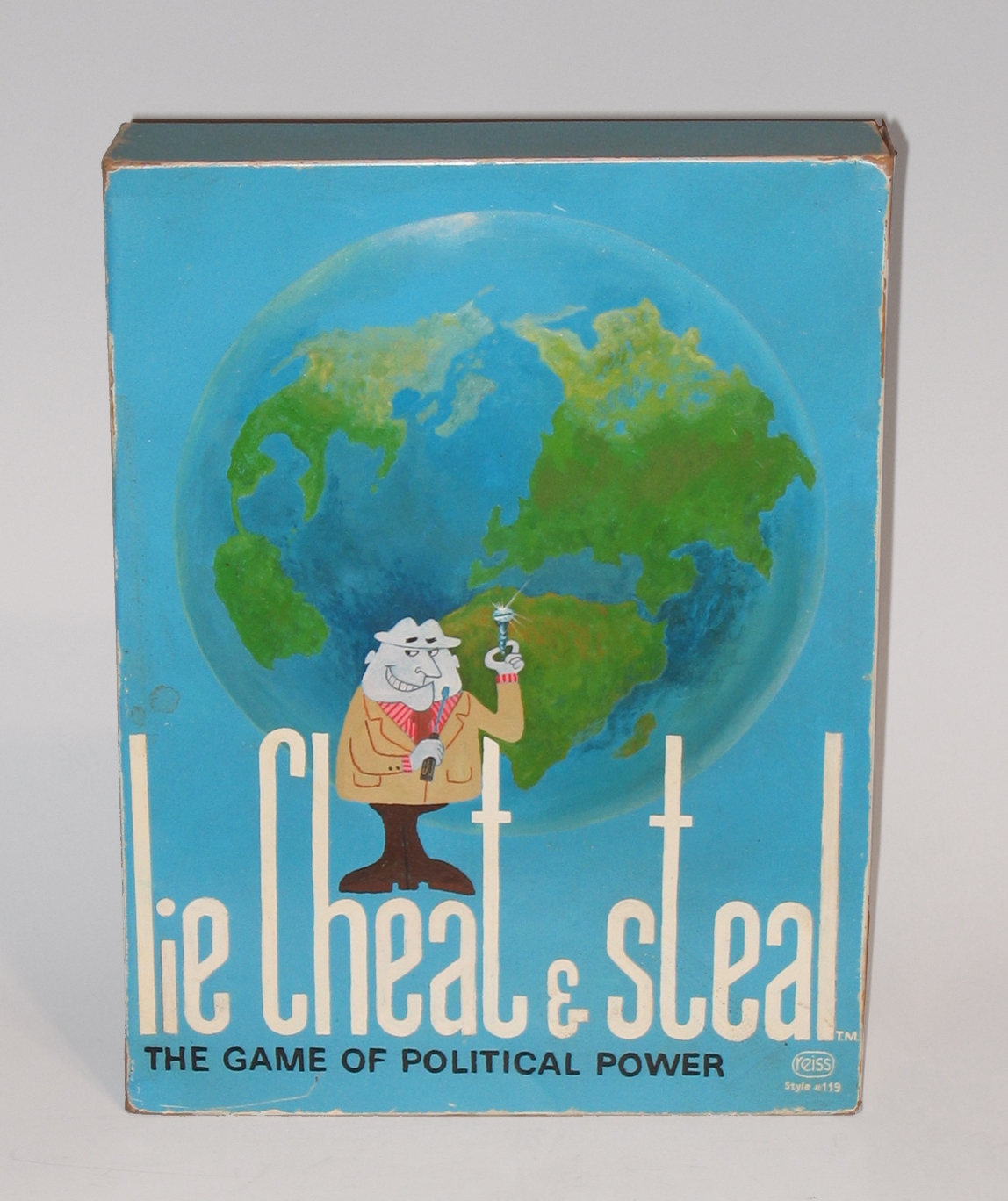
Tim Liddy, Lie Cheat and Steal (1971) The Game of Political Power Oil and enamel on copper, plywood back 2006
TIM LIDDY (b. 1963) Missouri
“Lie Cheat and Steal” (1971) The Game of Political Power 2006
Oil and enamel on copper, plywood back
Signed in script: Tim Liddy “circa 1971” 2006, red circular ring
Provenance: William Shearburn Gallery (St. Louis, MO)
H: 12” x W: 9” x D: 2”
With his recent paintings, Liddy has both reasserted the construct of hyperrealist painting and developed a thoroughly unique advancement of that mode by extending the cultural reality of the indexed original. Based on the illustrated box lids of vintage board games, Liddy has recontextualized a subject, which evokes the underlying rules of life. Painted on copper or steel in the precise dimensions of the original, the metal is then manipulated to demonstrate the exact rips and tears from years of usage and includes trompe-l’oeil renditions of the scotch tape that might be holding the cardboard box together, the assorted stains, or the various graffiti of time. Liddy leaves no possibility of ambivalence, these works speak to a concurrent understanding of their original object identity and to themselves as works of art engaged in historical and psychological dialogue.
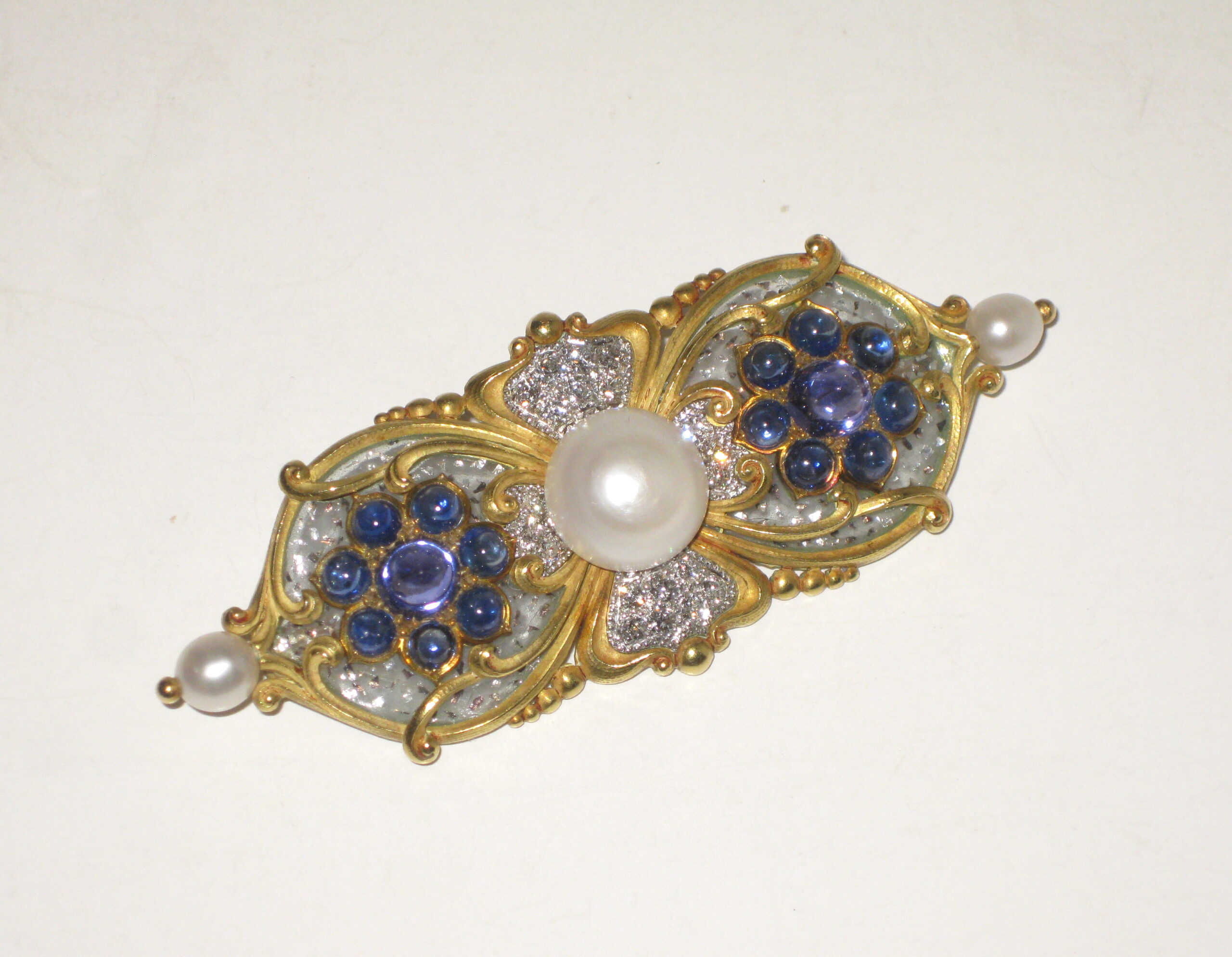
Marcus & Co. Art Nouveau brooch, “Tibula” shaped 18k yellow gold brooch set with three natural pearls, the natural center button pearl approx. 10 mm in diameter (G.I.A. certificate, 3 natural freshwater pearls, weight 24.90 grams, measurement range from 5.46 to 12.26mm), 16 sugarloaf cabochon sapphires, the two large and high dome middle sapphires with a purple hue, 20 pave set round diamonds all surrounded with clear plique-a-jour further trapped with platinum flakes, signed c. 1897





 @hd_jewels