Product Description
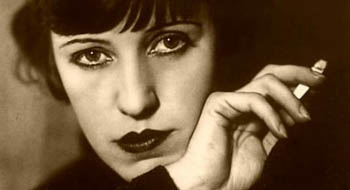
Isobel Steele MacKinnon, Weimar Portrait, Gouache, tempera and oil on paper c.1927 SOLD

ISOBEL STEELE MACKINNON (1896 – 1972) USA
Weimar Portrait c.1927
Gouache, tempera and oil on paper, lemon gold frame.
Signed: MacKinnon
Exhibited: Weimar Portraits, Riviera Landscapes: A Chicagoan in Hofmann’s Studio, 1925–1929, Corbett vs. Dempsey, Chicago, IL, March 28 – May 3, 2008
Illustrated: Weimar Portraits, Riviera Landscapes: A Chicagoan in Hofmann’s Studio, 1925–1929, exhibition catalog, Corbett vs. Dempsey, Chicago, IL, March 28 – May 3, 2008
Painting: H: 16 1/2″ x W: 13″
Frame: H: 20 1/2″ x W: 17 1/4″
SOLD
***This colorful and mesmerizing painting rather closely foreshadows the famous portraiture of the renowned American artist Alice Neel (1900-1984). Isobel Steele MacKinnon’s adventures as an American artist living and working in Europe echo those of many other expatriates of the epoch. MacKinnon and her husband Edgar Rupprecht were, by the time they left Chicago in 1925, both established figures in Chicago’s art world, and especially in Saugatuck, Michigan, where they taught at Ox-Bow Summer School. What the couple encountered in the studio of German artist Hans Hofmann would rock the impressionist foundations of their artwork and transform them into committed modernists. Hofmann’s Munich-based school was a magnet for foreign students after World War I, ever after Hofmann left Germany in the early Thirties. Indeed, over the period of four years (1925 to 1929) during which Steele and Rupprecht worked alongside Hofmann, their fellow students included renowned abstract artist Vaclav Vytlacil and painter Worth Ryder, the artist who would invite Hofmann to teach in the US for the first time in 1930. A small, elegant, realistic profile drawing Rupprecht made of MacKinnon in 1925 makes fascinating contrast with the work she produced while in Europe. In Chicago, her approach had been as conventional as his, but under Hofmann she took to the new ideas with startling ease, absorbing his “push and pull” spatial concept and his deep investigations of the compositional consequences of hot and cold colors. The portraits of German and other expat sitters made at the time have the analytic angularity associated with Hofmann, drawn and painted with a palpable power and sureness. Some resemble expressionists like Oskar Kokoschka or Ludwig Meidner. For instance, the small portrait of a rat-like man with a whiskery mustache or the jutting, harsh jaw of a stern woman with a fur collar, and a rosy-cheeked girl in red (this painting), straight from a German cabaret. More radical than her portraits, MacKinnon’s slashing charcoal gesture drawings of figures are sometimes exceptionally abstract, hauntingly presaging the abstract expressionist women of Willem de Kooning. These works represent an artist in the throes of letting herself loose, shaking off the constrictions of academicism, experimenting with vital energy and displaying an unwavering hand. During their European summers, MacKinnon and Rupprecht traveled with Hofmann. MacKinnon had quickly risen to become his premier student. On Capri and St. Tropez, she painted bright, abstracted landscapes, often based on carefully plotted line drawings. The warm environs often drew out her old impressionist tendencies, but in the most advanced of these works she blocked colors into shapes and patterns that suggest Marsden Hartley, Milton Avery or, in some cases, Jan Matulka. In one drawing, probably from Paris, she has sculpted the trees into architectural forms. After their sojourn, which extended from their studies with Hofmann to several years as active artists in Paris, MacKinnon and Rupprecht returned to Chicago. They were rejuvenated, heads full of new ideas, portfolios brimming with the work they’d done. When WWII was over, Steele began a long and fruitful teaching career at the School of the Art Institute. From this post she introduced many young artists, from Jack Beal to Tom Palazzolo, to Hofmann’s concepts at the same time he was teaching the future abstract expressionists of America from his schools in New York and Provincetown. In recognition of her unwavering interest in issue of space in pictoral composition, MacKinnon’s closest students were known as the “space cadets.” A larger-than-life character, she died in Chicago in 1972 after a protracted battle with Alzheimer’s.
Isobel Steele MacKinnon, Weimar Portrait, Gouache, tempera and oil on paper c.1927 SOLD
You must be logged in to post a comment.
HERBERT BAYER (1900-1985) Austria
Self portrait 1932 (printed later)
Silver gelatin print
Edition: 28/40
Signed: bayer 32 (in ink on bottom right corner)
Provenance: Kennedy Gallery, New York
H: 13 7/16” x W: 9 ½”
Framed size: H: 21 ½” x W: 17 ½”
Price: $16,000
Herbert Bayer (1900 – 1985) was an Austrian graphic designer, painter, photographer, and architect. Bayer apprenticed under the artist Georg Schmidthammer in Linz. Leaving the workshop to study at the Darmstadt Artists’ Colony, he became interested in Walter Gropius’s Bauhaus manifesto. After Bayer had studied for four years at the Bauhaus under such teachers as Wassily Kandinsky and László Moholy-Nagy, Gropius appointed Bayer director of printing and advertising. In the spirit of reductive minimalism, Bayer developed a crisp visual style and adopted use of all-lowercase, sans serif typefaces for most Bauhaus publications. Bayer is one of several typographers of the period including Kurt Schwitters and Jan Tschichold who experimented with the creation of a simplified more phonetic-based alphabet. Bayer designed the 1925 geometric sans-serif typeface, universal, now issued in digital form as Architype Bayer that bears comparison with the stylistically related typeface Architype Schwitters.
In 1928, Bayer left the Bauhaus to become art director of Vogue magazine’s Berlin office. He remained in Germany far later than most other progressives. In 1936 he designed a brochure for the Deutschland Ausstellung, an exhibition for tourists in Berlin during the 1936 Olympic Games. In 1938 he left Germany and settled in New York City where he had a long and distinguished career in nearly every aspect of the graphic arts. In 1946 Bayer relocated again. Hired by industrialist and visionary Walter Paepcke, Bayer moved to Aspen, Colorado as Paepcke promoted skiing as a popular sport. Bayer’s architectural work in the town included co-designing the Aspen Institute and restoring the Wheeler Opera House, but his production of promotional posters identified skiing with wit, excitement, and glamour. Bayer would remain associated with Aspen until the mid-1970s. Bayer gave the Denver Art Museum a collection of around 8,000 of his works. In 1959, he designed his “fonetik alfabet”, a phonetic alphabet, for English. It was sans-serif and without capital letters. He had special symbols for the endings -ed, -ory, -ing, and -ion, as well as the digraphs “ch”, “sh”, and “ng”. An underline indicated the doubling of a consonant in traditional orthography.
Reviews
There are no reviews yet, would you like to submit yours?