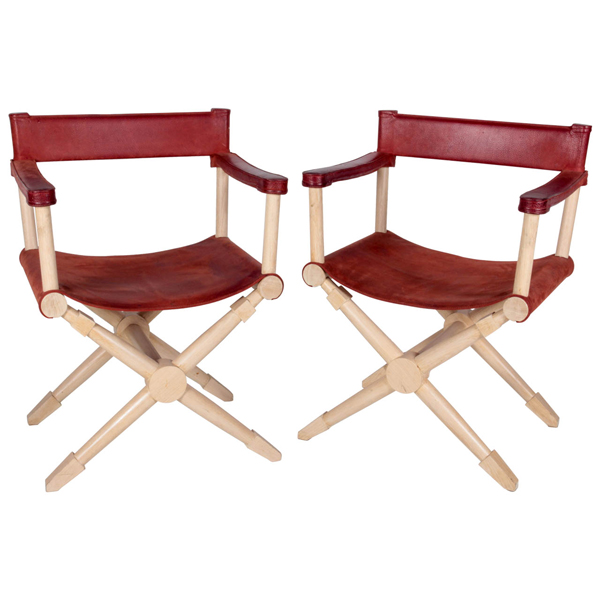
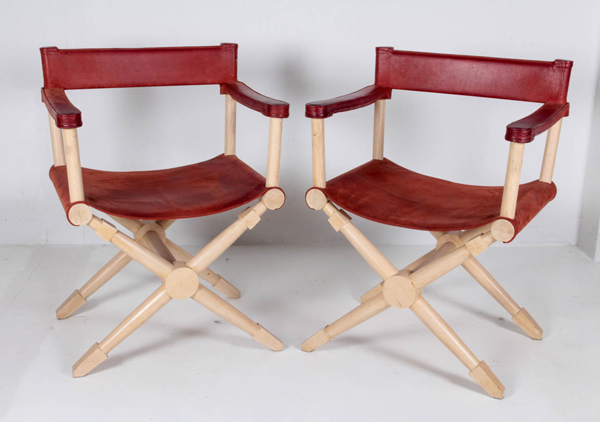
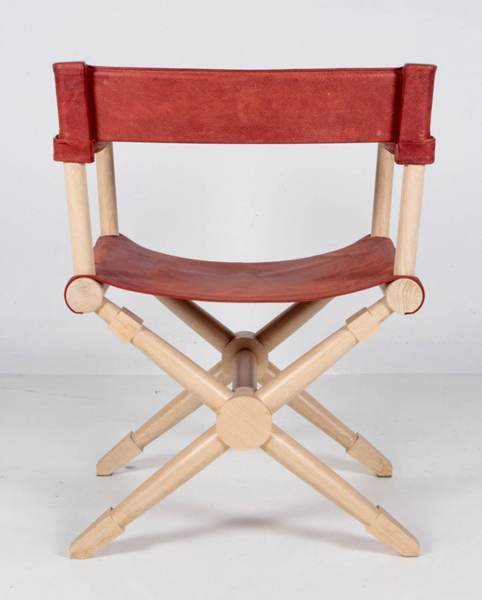
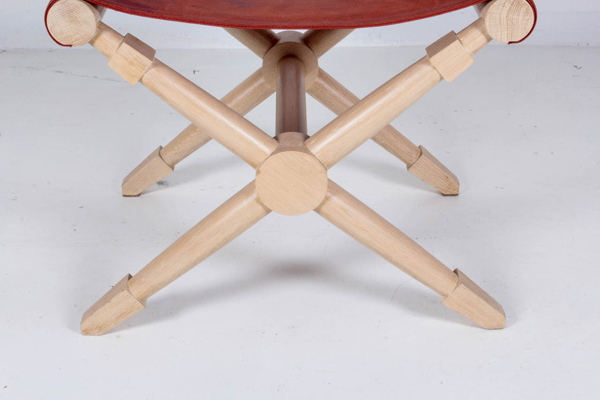
In the style of Jean-Michel Frank / Hermès Pair of French Art Deco "Rodo" chairs 20th Century
More Information
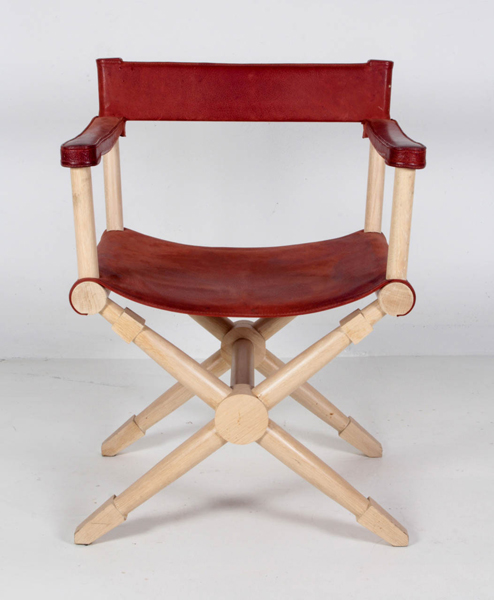
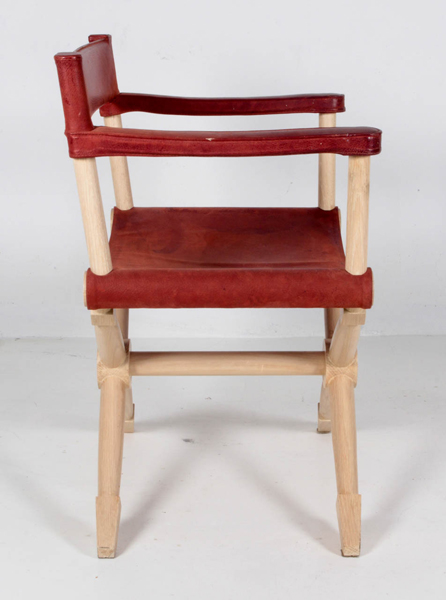
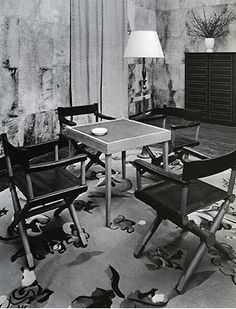
In the style of Jean-Michel Frank / Hermès Pair of French Art Deco “Rodo” chairs 20th Century
In the Style of JEAN-MICHEL FRANK (1895 – 1941) France
Pair of “Rodo” chairs 20th Century
Light ceruse oak with red Hermès sueded leather
For more information see: Jean-Michel Frank: The Strange and Subtle Luxury of the Parisian Haute-Monde in the Art Deco period, P.E. Martin-Vivier (Paris, 2006)
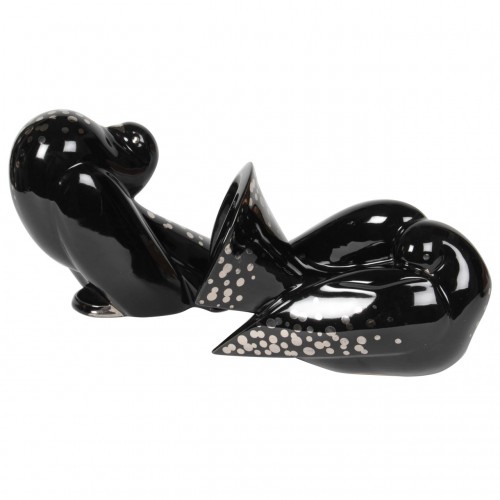
Jan et Joel Martel / Primavera French Art Deco Courting Fantail Pigeon Sculptures c.1930
JAN ET JOËL MARTEL (1896-1966) France
PRIMAVERA Paris
Pair of courting Faintail Pigeon Sculptures c.1925-30
Black glazed earthenware with silver / platinum decorative dot motif.
Marks: PRIMAVERA FRANCE, 12684
For related model: The Art Deco Style in Household Objects, Architecture, Scupture, Graphics, Jewelry, Theodore Menten (New York: Dover, 1972), p. 179.
For more information see: Joël et Jan Martel: sculpteurs 1896-1966, Christophe Vital, et al. (Paris: Gallimard / Electa, 1996), pp. 127-9
H: 8 1/16” x L: 9” x D at tail: 5 1/4”
H: 7 1/8” x L: 10” x D at tail: 5 1/4”
Jan & Joël Martel (the Martel Brothers/Twins, born in Nantes on 5 April 1896, both died in 1966)
The twin Martel sculptors were among the founding members of Union des Artistes Modernes, and their original works include ornamental sculptures, statues, monuments and fountains displaying characteristics typical of the Art Déco and Cubist periods. The brothers took part in a number of Paris exhibitions including the Salon des Indépendants, Salon d’Automne, Salon des Tuileries and the Exposition des Arts Décoratifs in 1925. In 1932, they created the Claude Debussy monument which sits on the boulevard Lannes in Paris. Between 1924-1926, Robert Mallet-Stevens designed a studio for the Martel twins at 10 Rue Mallet-Stevens in Paris’ 16th Arrondissement.
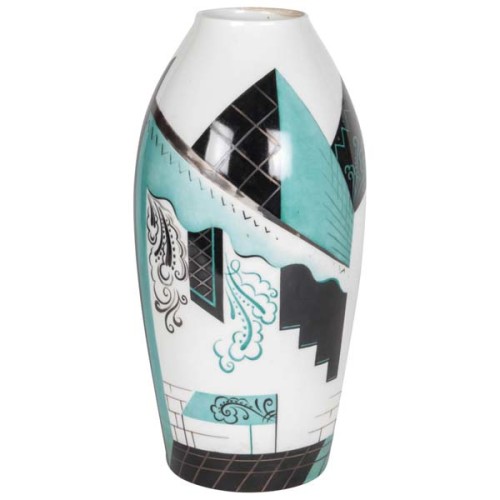
Lucien Lelong / French Art Deco Handpainted Porcelain Vase circa 1935
LUCIEN LELONG (1889 – 1958) Paris, France
“Metaphysical” vase c. 1935
Hand painted and glazed porcelain with aqua, black and silver tones.
Marks: LL monogram, AB
H: 13 3/4″
Lucien Lelong was born in Paris, France on October 11, 1889. Lucien learned his trade from his father, Arthur Lelong, who owned a textile factory in 1896, and his mother Eleanore, a dressmaker. He discovered his vocation in the family business and as soon as World War I was over, he expanded the family business by creating his own fashion house in the late 1918.
He became immediately famous due to the neat tailoring of his designs and his skill in choosing and manufacturing fabrics. He did not actually create his own designs but hired the most prominent designers of the moment to design his collections such as Christian Dior, Pierre Balmain and Hubert Givenchy. Lelong was one of the first designers to diversify into lingerie and stockings. He introduced a line of ready-to-wear in 1934 which he labeled “editions.” In 1939, Lelong’s collections showed tightly waisted, full skirts; a style which became the “new Look” in Dior’s collection in 1947. After the war, in 1947, Lelong showed pencil-slim dresses; pleated, tiered, harem hemlines; and suits with wasp waists, cutaway fronts and square shoulders.
After a trip to the United States where he learned everything pertaining to the working methods in the mass production of clothes, he returns to France and creates a line of pret-a-porter (ready-to-wear) collection, branded “LL” Edition. Lelong used his double” LL” logo to influence his designs as well as refining the packaging design of his perfumes and cosmetics. He was a master of the use of knits and bias to shape the body in the most complementary way. His house’s trademark was their unique ability in designing with fur.
He was married to Natalie Paley who was the daughter of the Grand Duke Paul of Russia that assisted him with his business. Lelong was an active member of high society; socialized with the women he dressed, and did not miss the opportunity to capitalize on his name. From 1937 until the end of the war in 1948, Lelong was President of the Chambre Syndicale de la Couture Parisienne, in which role he was able to fight and hinder the transfer of the Parisian fashion houses to Berlin during the German occupation. It was largely due to his efforts that ninety-two houses stayed opened during the war.
Poor health caused the end of his career; Lelong retired in 1952, and died in 1958 of a heart attack.
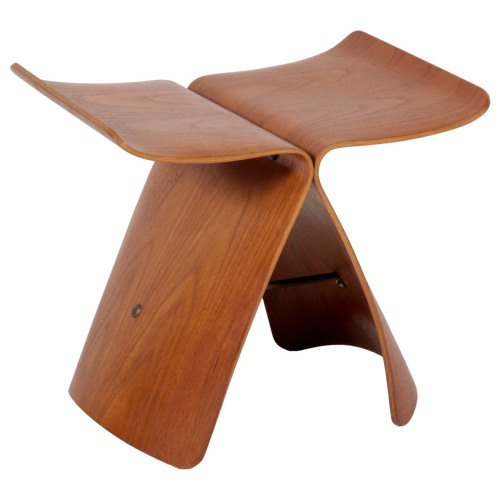
Sori Yanagi / Tendo Co. Ltd. / Japanese Crafts “Butterfly” Stool c.1956
Sori Yanagi (1915-2012), Japan
Tendo Co. Ltd., Japan
Butterfly stool, 1956.
Bleached rosewood veneer on plywood with brass.
H: 15” x W: 16 ½” x D: 12”
Price: $4,900
This model can be found in the collections of the Museum of Modern Art and the Metropolitan Museum in New York.
The Japanese designer Sori Yanagi is best known for his 1956 Butterfly Stool. It is both elegant and utterly simple: two curved pieces of molded plywood are held together through compression and tension by a single brass rod. The stool’s graceful shape recalls a butterfly’s wings, and has also been compared to the form of torii, the traditional Shinto shrine gates. He loved traditional Japanese crafts and was dedicated to the modernist principles of simplicity, practicality and tactility that are associated with Alvar Aalto, Charles and Ray Eames, and Le Corbusier.”
Yanagi, who studied architecture and art at Tokyo’s Academy of Fine Art, was inspired by the work of Le Corbusier and by the designer Charlotte Perriand, with whom he worked in the early 1940s, while she was in Tokyo as the arts and crafts adviser to the Japanese Board of Trade. But perhaps the most indelible influence on Yanagi was that of his father, Soetsu Yanagi, who led the “mingei” movement, which celebrated Japanese folk craft and the beauty of everyday objects, and who founded the Nihon Mingeikan (or Japanese Folk Crafts Museum) in Tokyo. Yanagi fils, who was named director of the museum in 1977, succinctly described his design aesthetic in a 2002 interview in The Japan Times: “I try to create things that we human beings feel are useful in our daily lives. During the process, beauty is born naturally.” Throughout his life, Sori Yanagi was inspired by what he called “anonymous design” — he cited the Jeep and a baseball glove as two examples — and he in turn inspired younger designers, like Naoto Fukasawa, Tom Dixon and Jasper Morrison.


 @hd_jewels