Product Description
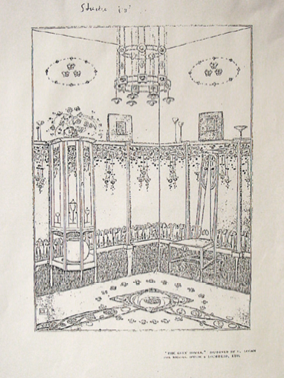
George Logan / Glasgow Style / British Arts & Crafts “The Grey Bower” chair c. 1905

George Logan (1866–1939) Glasgow, Scotland
Wylie & Lochhead, Ltd. Glasgow
British Arts & Crafts Movement/Glasgow Style
“The Grey Bower” chair, circa 1905.
Stained beech and contemporary silk upholstery.
Illustrated in a published drawing “The Grey Bower” by George Logan for Mssrs. Wylie & Lochhead in an article entitled ” A Color Symphony”: The Studio Magazine 1905
H: 53 3/8” x W: 18” x D: 13 3/4”
The Glasgow School was a circle of influential modern artists and designers who began to coalesce in Glasgow, Scotland in the 1870s, and flourished from the 1890s to sometime around 1910. Wylie and Lochhead’s output in the Glasgow Style, which was showcased at the 1901 Glasgow International Exhibition was designed by three young craftsmen – Ernest Archibald Taylor (1874–1951), John Ednie (1876–1934) and George Logan (1866–1939).
George Logan / Glasgow Style / British Arts & Crafts “The Grey Bower” chair c. 1905
You must be logged in to post a comment.
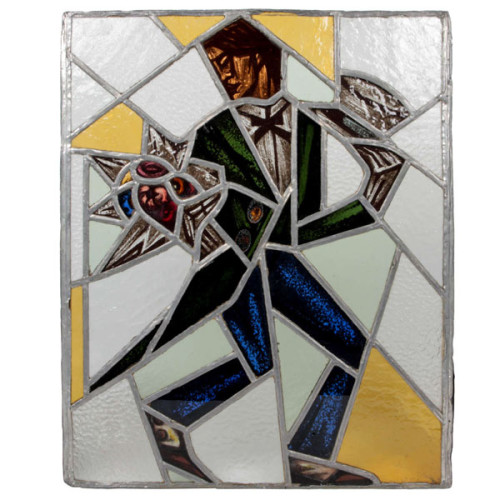
Peter Canty received his BA in art from the Chouniard Art Institute, Los Angeles (now California Institute of the Arts) and an MA from the University of California, Santa Cruz in 1969. Heavily influenced by the Post-Impressionist masters Van Gogh, Gauguin and Cezanne, in his own he words he describes his interest in landscapes, believing they are, “the best vehicle for motion, force, and color dynamics.” Although his work reference realistic subjects, Canty’s imagery is drawn strictly from his own imagination.
TIM LIDDY (b. 1963) Missouri
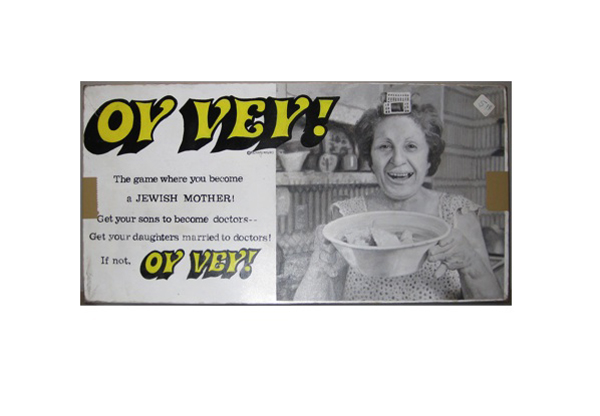
“Lie Cheat and Steal” (1971) The Game of Political Power 2006
Oil and enamel on copper, plywood back
Signed in script: Tim Liddy “circa 1971” 2006, red circular ring
Provenance: William Shearburn Gallery (St. Louis, MO)
H: 12” x W: 9” x D: 2”
With his recent paintings, Liddy has both reasserted the construct of hyperrealist painting and developed a thoroughly unique advancement of that mode by extending the cultural reality of the indexed original. Based on the illustrated box lids of vintage board games, Liddy has recontextualized a subject, which evokes the underlying rules of life. Painted on copper or steel in the precise dimensions of the original, the metal is then manipulated to demonstrate the exact rips and tears from years of usage and includes trompe-l’oeil renditions of the scotch tape that might be holding the cardboard box together, the assorted stains, or the various graffiti of time. Liddy leaves no possibility of ambivalence, these works speak to a concurrent understanding of their original object identity and to themselves as works of art engaged in historical and psychological dialogue.
ROYCROFT COPPER SHOP East Aurora, N.Y.
Pair of candlesticks c. 1915.
Hand wrought and textured copper, silver-plated.
Marks: impressed R, in orb with cross, ROYCROFT
For more information see: The American Arts & Crafts Movement in Western New York 1900-1928, Bruce A. Austin (Rochester Institute of Technology, 1992); Arts & Crafts Movement in New York State 1890’s – 1920’s, Coy Ludwig (Hamilton, N.Y.: Gallery Association of New York, 1983).
H: 6″ x W: 6 7/8″ x D: 2 5/8″
Reviews
There are no reviews yet, would you like to submit yours?