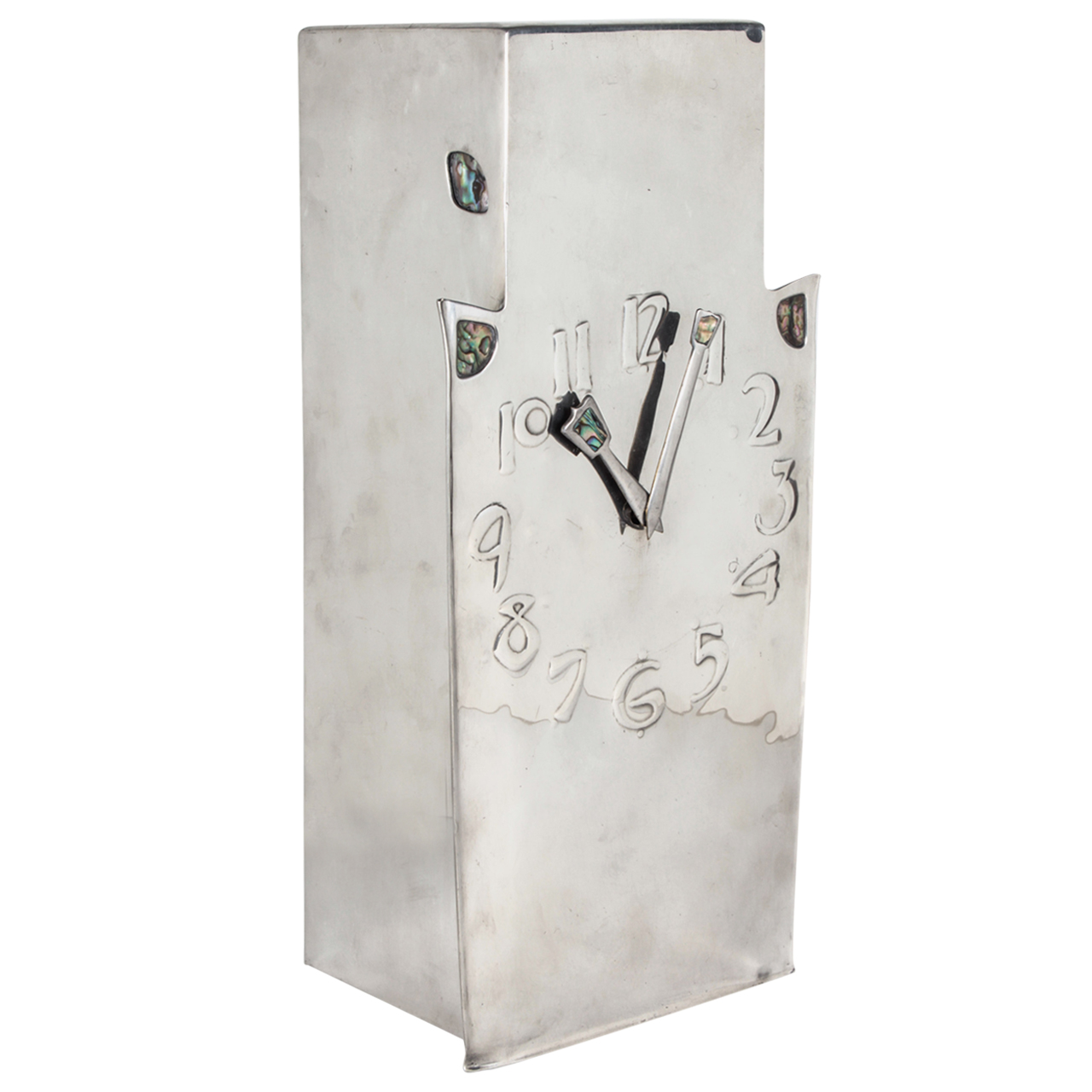
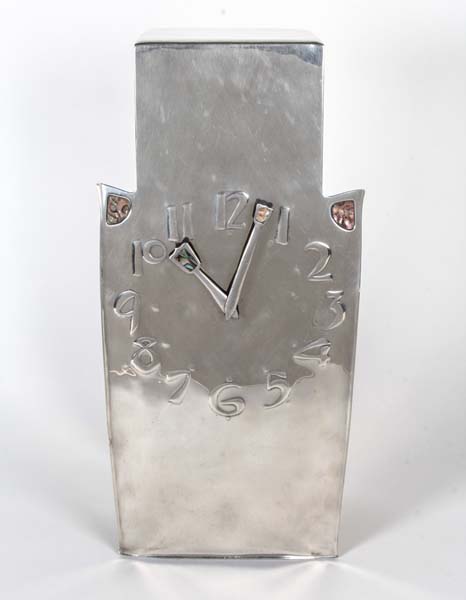
Archibald Knox / Liberty & Co. Important and Rare Tudric Clock 1902
More Information
Archibald Knox / Liberty & Co. Important and Rare Tudric Clock 1902
ARCHIBALD KNOX (1864-1933) UK
LIBERTY & CO. London
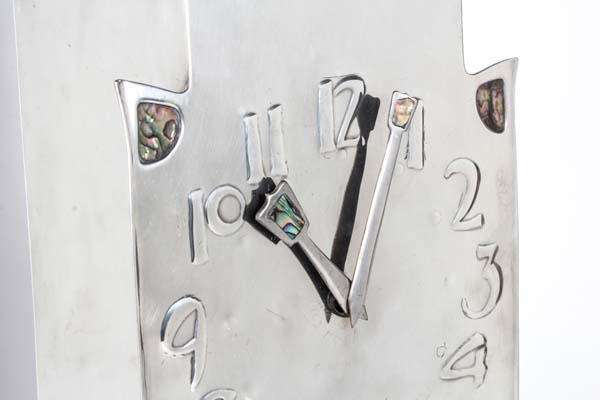
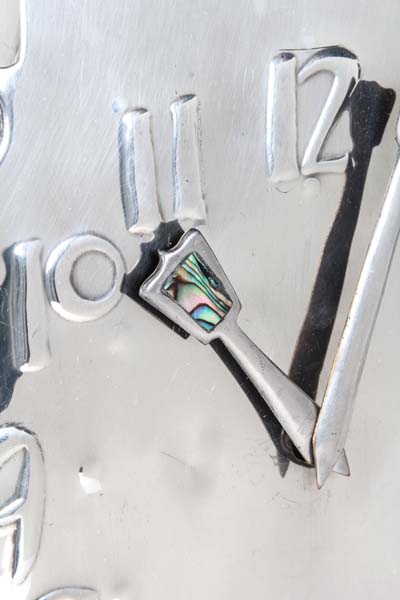
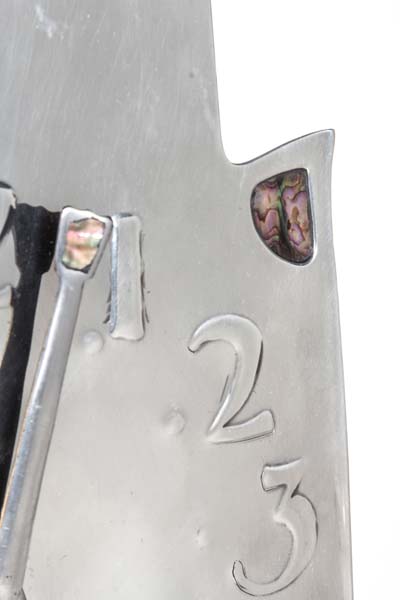
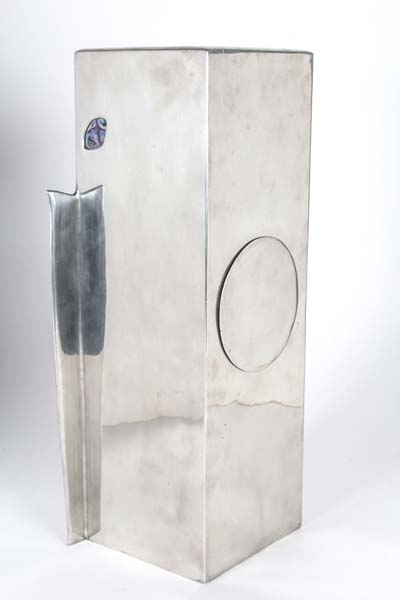
Extremely rare and important grand clock by Archibald Knox for Liberty & Co. This is the largest of all of the Tudric models designed and is inset with abalone shell on the sides, the front corners and on the hands of the clock.
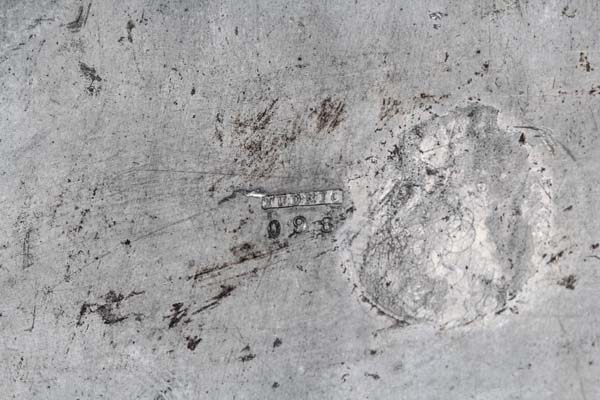
Marks: TUDRIC, 098
Illustrated: The Designs of Archibald Knox for Liberty & Co., A..J. Tilbrook (London: Ornament Press Ltd., 1976) pg. 88; The Liberty Style, (Japan: Hida Takayama Museum of Arts, 1999) fig. 168, p 114; Archibald Knox, ed. by Stephen A. Martin (London: Academy Editions, 1995) p. 88.
H: 15″ x W: 7″ x D: 5″
***This is the largest clock designed by Archibald Knox for
Liberty & Co. and one of only three models known.
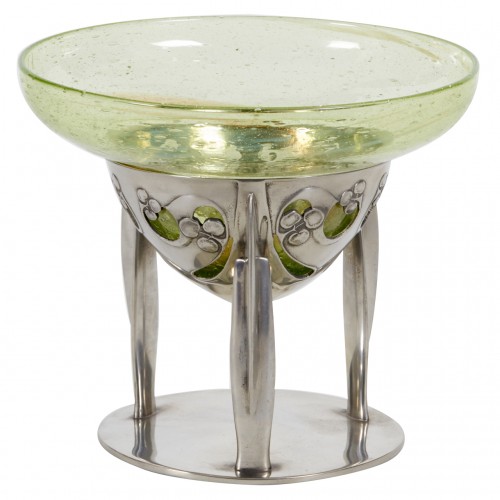
Archibald Knox / Liberty & Co. Clutha bowl on tri-leg Tudric stand c. 1902
ARCHIBALD KNOX (1864-1933) UK
LIBERTY & CO. London
JAMES COUPER & SONS Glasgow
Clutha bowl on tri-leg stand c. 1902
Clutha glass with inclusions of aventurine streaks and bubbles, polished tri-leg Tudric pewter stand.
Marks: Tudric, 0276
Illustrated: Liberty’s 1875-1975, An Exhibition to mark the Firm’s Centenary (London: Victoria & Albert Museum, 1975), p. 89, number D 250 A; The Designs of Archibald Knox for Liberty & Co., A.J. Tilbrook (London: Ornament Press Ltd., 1976), p. 114; Liberty Style, The Classic Years: 1898-1910, Mervyn Levy (New York: Rizzoli, 1986), p. 31; Archibald Knox, ed. by Stephen A. Martin (London: Academy Editions, 1995), p. 96.
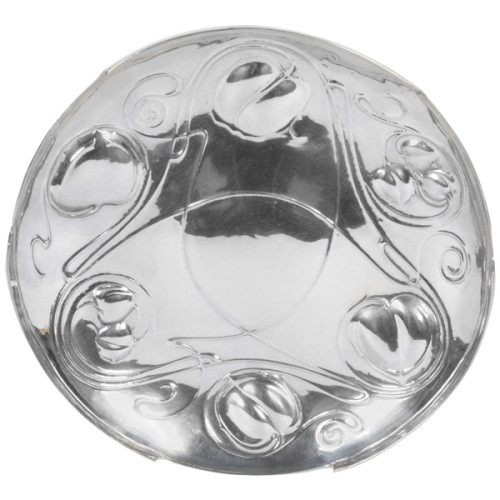
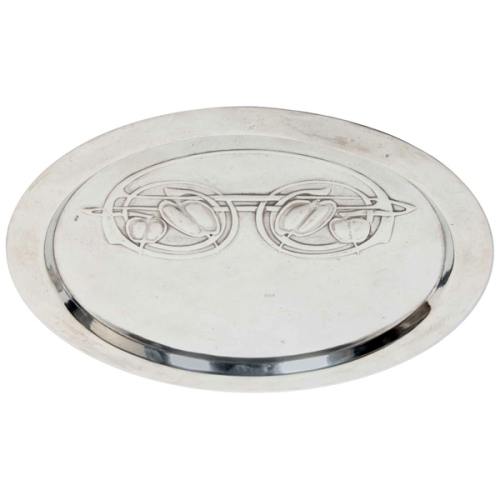
Archibald Knox / Liberty & Co. Tudric charger / tray c. 1902-05
ARCHIBALD KNOX (1864-1933) UK
LIBERTY & CO. London
Tudric charger c. 1902-05
Pewter with abstract Celtic design in bas-relief
Marks: TUDRIC, 0163, Made in England
Illustrated: Archibald Knox, ed. Stephen A. Martin (London: Artmedia Press, 2001) p 203
Drawing illustrated: Archibald Knox, ed. by Stephen A. Martin (London: Academy Editions, 1995) p 137;
D: 9 9/10”
This British avant-garde charger demonstrates the profound influence of Celtic ornament upon Knox and his highly individual and sophisticated use of these ancient graphic devices of interlocking loops and tendrils.


 @hd_jewels
Reviews
There are no reviews yet, would you like to submit yours?