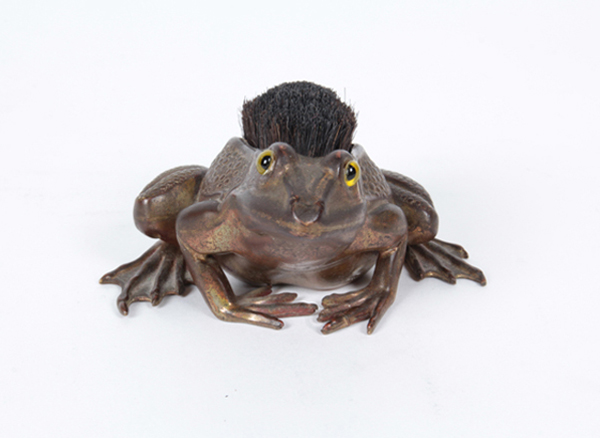
Franz Xaver Bergman Art Nouveau "Frog" pen wipe c. 1905-1910
More Information
Franz Xaver Bergman Art Nouveau “Frog” pen wipe c. 1905-1910
FRANZ XAVER BERGMAN (1861-1936) Austria
“Frog” pen wipe c. 1905-1910
Cold-painted bronze, boar’s hair bristles
For information see: Art Bronzes, Mich. Forrest (Schiffer, 1988).
L: 3 1/2″ x W: 3 1/2″ x H: 2″
Price: $1,675
A well-known animalier at the turn-of-the century, the sculptor Franz Bergman created a number of small bronzes in a variety of subject matter. Other figurative works were informed by the Jugendstil / Art Nouveau style and the European taste for the exotic as is found in his figures of rug merchants and camels. His animal sculptures, however, capture the Viennese tradition of naturalistic bronzes. The quality of the bronze casting shows tremendous detail, which was carefully brought out through the applied patination process known as cold painting.
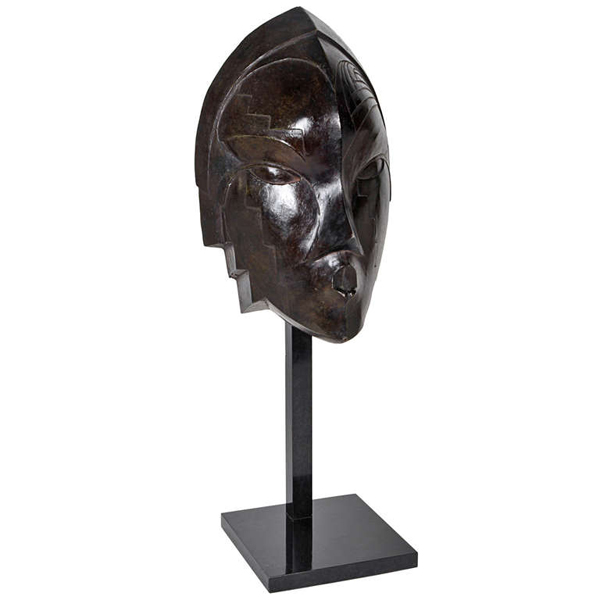
Andree Flamant-Ducany-Gide / Valsuani Foundry French Cubist bronze “African” mask sculpture 20th Century
ANDREE FLAMANT-DUCANY-GIDE (1882-1970) France
VALSUANI FONDEUR (1899-1981) Paris, France
Cubist mask sculpture 20th Century
Cast bronze with rich brown-black patina (possibly cast at a later date by the Valsuani Foundry)
Marks: G. Flamant, 2/8 C. Valsuani Cire Perdue (signed on chin)
H: 11” x W: 7” x D: 5 ½”;
On stand: H: 18 ½”
Price: $35,000
ANDREE FLAMANT-DUCANY-GIDE
Flamant-Gide was born in Nimes, France on January 2nd, 1892 and died on March 28th 1970. She was both a painter and sculptor and exhibited regularly at the Salon des Artists Francais beginning in 1923. She sculpted in an angular Cubist style influenced by African Art and was a fellow artist of Joseph Csaky, Gustave Miklos, Jacques Lipchitz and Henri Laurens who were considered the leading Art Deco sculptors in Paris during the 1920’s.
CUBISM
Cubism drew its influence from: Cezanne’s structural analysis in his oil landscapes, e.g. ‘La Montagne Sainte Victorie’ c.1887; Gauguin’s figurative landscapes, e.g. ‘Haymaking’ 1889; and African tribal Art such as Gabon masks. European artists were greatly influenced by African and Oceanic Art during the late 1890s and early 1900s. African sculpture, with its bold shapes and lines, had a great impact on the development of Cubism. Maurice de Vlaminck became a keen admirer and collector of African masks after seeing them in a Paris anthropological museum. He purchased similar masks and his excitement for these works displaying bold primitive expressions and simplistic design filtered through to Matisse, Derain, Gris and Picasso, who all became collectors as well. By the 1920s African art exhibitions were common in Paris and other cities throughout Europe.
Cubist sculpture brought the simplified shapes of Cubist painting together with the three-dimensional modeling medium of sculpture. The first Cubist sculpture, which could be properly deemed as such was made by Picasso in 1909 and was titled ‘Head of a Woman’. However Picasso did experiment with sculptural forms as early as 1907 when he found himself fascinated and deeply influenced by African masks. Cubist sculpture was mostly reminiscent of Analytical Cubism in its stripping away of illusionist details to reveal the fundamental form contained in each individual subject, be it human or still-life.
VALSUANI FOUNDRY
The Valsuani foundry was started by the brothers Claude and Attilio Valsuani who learned the foundry trade while employed at the Hebrard foundry. While working for Hebrard, Claude Valsuani showed great promise as a finisher and eventually worked his way up to become the Technical Director of the Hebrard foundry. In 1899 Claude Valsuani started his own foundry in Chatillon, casting mostly small works for various artists primarily using the lost wax technique of casting (cire perdue). In 1905 he moved his foundry to 74 Rue des Plantes in Paris. Among the famous sculptors who had the Valsuani foundry cast their works were: Renoir, Picasso, Despiau, Paul Troubetzkoy, Matisse, and Gaugin. Claude Valsuani died in 1923 in his native Italy but his son, Marcele then took over the foundry and continued the tradition of producing extremely fine bronzes until the 1970’s.
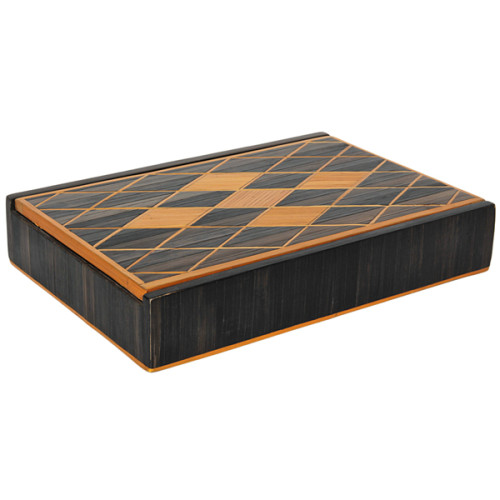
Andre Arbus (attr.) French Art Deco Straw Marquetry Box c. 1940
ANDRÉ ARBUS (attr.) (1903-1969) France
Straw marquetry box c. 1940
Natural gold and ebony stained straw inlaid in a design of a window pane diamond pattern on the hinged lid, original suede cloth/paper interior, wood frame
For more information see: André Arbus: architecture-décorateur des années 40, Yvonne Brunhammer (Paris: l’Editions NORMA, 1996).
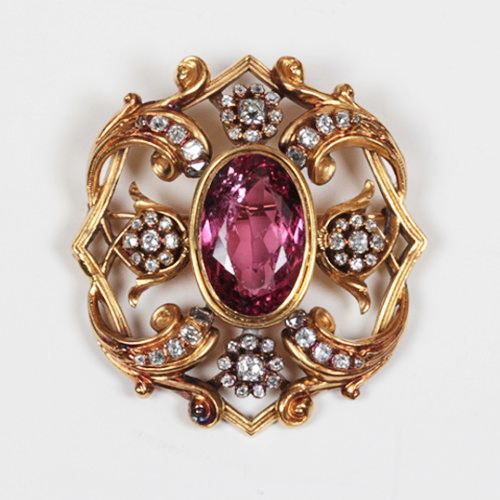
French 19th Century “Baroque” inspired brooch 18K yellow gold set with a large oval cut pink tourmaline (approx. 16 carats TW) and 59 rose cut diamonds (approx. 5 carats TW), marked, c. 1890
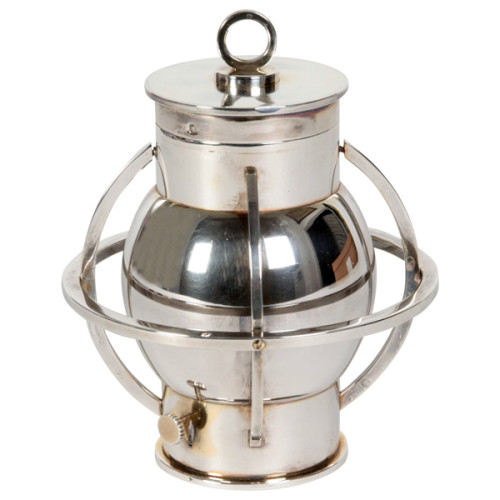
Mellerio Paris Rare French Art Deco “Gyroscope” sterling cigarette box c.1930
MELLERIO PARIS Italy/ France
Gyroscope cigarette box c.1930
French silver (950 silver standard) in a structural form of a gyroscope with a lever for an interior lifting mechanism, gilding
Marks: Mellerio Paris, 3776 D, head of Minerva French guarantee mark for 950/1000
H: 5 1/4″ x Dia: 4 1/4″
The renowned Mellerio family and their jewelry can be traced back to Lombardy, Italy as early as the 16th century. Some family members moved to Paris and became royal jewelers for Louis XIII. The revolutions of 1789 and 1848 interrupted their business and they moved to Madrid where they became the jewelers favored by Queen Isabel II. Later in the 19th century they returned to Paris where once again they prospered and participated in several international expositions including London (1862), Paris (1867, 1878 and 1900), and Vienna (1873). In the 20th century they exhibited at the renowned Paris 1925 Exposition des Arts Décoratifs in Paris and then in New York at the 1939 World’s Fair.





 @hd_jewels