Product Description
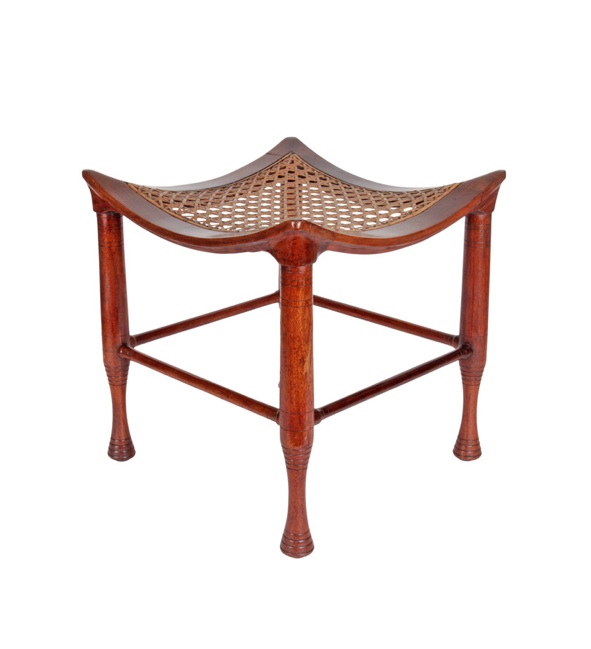
Liberty & Co. / Leonard Wyburd Egyptian Revival Four-Legged Mahogany Thebes Stool c. 1890-95

Leonard Wyburd UK
Liberty & Company London
Four-legged Thebes stool circa 1890-95.
Mahogany, woven wicker seat, turned details.
Comparable Liberty stools illustrated: Egyptomania: Egypt in Western Art, 1730-1930 (Paris: Éditions de la Réunion des Musées Nationaux and Ottawa: National Gallery of Canada, 1994), pp. 465-66.
H: 15 3/4″ x D: 15″ x W: 15″
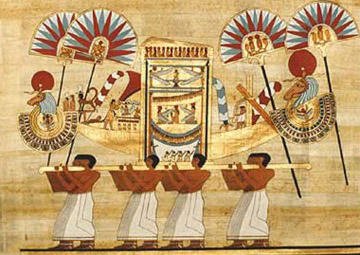
One of the driving influences of the Aesthetic Movement of the late 19th century was an informed interest in authentic ancient designs inspired by recent archaeological discoveries. Both the three- and four-legged Thebes stool were inspired by actual furniture and wall paintings unearthed from royal tombs in the ancient Egyptian city for which they are named. Leonard Wyburd, who was one of the principal designers for Liberty, patented his designs for the Thebes stools in 1884. Liberty & Co. continued to make the popular stools into the early 1900’s.

Liberty & Co. / Leonard Wyburd Egyptian Revival Four-Legged Mahogany Thebes Stool c. 1890-95
AFRICAN / TRIBAL
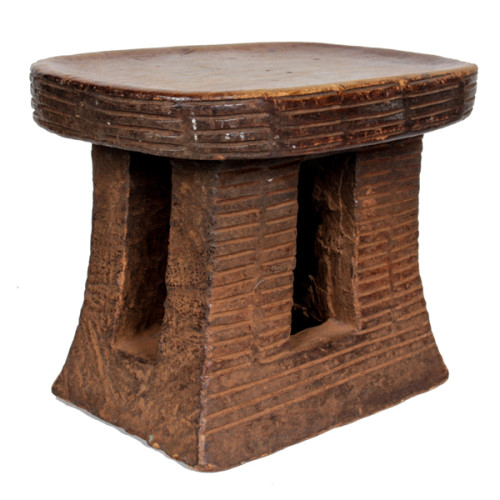
CAMEROON GRASSLANDS
Stool 20th Century
Hand carved wood with a rich, well worn and developed brown patina, minimalist decoration with fine line incising. Very comfortable chair.
H: 12″ x W: 16″ x D: 10 1/2″
Grosfeld House New York
Lucite stool circa 1940.
Cylindrical lucite base stool with gold lucite wrap like connecting elements, silk upholstery.
H: 16 1/4″ x W: 13 1/2″ x D: 16 1/2″
Grosfeld House Furniture Company manufactured some iconic designs of the twentieth century. Some of the great designers that work for the company were Vladimir Kagan and Lorin Jackson. They produced some of the earliest chairs using Lucite starting in the 1930’s and through the Post War Era.
WILHELM SCHMIDT (b. 1880) Austria
PRAG-RUDNICKER KORBWAREN-FABRIKATION Austria
Vienna arts & crafts stool c. 1902
Oak, rattan
Illustrated: Das Interieure III “Wiener Kunst im Hause Exhibition”, Wien, 1902, p. 169; Prag-Rudnicker Korbwaren-Fabrikation Catalog, 1902/1903, No. 508. Korbmöbel, Eva B. Ottillinger (Salzburg: Residenz Verlag, 1990) p. 106, illus. no. 99, Moderne Vergangenheit Wien 1800-1900 (Vienna: Künstlerhaus, 1981) p. 271;
H: 19 1/2″ x W: 19″ x D: 17 5/8″
Price: $4,800
Wilhelm Schmidt was one of a number of avant-garde designers, along with M.H. Baillie Scott, Peter Behrens, and Henry van de Velde, who incorporated the traditional material of rattan, or wicker, into their furniture designs during the early part of the century. For this stool, the Viennese designer used rattan in the much same way that a furniture maker of his day would have used upholstery on seating furniture. It provides a supportive, yet yielding and therefore comfortable seat.
ARCHIBALD KNOX (1864-1933) UK
LIBERTY & CO. London
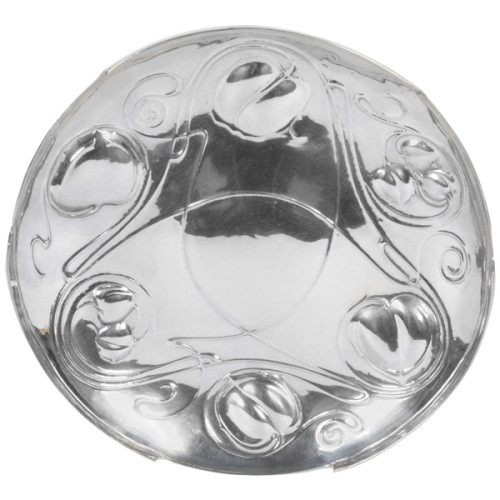
Tudric charger c. 1902-05
Pewter with abstract Celtic design in bas-relief
Marks: TUDRIC, 0163, Made in England
Illustrated: Archibald Knox, ed. Stephen A. Martin (London: Artmedia Press, 2001) p 203
Drawing illustrated: Archibald Knox, ed. by Stephen A. Martin (London: Academy Editions, 1995) p 137;
D: 9 9/10”
This British avant-garde charger demonstrates the profound influence of Celtic ornament upon Knox and his highly individual and sophisticated use of these ancient graphic devices of interlocking loops and tendrils.