Product Description
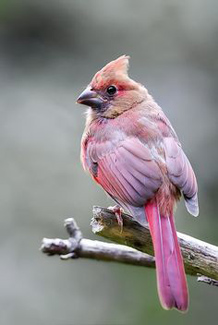
Asprey & Co., Important Cardinal Sculpture gem set with natural rubies, 18K gold and amethyst quartz, signed, 1980

ASPREY & CO. LTD. (founded 1781) London, UK
Important Natural Ruby Gem Set 18K Gold Cardinal Bird Sculpture 1980
Finely chased and chiseled 18K yellow and white gold realistically rendered sculpture of a Cardinal bird set with
85+ carats (approx.) of natural gem quality oval and round cut Burmese rubies (GIA certificate) further heightened with enamel eyes and blackened gold face plumage details, the 18K gold and natural ruby cardinal sets atop a natural Amethyst crystal “mountain rock” with a tooled and gilt (script mark) on the leather under-pad.
Marks: A & Co. (in a quatrefoil), Crown mark, 750 (gold standard mark) Lion’s head (London assay mark) “F” date mark for 1980, tooled and gilt Asprey (script mark) on the leather under-pad
Provenance: Privately commissioned by the Sultan of Brunei’s younger brother, Prince Jefri Bolkiah who also later became the owner of Asprey & Co in the 1995. This rare sculptural 18K gold and natural ruby Cardinal was handmade by the finest jewelers and work masters in the workshop of the London Asprey & Co. located above the flagship store at 167 New Bond Street.
H: 3 ¾” x L: 5 3/4” x W: 1 ½”(Cardinal only)
H: 6” x W: 6 ¾” x D: 5 ¾” (with Cardinal atop natural Amethyst crystal rock)
As one might guess, a large part of the animal symbolism of the cardinal comes from the brilliant red color of the males. In fact, its name is derived from the royal red vestments worn by Catholic cardinals. This shock of red, especially against the stark backdrop of winter snow, is a magnificent sight. The male cardinal reminds us passion, warmth and vibrancy is available to us – even under the cloak of Winter’s grey clouds. Interestingly, the more bold and bright his color is, the more successful the cardinal will be at prolonging his lineage. Dull colored male cardinals are less likely to mate successfully than bright colored ones. True to the fire of his color, the crimson cardinal has got some major spunk. He will aggressively defend his territory, and fight attackers with ferocity. Indeed, they have been known to fight ghost males (their reflections) in mirrors for hours on end. Both male and female give us glorious songs. Along with peeps and pips and warbles, the tuned ear can also hear “cheer, cheer, cheer!” Very appropriate to the animal symbolism of cardinals, because they are a delight to both eyes and ears. The cardinal makes a fantastic animal totem. It reminds us to hold ourselves with pride, not ego pride but rather the cardinal asks us to stand a little taller, be a bit more regal and step into our natural confidence as if we were born to lead with grace and nobility. Those who attract the cardinal as their totem are naturally energetic, love life, and happily help others where and when they can!
Asprey & Co., Important Cardinal Sculpture gem set with natural rubies, 18K gold and amethyst quartz, signed, 1980
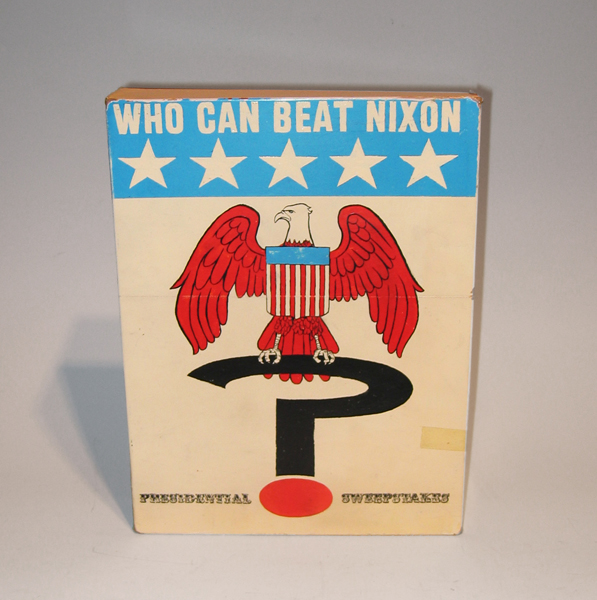
TIM LIDDY
“Oy Vey” (1979) The game where you become a JEWISH MOTHER! Get your sons to become doctors—Get your daughters married to doctors! If not, OY VEY! 2008
Oil and enamel on copper, plywood back
Signed in script: Tim Liddy, red circular ring, “circa 1979”, 2008
Provenance: William Shearburn Gallery, St. Louis, MO
H: 10 ¼” x W: 20 ½” x D: 1 ¾”
With his recent paintings, Liddy has both reasserted the construct of hyperrealist painting and developed a thoroughly unique advancement of that mode by extending the cultural reality of the indexed original. Based on the illustrated box lids of vintage board games, Liddy has recontextualized a subject, which evokes the underlying rules of life. Painted on copper or steel in the precise dimensions of the original, the metal is then manipulated to demonstrate the exact rips and tears from years of usage and includes trompe-l’oeil renditions of the scotch tape that might be holding the cardboard box together, the assorted stains, or the various graffiti of time. Liddy leaves no possibility of ambivalence, these works speak to a concurrent understanding of their original object identity and to themselves as works of art engaged in historical and psychological dialogue.
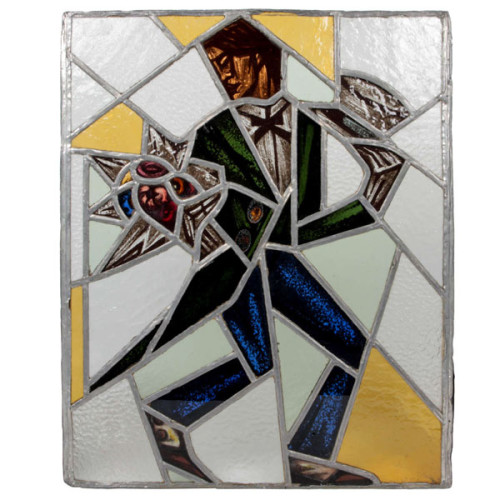
REINHOLD KLAUS (1881-1963) Vienna, Austria
CARL GEYLING ATELIER (founded 1841) Vienna, Austria
Man with tophat and flowers c. 1930
Window of stained and hand-painted leaded glass
Provenance: Estate of Carl Geyling (1814-1880), Vienna
H: 17 3/4″ x W: 14 1/2″
Reinhold Klaus studied from 1898-1902 with Alfred Roller at the Kaiserlich-Königliche Kunstgewerbeschule in Vienna. In 1914 Klaus married into the Carl Geyling family and became extensively involved with with stained glass painting. As early as 1918 Klaus worked on a stained glass window for the Siegestempel am Bisamberg in Vienna. In 1934 he became a professor of stained glass painting at the Kunstgewerbeschule, as well as creative director of the C. Geylings Erben glass painting company. Reinhold Klaus, a member of the Künstlerhaus since 1924 received many prizes and honors. He worked on commissions for the St. Veits cathedral in Prague, the St. Stephan cathedral in Vienna and many others.
ARCHIBALD KNOX (1864-1933) UK
LIBERTY & CO. London, UK
Hand mirror 1908
Sterling with large matrix cabochon turquoise
Marks: L & Co. cipher, Birmingham assay marks for 1908
Similar works with turquoise Illustrated: Archibald Knox, ed. by Stephen A. Martin (London: Academy Editions, 1995) ; Liberty Design 1874-1914, Barbara Morris (London: Pyramid Books, 1989) p. ; The Designs of Archibald Knox for Liberty & Co., A.J. Tilbrook (London: Ornament Press Ltd., 1976)
L: 11″