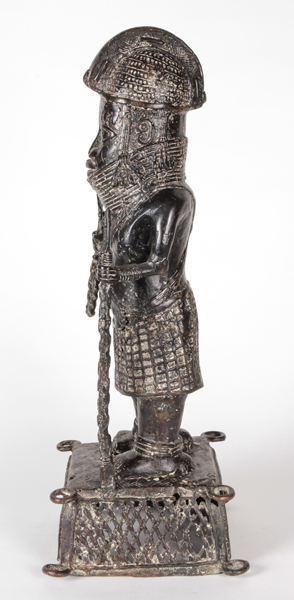
Benin King Oba bronze standing figure, Nigeria, 20th Century
More Information
Benin King Oba bronze standing figure, Nigeria, 20th Century
Benin King Oba bronze standing figure, Nigeria, 20th Century
Lost wax cast bronze with a rich brown and black patina with light desert sand patina in some of the recessed areas.
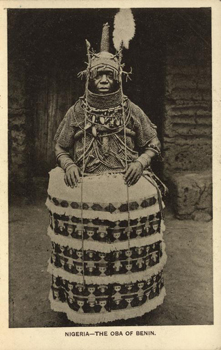
The art of Benin is the product of an urban royal court, and is meant to symbolize and to extol the power, mystique, grandeur, continuity, and endurance of the ruling dynasty and its governing institutions. From the 14th century until its fall in 1897, Benin was ruled by the Oba, a divine ruler at the head of the political system of titled chiefs. Under royal support, a number of craftsman's guilds produced bronze, brass, and wood sculptures and embroidered cloth, all of which have become prized by museums and collectors.
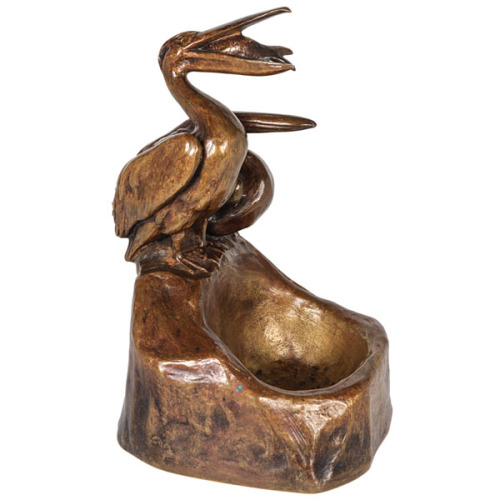
Friedrich Gornik Bronze “Pelican” Art Nouveau Vide Poche c.1910
Friedrich Gornik (1877-1943) Austria.
“Pelicans” vide poche c. 1910.
Bronze with a natural gold patina of two pelicans on a rock, one seated and the other eating fish.
Marks: F Gornik and monogram.
For more information on Friedrich Gornik see: Der Österreichische Werkbund, Astrid Gmeiner & Gottfried Pirhofer (Salzburg & Wien: Residenz Verlag,1985) p. 228; Österreichische Keramik des Jugendstils, Waltraud Neuwirth (Munich: Prestel-Verlag, 1974) p. 156.
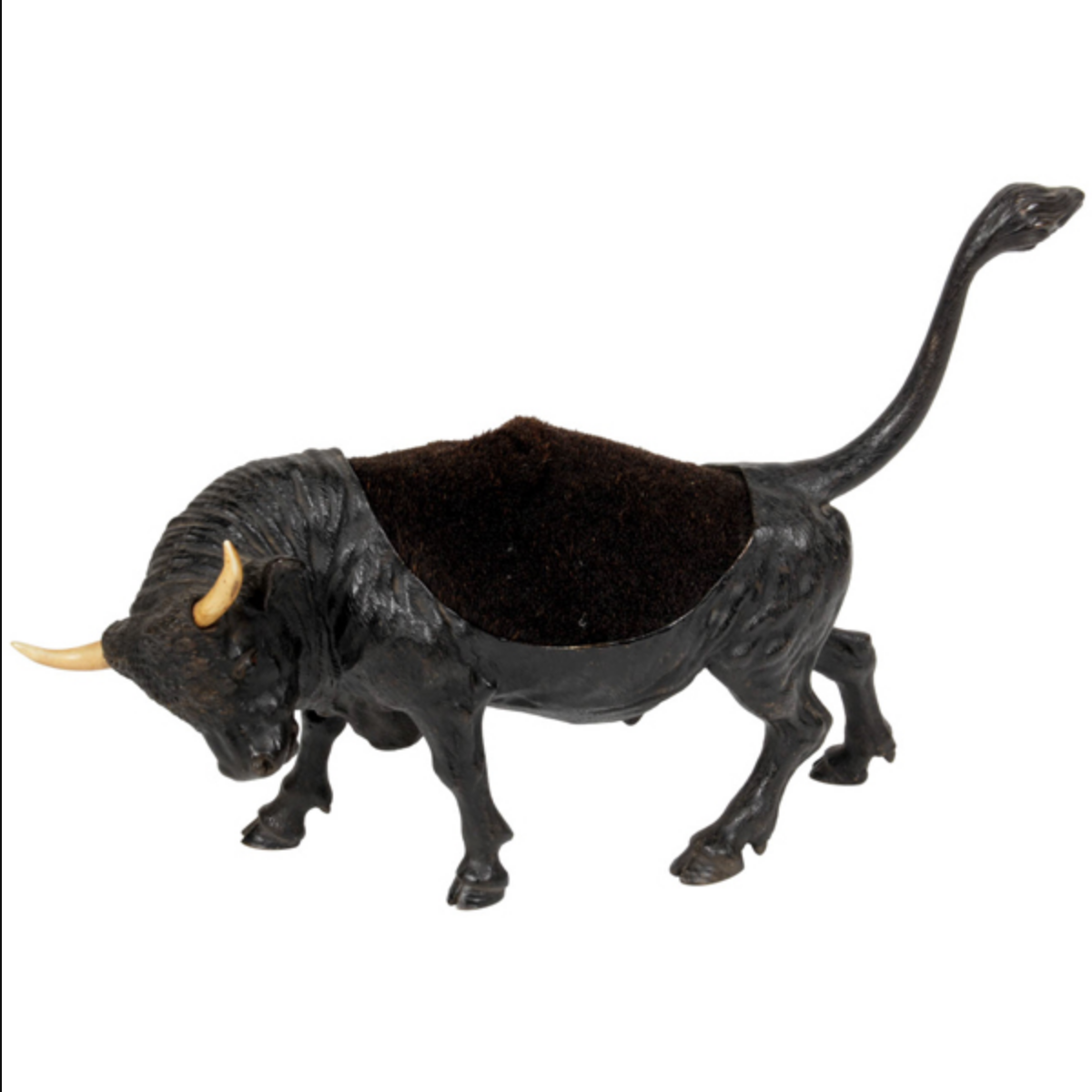
Franz Bergman (attr.) Bronze Bull Pen Wipe c. 1900
Franz Xaver Bergman (1861–1936) (attr.) Vienna, Austria.
Bull pen wipe c. 1900
Cold painted bronze, boar’s hair bristles, horn.
For information see: Art Bronzes, Mich. Forrest (Schiffer, 1988).
H: 5 1/4” x L: 11”
Franz Xaver Bergman (1861–1936) was the owner of a Viennese foundry who produced numerous patinated and cold-painted bronze Oriental, erotic and animal figures, the latter often humanized or whimsical, humorous objects d’art.
A well-known anamalier at the turn-of-the century, the sculptor Franz Bergman created a number of small bronzes in a variety of subject matter. Other figurative works were informed by the Jugendstil/Art Nouveau style and the European taste for the exotic as is found in his figures of rug merchants and camels. His animal sculptures, however, capture the Viennese tradition of naturalistic bronzes. The quality of the bronze casting shows tremendous detail, which was carefully brought out through the applied patination process known as cold painting.





 @hd_jewels