Product Description
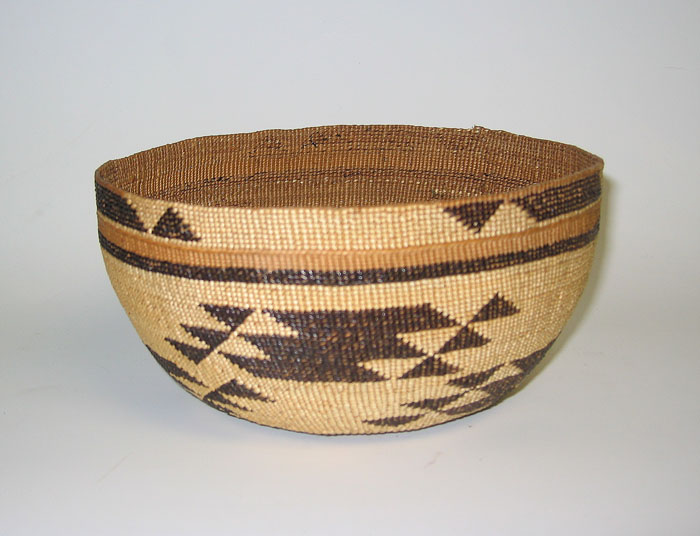
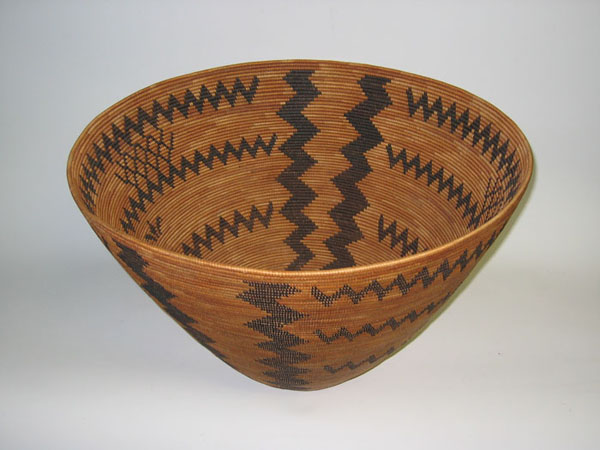
Northwest California, twined trinket basket, Hupa, Yurok or Karok Tribe, fine weave, early 20th Century

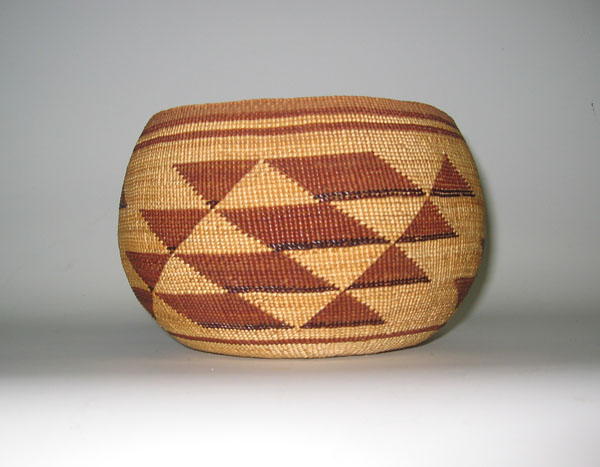
Northwest California, twined trinket basket, Hupa, Yurok or Karok Tribe, fine weave, early 20th Century
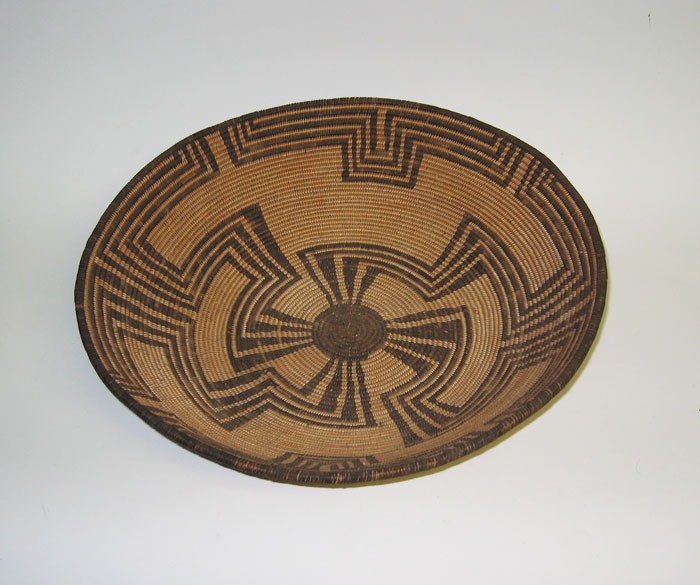
TLINGIT TRIBE / NORTHWEST COAST
Chevron/diamond storage basket, late 19th Century, early 20th Century
Handwoven split conifer root (buff), bear grass (white), woodwardia fern stem dyed with alder bark (rust), maidenhair fern stem (black), willow shoots
For more information see: The Fine Art of California Indian Basketry, Brian Bibby (Sacramento/Berkeley: Crocker Art Museum, Heyday Books, 1996), p. 90.
H: 8 1/2” x D: 11”
African Bronze “Tree of Life” Sculpture 20th Century
Sand cast bronze with a brown black patina with golden highlights in an open work design depicting 18 figures perched on a tree form with various intricate pattern details.
***As a Primitive / Tribal sculpture this piece visually relates to some of the sculpture and painting of the renowned French artist Jean Dubuffet.
H: 18 1/2″ x D: 4″ x W: 8″
SOMALIA
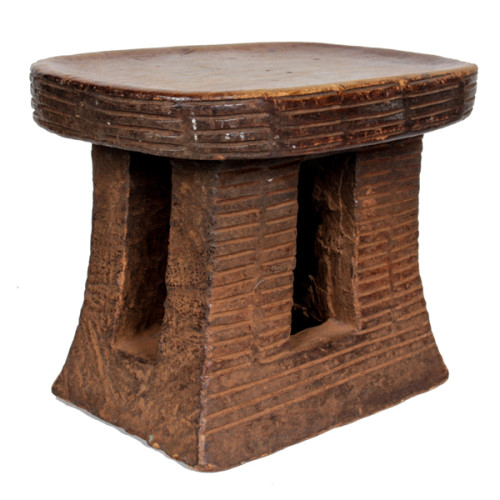
Head rest early to mid 20th Century
Carved wood with rich natural patina
H: 4 3/4″ x W: 13″
Headrests are used by both Somali men and women while resting or sleeping. It is popularly believed that the headrest serves a protective function by elevating the head off the ground during sleep, thereby preventing any possible attack by snakes or scorpions. Men’s headrests, such as this one, generally feature a smaller base that makes them somewhat unstable to sleep on, while the rectangular bases of women’s headrests are usually more stable. Scholars suggest that this instability is purposeful as it prevents the user from falling into a deep sleep while guarding the herds at night. It is in this sense that the headrest itself has become a symbol of vigilance among Somali nomads. Headrests also play an important role in the nuptial ceremonies of Somali nomads. On his wedding night, the groom places the tubash (a sum of money) under the bride’s headrest. The morning after the marriage is consummated, the bride will use this money to purchase an amber necklace, the symbol of her new status.