Product Description
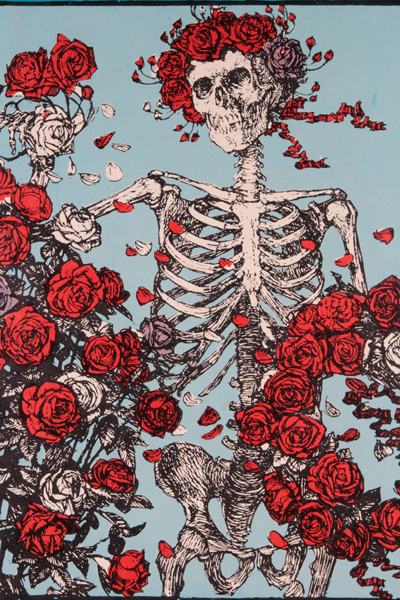
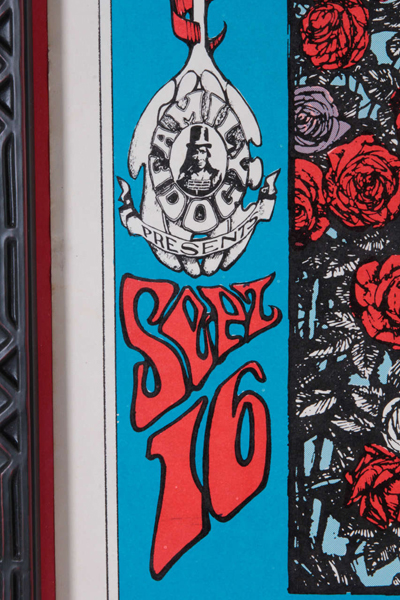
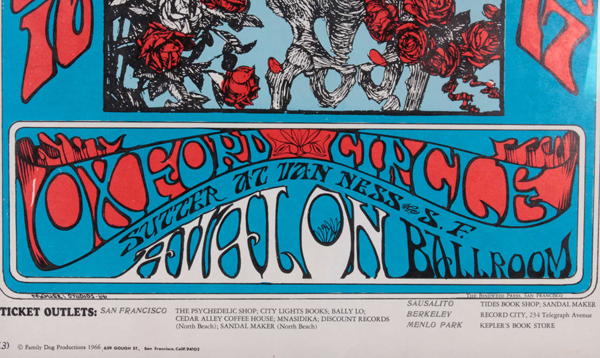
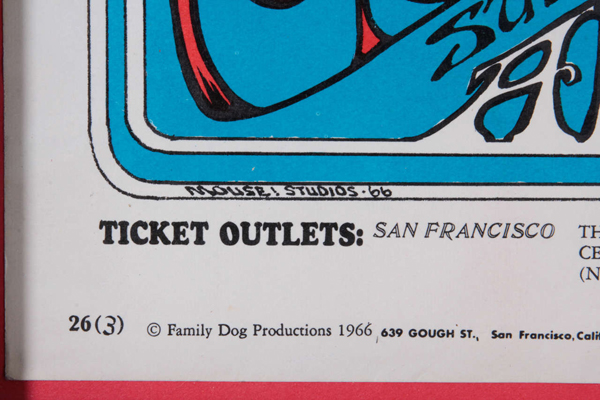
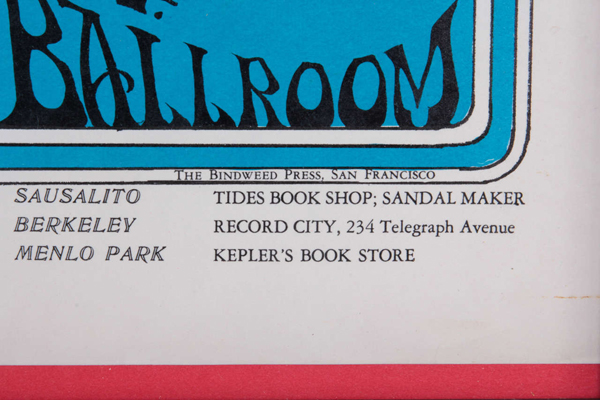
Stanley Mouse / Alton Kelley, Grateful Dead & Oxford Circle at the Avalon Ballroom September 16 -17, 1966

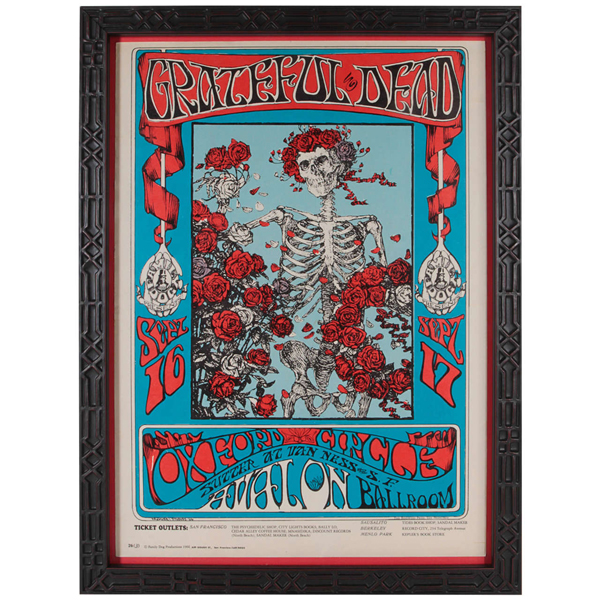
STANLEY MOUSE USA
ALTON KELLEY USA
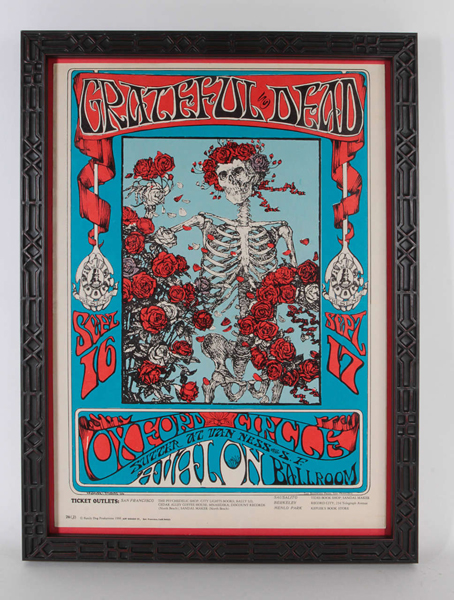
Grateful Dead & Oxford Circle at the Avalon Ballroom September 16 -17, 1966
Marked: Mouse Studios 66, 26(3), (c) Family Dog Productions 1966 639 Gough St., San Francisco, Calif. 94102
H: 20″ x W: 14″
Born in Detroit, Stanley Miller became known as “Mouse” after illustrating countless notebooks with his signature rodent sketch. Miller found an outlet for his creativity in pin-striping cars and airbrushing hot rod designs on posters and T-shirts. Mouse migrated to San Francisco in 1964, where he first met the artists associated with Family Dog, the organization producing dance concerts at the Avalon Ballroom. With collaborator Alton Kelley, Mouse experimented broadly with composition, lettering and imagery: Kelley came up with the ideas and Mouse executed the designs. Mouse and Kelley helped to establish the psychedelic style of expression under the name Mouse Studios.
Stanley Mouse / Alton Kelley, Grateful Dead & Oxford Circle at the Avalon Ballroom September 16 -17, 1966
FORREST (FROSTY) MYERS (1941- ) USA
Orange cube 2008
Orange anodized and contoured aluminum wire manipulated into a cube form
Signed: Orange Cube, 08, Forrest Myers (on plaque)
For more information see: Who Was Who in American Art (Madison, Conn.: Sound View Press, 2003-2004 25th Edition), Dictionary of American Sculptors: 18th Century to the Present, Glen Opitz (Poughkeepsie, NY: Apollo, 1984).
Dimension: 10 1/2″ cube
Price: $15,000
A sculptor and art teacher born in Long Beach, California, Forrest Myers settled in Brooklyn, New York. Myers studied at the San Francisco Art Institute. His teaching venues include the San Francisco Art Institute, School of Visual Arts in New York, Kent State University, and the Parsons School of Design. His studio is in Brooklyn.
In the early 1980s, Forrest Myers was applying Buckminster Fuller's principles of tensegrity and repeated tetrahedrons into his designs for furniture. This exploration culminated in the use of aluminum wire that becomes structural when bent and pressed into a dense tangle.
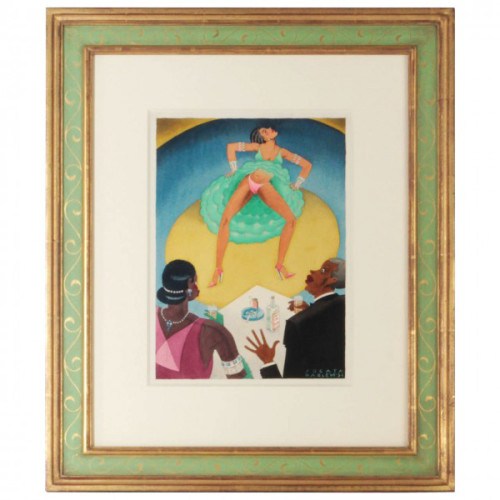
NILE BEHNCKE (1894-1954) USA
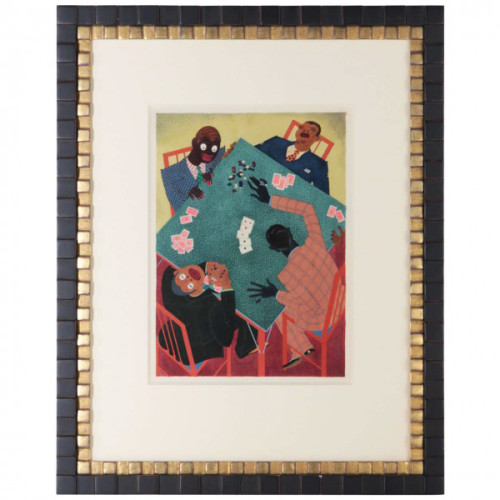
Oshkosh, Wisconsin c. 1935
Watercolor and pencil on paper
Painting: H: 20 ¼” x W: 24 ¾”
Framed: H: 33” x W: 37 1/2”
Nile Juergen Behncke was a well-known Wisconsin watercolorist and the first director of the Oshkosh Public Museum, from 1924-1954.
WES WILSON USA
Grateful Dead, Big Mama Mae Thornton at the Fillmore December 9-11, 1966
Marked: © 1966 Wes Wilson 41, printing by West Coast Lithograph Co. SF
H: 21 7/8” x W: 14”
GALERIE CARREFOUR 141Boulevard Raspail, Paris
Vérité Collection Wood block print poster “ARTS PRIMITIFS, CARREFOUR, 141 BD RASPAIL, DAN 5803″ c. 1948
Float mounted in a finely contoured oak frame.
Inscribed to: A Monsieur E Mme Breton, Vérité Image dimension:
H: 19 1/2″ x W: 12 3/4″
Framed dimension: H: 26 3/4″ x W: 19 3/4”
Price: $9,000
The Vérité Collection of primitive arts started after World War 1 in 1920. Pierre Vérité, a young artist started buying primitive art before anyone else. Vérité opened a small store selling exclusively tribal art in 1931 in conjunction with the Paris Colonial Exposition. Pierre Vérité regarded “primitive arts” as art, and it is the raw power of these primitive pieces that changed the history of 20th-century European culture. In 1936, he opened the Galerie Carrefour on the Boulevard Raspail, which was a hangout for artists and collectors such as Pablo Picasso, Helena Rubenstein, Nancy Cunard and Andre Breton. Tribal art was one of the key influences on Pablo Picasso and he often dropped into Pierre Vérité’s Galerie Carrefour in Paris to buy masks and carvings from Africa and Oceania. Henri Matisse was also a regular visitor, as were other artists such as Fernand Léger and Maurice de Vlaminck, while Vérité used to browse Parisian flea markets with André Breton, Surrealism’s chief theorist. In the decades that followed the opening of the gallery, the Vérité family’s client list grew to include Hollywood stars and leading museum curators, as well as some of the greatest names in 20th-century art. Vérité very quickly became the most important art dealer for primitive arts. In the 1948, Pierre’s son Claude became increasingly involved in the gallery. He went on African expeditions, collecting objects and information, and took photographs to document his travels, while his wife Jeannine was running the gallery operations. With Claude and Jeannine joining the gallery, Galerie Carrefour showed at all “Art Primitifs” exhibitions in Europe and the United States. The gallery established itself as the most important player in tribal arts in the world and exhibited until the 1990’s.