Hand wrought and hand hammered silver cone shaped covered pitcher form with a green PVC handle and spout over silver cylindrical arching forms
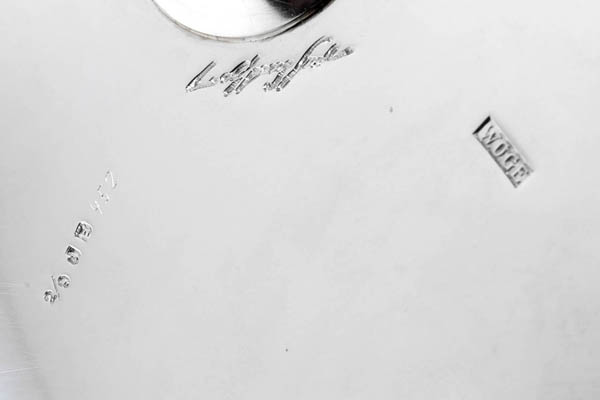
Marks: Wolfgang Gessl (script impressed signature), WO.GE (in a rectangle), Swedish assay mark for Stockholm, 925 (silver guarantee in a rectangle), X10 (in a rectangle), 2/9 GD 452
Illustrated: Gold and Silversmith Wolfgang Gessl: Exceeding Geometry, Kerstin Wickman, p. 19.
H: 8 3/8” x W: 8 ½” x Dia base: 5 ¼”
This is No. 2 out of the edition of 9 models.
Price: $22,500
Wolfgang Gessl was born in 1949 in Vienna, Austria and trained as a goldsmith with Professor Hans Angerbauer. Upon moving to Sweden, Gessl studied under the eminent silversmith Sigurd Persson at Konstfack, the National University of Art, Craft and Design in Stockholm, Sweden.
Wolfgang Gessl has had fifteen solo exhibitions including shows at The National Museum, Stockholm and The Royal College of Art in London. His metalwork has been widely exhibited in Sweden, Europe and the U.S and his pieces can be found in many private collections throughout the world. He has taught at Konstfack for more than twenty-four years, and continues to live and work in Stockholm.
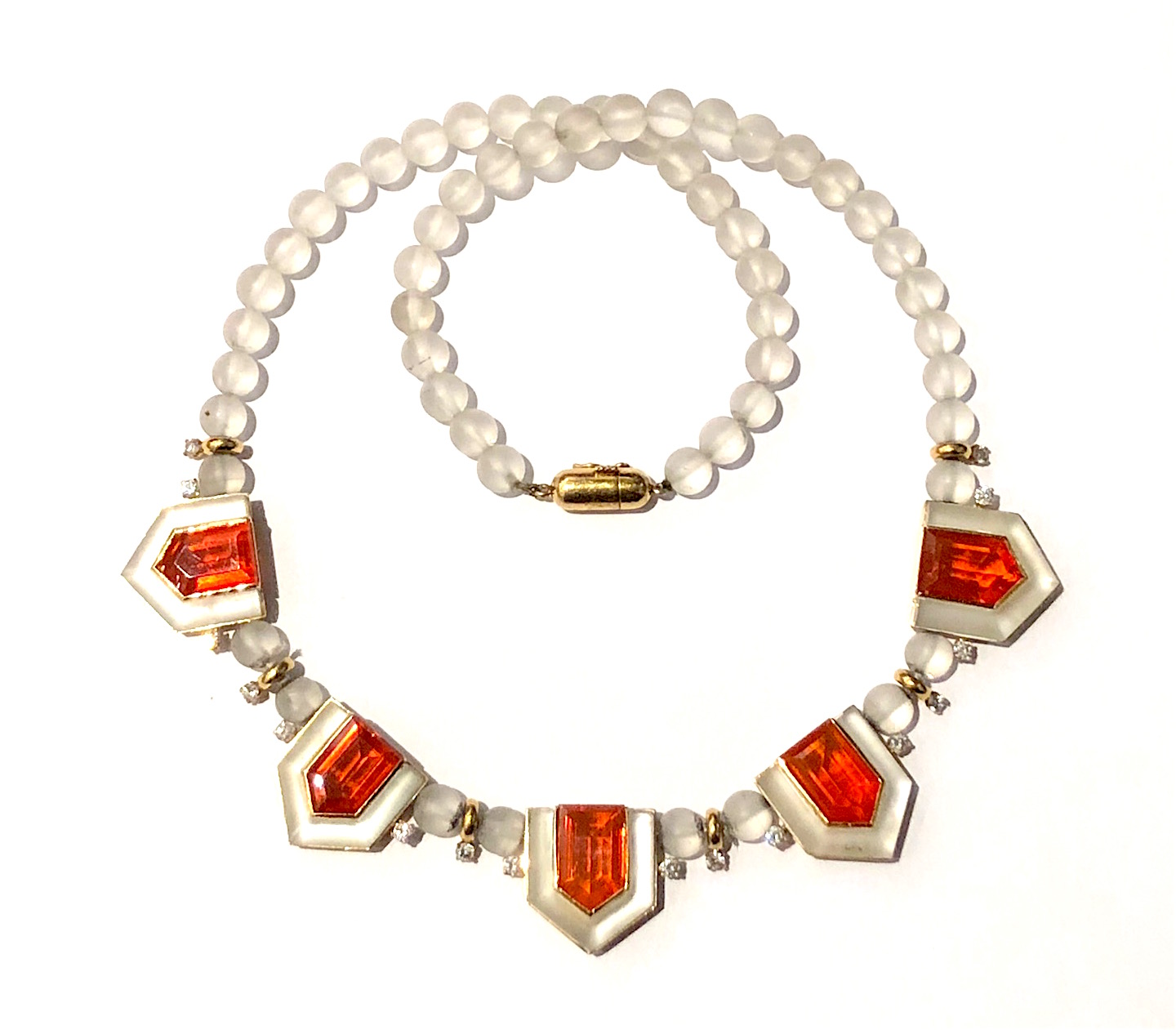
Art Deco “Fire Opal” necklace, frosted rock crystal round beads and four sided custom rock crystal bezels set in 18K yellow gold with 16 round–cut accent diamonds featuring five large natural fire opals (G.I.A certificate, dimension of each fire opal, 13.00 x 8.15 x 6.20mm for a TW of approx. 17.50 carats), c. 1940’s
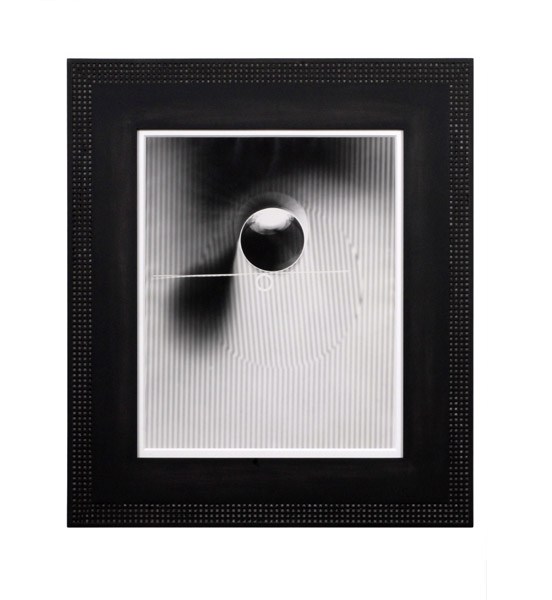
György Kepes, Abstraction, Gelatin silver print, 1942
GYÖRGY KEPES (1906-2001) Hungary/USA
Abstraction 1942
Silver gelatin print
Signed: 9 (in a circle, on back); Gyorgy Kepes 1942 (in ink on back)
György Kepes was a Hungarian-born painter, designer, educator and art theorist. After emigrating to the U.S. in 1937, he taught design at the New Bauhaus (later the School of Design, then Institute of Design, then Illinois Institute of Design or IIT) in Chicago. In 1947 He founded the Center for Advanced Visual Studies at the Massachusetts Institute of Technology (MIT) where he taught until his retirement in 1974.





 @hd_jewels