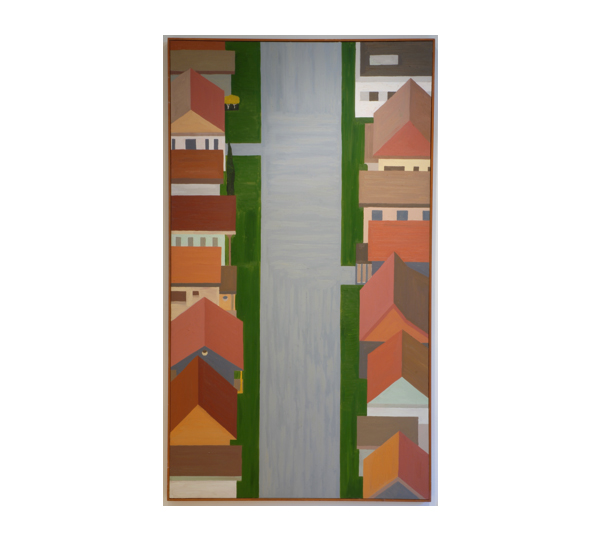
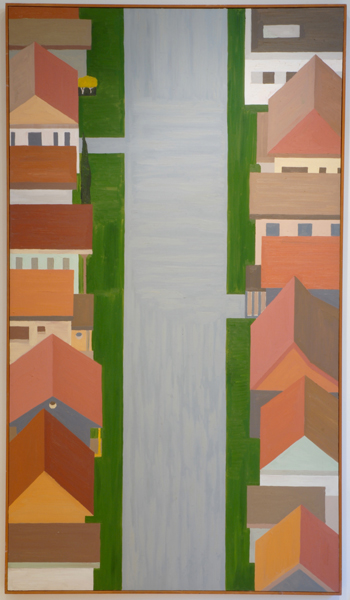
Illustrated: Nach Schiele, Tobias G. Natter and Thomas Trummer (Köln, Germany: Atelier Augarten, DuMont, 2006), p 142.
Provenance: Private Collection Vienna
For related works by Hubert Schmalix see: Hubert Schmalix, Lóránd Hegyi exhibition catalog (Museum Moderner Kunst StiftungLudwig Wien) November 19, 1994 – January 1995.
H: 85” x W: 49”
Hubert Schmalix was born in Graz, Austria, on December 17, 1952 and studied at the Vienna Art Academy from 1971 to 1976. By 1979 Schmalix was showing work at the forward-looking exhibition ‘Europa 79 – Kunst der 80er Jahre’ in Stuttgart. In 1983 the London Tate Gallery invited Schmalix to present work at ‘New Art’, an important survey of contemporary art. Schmalix has become well-known world-wide as an exponent of ‘New Art’, working with a retrospective glance at both classical art history and modern art. Schmalix focuses on the world of things and the human figure. Although the expressive gesture was the dominant feature of his 1980s work, it yielded early in the 1990s to stringent tectonic composition. In 1984 Hubert Schmalix went to the Philippines and on to the US, moving to Los Angeles in 1987. In 1986-87 Schmalix taught at the Academy for the Decorative and Applied Arts in Vienna and from 1997 he has been a professor at the Vienna Art Academy. Schmalix is a visiting professor at the University of California Los Angeles (UCLA). In 1993 his work was featured at the Venice Biennale and in 1998 he was awarded the Fine Art Prize of the City of Vienna. Schmalix has done several large fresco cycles in Salzburg and his work has been shown extensively at numerous international solo and group shows and most recently at Art Basel 2006.
The Kunstforum in Vienna is dedicating a major retrospective show to Hubert Schmalix from May 6th – July 12th, 2015.
“I’m not nervous or angry when I paint, but well rested and concentrated. Each stroke of the brush is important! I’ve painted a whole lot of beautiful pictures this way.” (Hubert Schmalix)
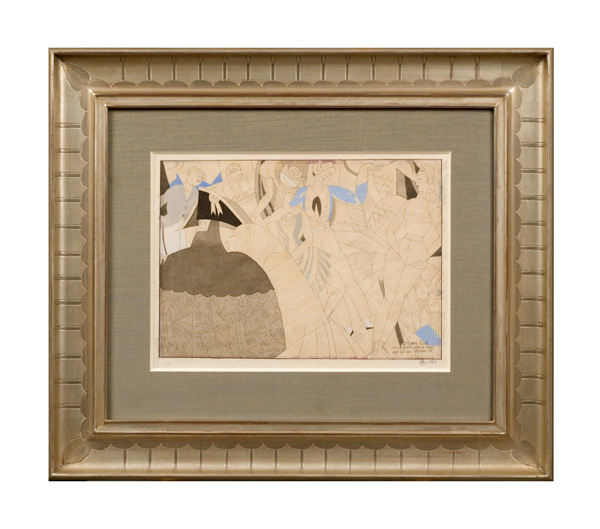
Charles Martin, “Feu d’Artifice”, Pencil, ink, gouache and watercolor on paper 1927
CHARLES MARTIN (1884-1934) France
Feu d’Artifice 1927
Pencil, ink, gouache and watercolor on paper.
Signed: Martin, A L’Ami Koval (dedication on lower right corner)
H: 8” x W: 11 7/16”
Price: $12,500
Charles Martin was a notable French illustrator, graphic artist, posterist, fashion and costume designer. His drawings are charming, amusing and sophisticated. The artist studied at the Montpelier Ecole des Beaux Arts, Academie Julian and Ecole Des Beaux Arts, Paris. Throughout his career, Martin was also a contributor to the French fashion journals Gazette du Bon Ton, Modes et Manieres d’Aujourd’hui, Journal Des Dames et Des Modes, and Vogue. His illustrated books include the hat catalogue “Les Modes en 1912,” the erotic “Mascarades et Amusettes” 1920, and “Sports et Divertissements” 1919, written in collaboration with composer Erik Satie.
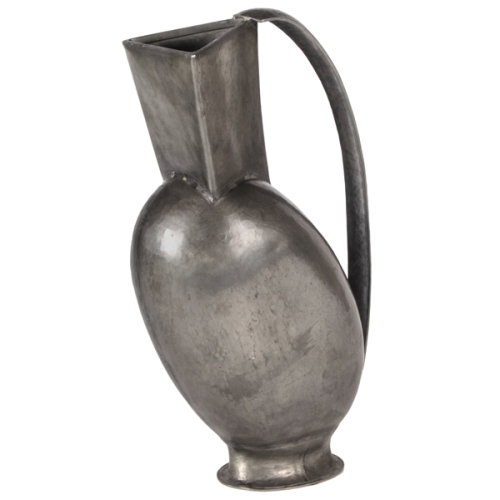
Italian Futurist 1950’s “Auntie Mame” Handwrought Pewter Pitcher c.1950
1950’s ITALIAN DESIGN
Futurist pitcher c. 1950
Handwrought and hand hammered pewter in an overall footed ovoid form with a traingle form spout body and an elongated arching contoured handle
Marked: PELTRO with lion, MADE ITALIA
H: 15″ x W: 9″ x D: 4″
Price: $6,000
The 1958 classic film, Auntie Mame, starring Rosalind Russell, features this sculptural pitcher on the coffee table in the surrealist interior of Mame Dennis’ penthouse on Beekman Place #3, New York City.
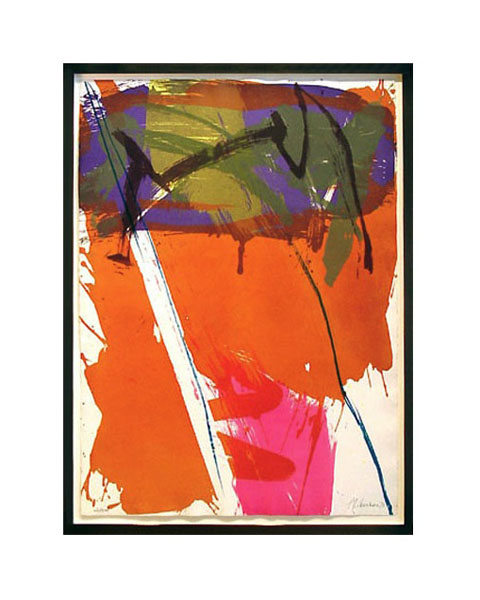
Alexander Liberman / Meyer Schapiro Portfolio Untitled 1973
ALEXANDER LIBERMAN (1912-1999) USA
MEYER SCHAPIRO PORTFOLIO 1974
Untitled 1973
Silkscreen, patinated bronze frame
Signed: A. Liberman 1973, Artist’s proof, 2RC (embossed on paper)
Canvas: H: 33” x W: 25 1/2”
Frame: H: 42 1/2” x W 33 1/2”
Portfolio of 12 works, Edition of 100
Price: $
Alexander Liberman’s family left the Soviet Union for London as exiles in 1921. Liberman studied there briefly before moving to Paris where he undertook philosophy and mathematics at the Sorbonne and architecture at the École des Beaux-Arts. In the 1930s Liberman designed stage sets, and worked on the staff of Vu, the first magazine illustrated with photographs. Although Liberman quickly earned the title of managing director, he left the magazine in 1936, and devoted himself to painting and writing. In 1941, he left Paris for New York. Again, he became involved in publishing after gaining employment at Vogue magazine. Twenty years later, in 1962, he became Editorial Director of all Condé Nast Publications, a position he held until he retired in 1994. During his time at Vogue, Liberman introduced 20th-century art to readers by using it as a backdrop for fashion shoots, as well as by profiling living artists in the magazine. As a painter, Liberman exhibited geometric circle paintings in galleries and museums around New York in the 1950s. Liberman also had an interest in sculpture, and began welding steel into public works in the late 1950s. These monochrome geometric sculptures are featured in over 40 cities worldwide.

 @hd_jewels