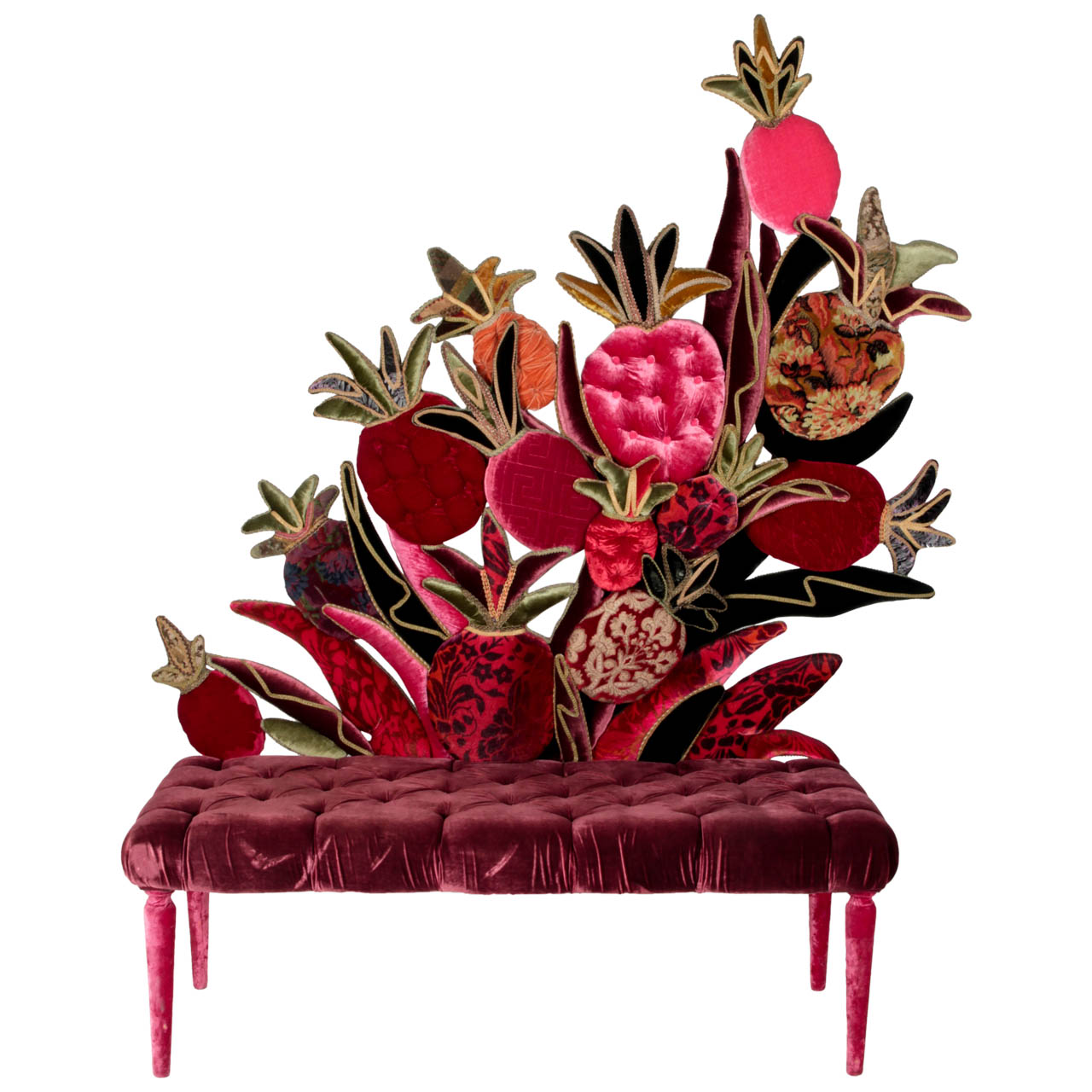
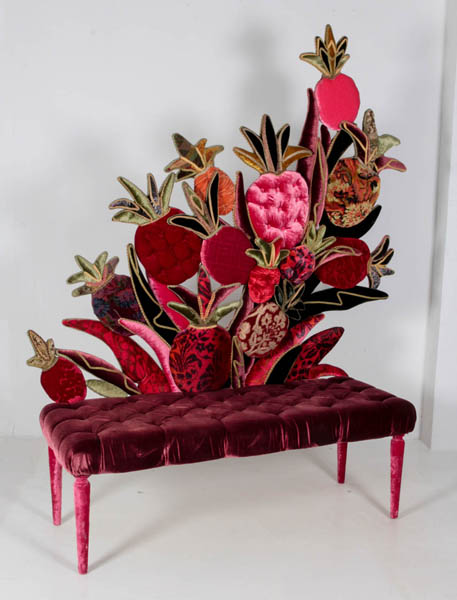
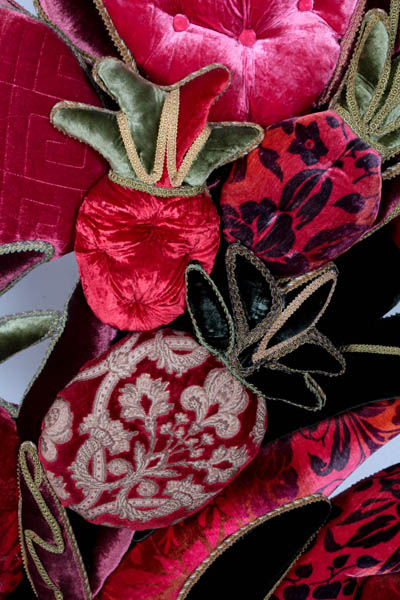
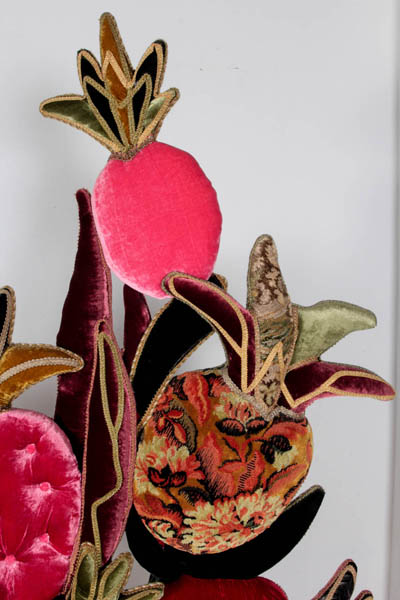
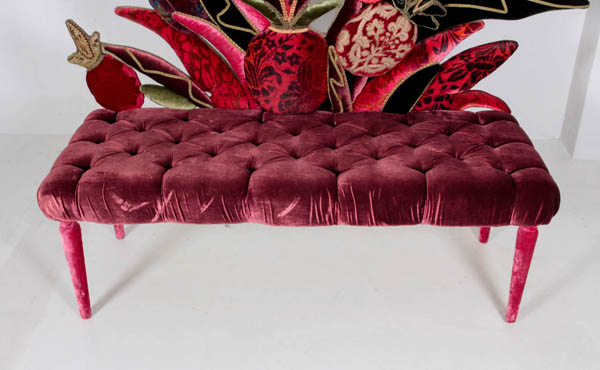
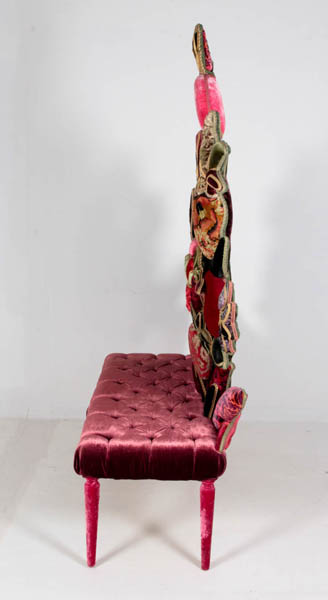
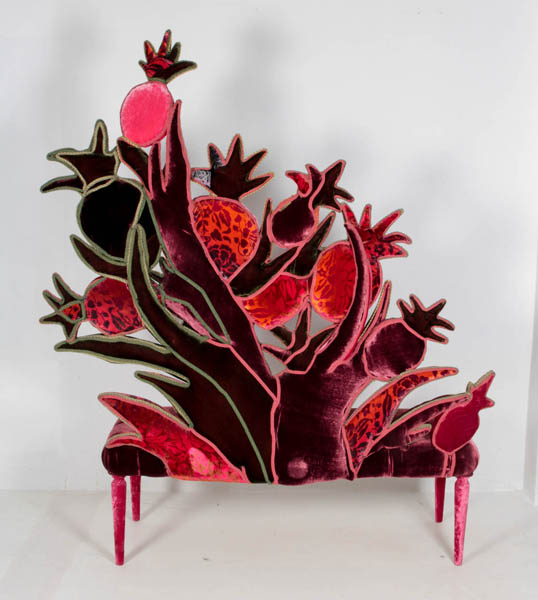
Exotic variety of silk and cut silk velvets sewn and sculpted in the form of a spray of various pineapple shapes on a tufted cushion seat and upholstered legs.
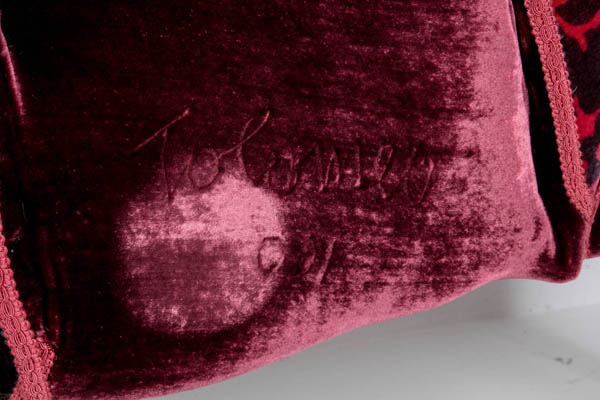
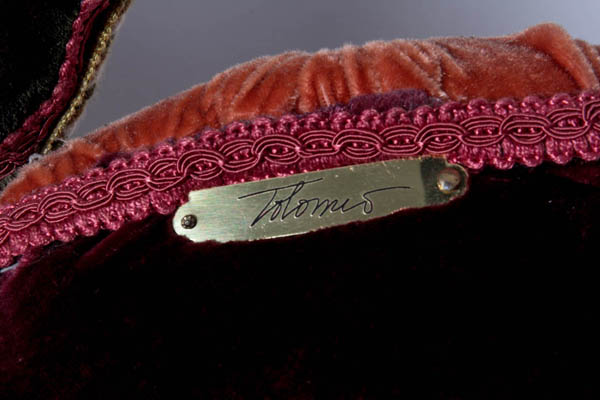
Marks: Tolomeo (written on the velvet), Tolomeo script signature (brass plaque)
Exhibited: Fondazioni Cerratelli, Pisa, Italy, Summer 2006
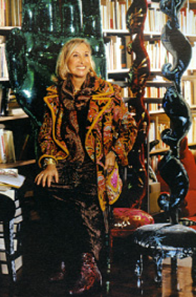
Model illustrated and biographical information on Carla Tolomeo: Il Fogliaccio, July 7th, 2006
For further information see: Carla Tolomeo Mai Sedersi Sugli Allori, Never rest on your laurels 1995-2004, Carla Tolomeo (Milano 2004)
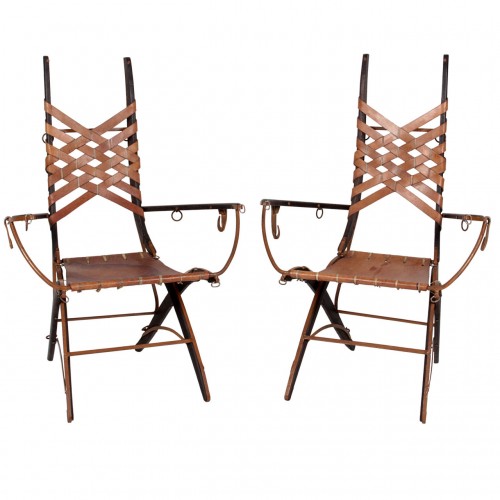
Alberto Marconetti / Italian Post-War Design Armchairs c. 1960’s
ALBERTO MARCONETTI Milan, Italy (active Argentina)
Armchairs (Two available) c. 1960’s
Oak, painted iron, leather strapwork and seat
Marks: by Alberto Marconetti (script signature)
H: 40 1/2” x W: 27” x D: 21”
Seat height: 19″
Price: $7,450 (each)
This pair of armchairs nods to the influence of such Italian designers as Carlo Bugatti and Carlo Mollino yet are their own unique creation. They have an unusual anthropomorphic quality in that the frame suggests a skeletal structure. In addition, the leather strapwork, iron loops and hooks allude to the equipage of the ancient Roman equestrian order.
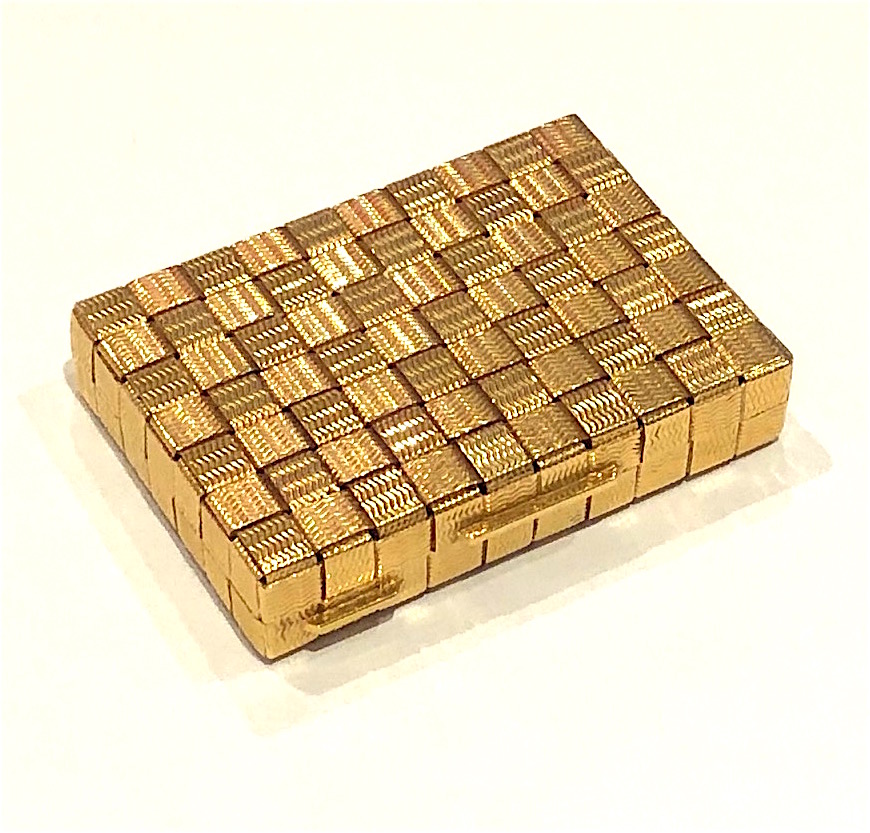
Bino Bini for Uno A Erre, Arezzo, Italy, basket weave textured 18k gold in the form of a pill box, marked: 1AR (in a hexagon), Uno A.R. (in an oval), 750 (in a hexagon), c.1970’s
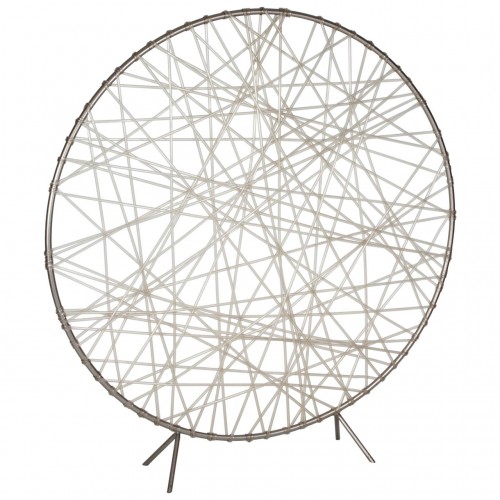
Fernando and Humberto Campana, Zig Zag Screen 2001
Humberto Campana (1953 – ) Brazil
Fernando Campana (1961 – ) Brazil
Zig Zag Screen, 2001
Circular iron frame with electrostatic silver painted surface, translucent PVC hose stretched in a web pattern.
Illustrated: Campanas, Humberto and Fernando Campana (Sao Paulo: Bookmark 2003) p. 240; Mood River, February 3 – June 26, 2002, exh. cat. Jeffrey Kipnis and Annetta Massie (Ohio: Wexner Center, 2002)
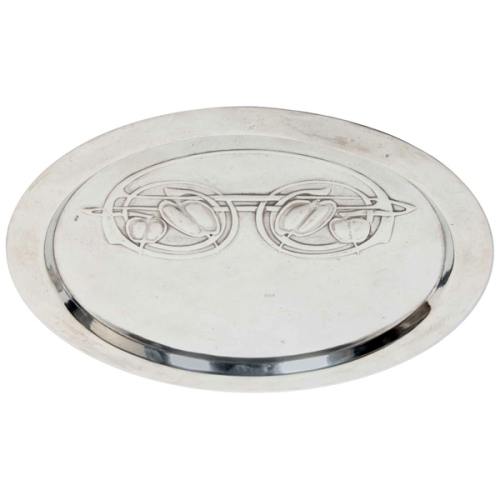
Archibald Knox / Liberty & Co. Tudric charger / tray c. 1902-05
ARCHIBALD KNOX (1864-1933) UK
LIBERTY & CO. London
Tudric charger c. 1902-05
Pewter with abstract Celtic design in bas-relief
Marks: TUDRIC, 0163, Made in England
Illustrated: Archibald Knox, ed. Stephen A. Martin (London: Artmedia Press, 2001) p 203
Drawing illustrated: Archibald Knox, ed. by Stephen A. Martin (London: Academy Editions, 1995) p 137;
D: 9 9/10”
This British avant-garde charger demonstrates the profound influence of Celtic ornament upon Knox and his highly individual and sophisticated use of these ancient graphic devices of interlocking loops and tendrils.


 @hd_jewels
Reviews
There are no reviews yet, would you like to submit yours?