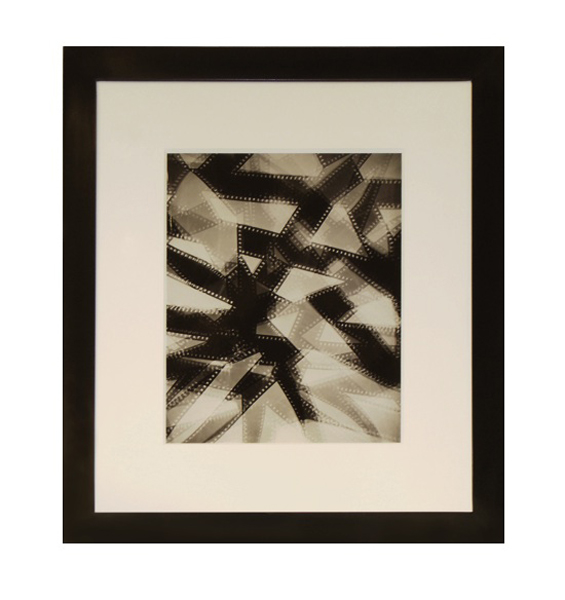
Allen Porter, Filmstrips, Photogram vintage gelatin silver print 1947
More Information
Allen Porter, Filmstrips, Photogram vintage gelatin silver print 1947
ALLEN PORTER (b.1926) USA
Filmstrips 1947
Photogram vintage gelatin silver print
Size: (unframed): H: 11” x W: 14”
Size: (frame): H: 20” x W: 23”
After attending art programs at the Art Institute of Chicago and the Chicago Academy of Fine Arts, Porter enrolled at the ID upon his return from military service in WWII. His course of study included graphic design and photography. His photograms were produced while working with famed ID photography instructors Frank Levstik and Ferenc Berko. Shortly after leaving the ID in 1949, Porter established a design office in Los Angeles during the height of the California modern design movement. He incorporated his innovative light work into design projects for important clients like Gruen Lighting and Carroll Sagar & Associates.
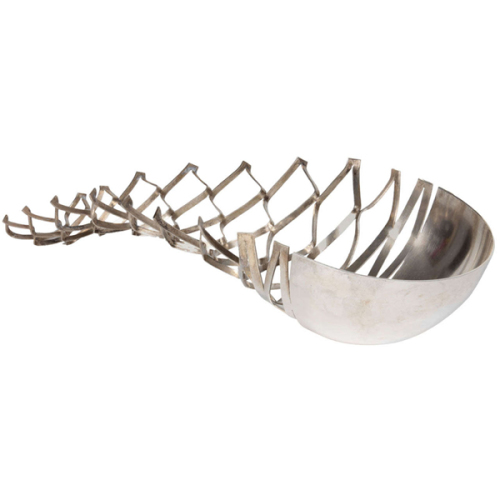
Ane Christensen Contemporary British Sterling Silver Bowl 1999
ANE CHRISTENSEN (b.1972) born in Copenhagen, Denmark/ based in London, UK
Bowl 1999
Sterling silver
Marks: AKC, 925, Z, British hallmarks
H: 2 ½” x L: 12”
Price: $5,950
The starting point for all of metalworker Ane Christensen’s tableware is a single sheet of metal. Her aim is to develop a three dimensional object from a flat sheet without adding or removing any elements. Japanese paper packaging influences Ane’s work, but a more important influence is the half finished or half demolished structures of building sites that she says can hold unexpected sculptural qualities.
Ane graduated from the Royal College of Art and has since been involved in exhibitions in London, Denmark and Copenhagen, including more recently at Collect, V&A.
Ane makes pieces in a variety of metals including silver, stainless steel and powder coated copper.
Size: H: 19” x W: 16 ½”; Size (with mat): H: 24” x W: 20”
Framed: H: 26 5/8” x W: 23 7/8”
Price: $6,500
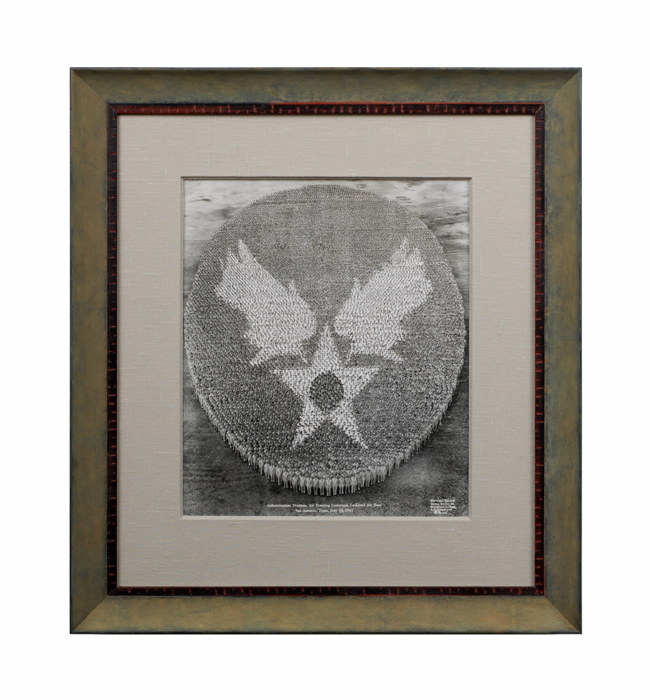
Known as the “unofficial photographer of America’s military,” Goldbeck conducted three-year tours to all of the major military bases in and outside of the United States until demand diminished for military group photos after World War II. He pushed the limits of his craft by working with larger and larger groups in striking designs. For his record setting group shot, in which 21,765 men were arranged to represent the Air Force insignia, he spent more than six weeks building a 200-foot tower and making blueprints of the formation and attire of his subjects. The photograph was subsequently featured in Life magazine and became the most frequently reproduced of his prints.
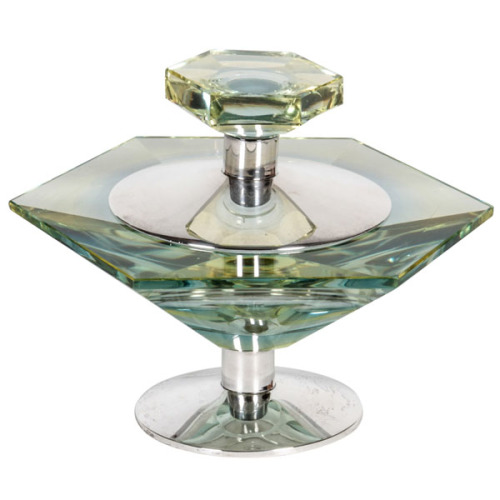
Hexagonal green-tinted lead crystal covered dish / tazza with lid in a stepped jewel-like form mounted with a silver lid and footed base silver
Marks: WMF logo, moon, crown, 800
For more information see: Wilhelm Wagenfeld und die Moderne Glasindustrie,Walter Scheiffele (Stuttgart: Verlag Gerd Hatje, 1994); WMF Ikora Metall / Metalwork, Carlo Burschel and Heinz Scheiffele (Stuttgart, Germany: ARNOLDSCHE, 2006).


 @hd_jewels