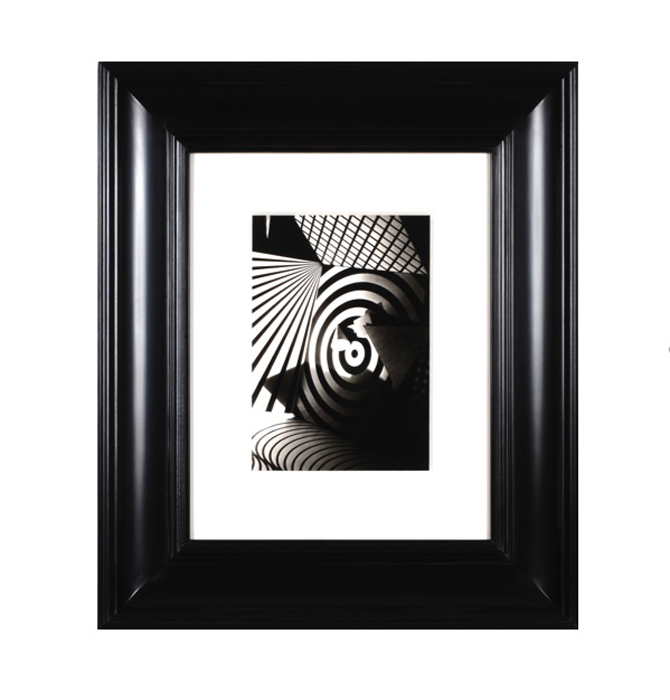
György Kepes, Abstraction, Gelatin silver print 1942
GYÖRGY KEPES (1906-2001) Hungary/USA
Abstraction 1942
Silver gelatin print
Signed: Gyorgy Kepes 1942 (in ink on back)
Framed size: H: 18 13/16” x W: 16”
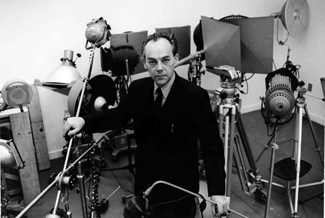
György Kepes was a Hungarian-born painter, designer, educator and art theorist. After emigrating to the U.S. in 1937, he taught design at the New Bauhaus (later the School of Design, then Institute of Design, then Illinois Institute of Design or IIT) in Chicago. In 1947 He founded the Center for Advanced Visual Studies at the Massachusetts Institute of Technology (MIT) where he taught until his retirement in 1974.
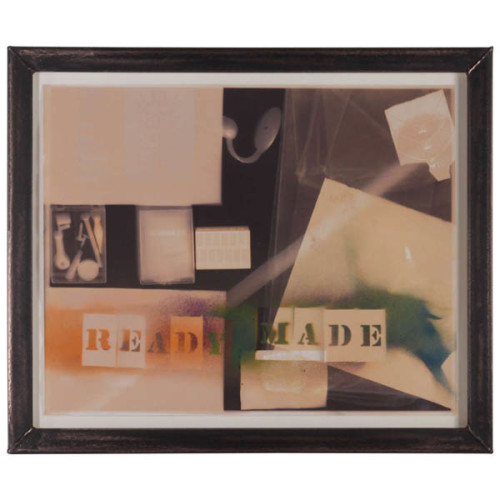
Thomas F. Barrow, Ready Made, Gelatin silver print photogram with applied spray paint, 1978
THOMAS F. BARROW (b. 1938) Kansas City, MO
Ready Made Photogram 1978
Gelatin silver print photogram with applied spray paint
Signed: Ready Made – 1978 – Thomas F. Barrow (in ink on back)
Exhibited: J.J. Brookings & Co. (San Jose, CA): Thomas F. Barrow: Inventories and Transformations, A Twenty Year Retrospective, Nov. 6 – Dec. 16, 1986. This exhibit occurred simultaneously with the following two museum shows: the San Francisco Museum of Modern Art (Nov. 6 – Jan 11, 1987) and the Los Angeles County Museum of Art (Feb. 26 – May 10, 1987).
Related photograph illustrated: Aperture: The New Vision: Forty Years of Photography, no. 87 (New York: Aperture Foundation, Inc., 1987), cover image.
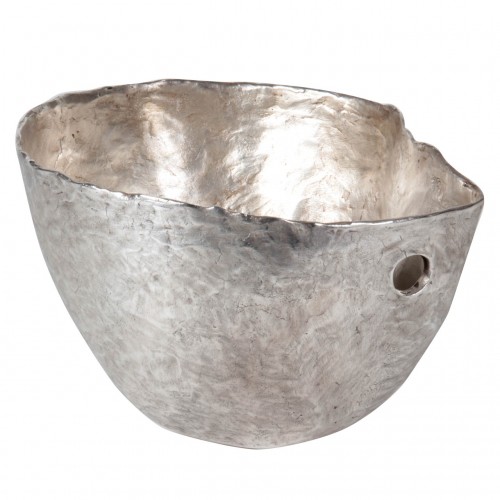
Linda Lee Johnson, Organic Shaped Sculpted Silver bird bowl Vessel XII c. 2004
LINDA LEE JOHNSON (1944-2018) Washington, DC
Sculpted silver bowl “Vessel XII” c. 2004
Irregular organic shaped lost wax cast silver bowl with an irregular shaped top and one pierced hole (3/4 inch). Approx. silver weight is 80 troy ounces.
Marks: Logo monogram, 5/20, initial monogram
H: 5 1/4″ x W: 8 1/2″ x D: 7 1/4″
At the age of three Linda Lee Johnson was given a handmade Native American bracelet from her father, a naval aviator, and subsequently another every time they crossed the country. By the time she was seven, she had seven bracelets which she never removed. She was an American field service exchange student to Greece in high school. It was here that she developed her love of theater, sculpture and ancient
jewelry. She graduated from the University of California, Berkeley, in English literature and dramatic art and immediately began to study sculpture making.
She was a founding member of the Berkeley Repertory Theatre, and a professional actress for nineteen years with many major roles in New York city and regional theaters around the country and abroad.
She studied jewelry making in New York City 1984-88.
In 1986, she was asked to place her pieces in Tiffany & Co. in all major stores. At the same time she had many featured pieces of jewelry, small sculpture and functional objects in the Museum of Modern Art design store.
Barney’s New York began to represent her in l989, where her jewelry and limited edition decorative art work are still found today.
She lived in Washington DC and the Adirondack Mountains where she continued to craft and sculpt her jewelry and decorative works of art until her passing in 2018.


 @hd_jewels