Benin King Oba bronze standing figure, African, Nigeria, 20th Century
More Information
Benin King Oba bronze standing figure, African, Nigeria, 20th Century
Benin King Oba bronze standing figure, Nigeria, 20th Century
Lost wax cast bronze with a verdigris patina and a desert sand surface highlighting a rich brown patina.
H: 15″ x D: 4 1/2″ x W: 4 1/2″
The art of Benin is the product of an urban royal court, and is meant to symbolize and to extol the power, mystique, grandeur, continuity, and endurance of the ruling dynasty and its governing institutions. From the 14th century until its fall in 1897, Benin was ruled by the Oba, a divine ruler at the head of the political system of titled chiefs. Under royal support, a number of craftsman’s guilds produced bronze, brass, and wood sculptures and embroidered cloth, all of which have become prized by museums and collectors.
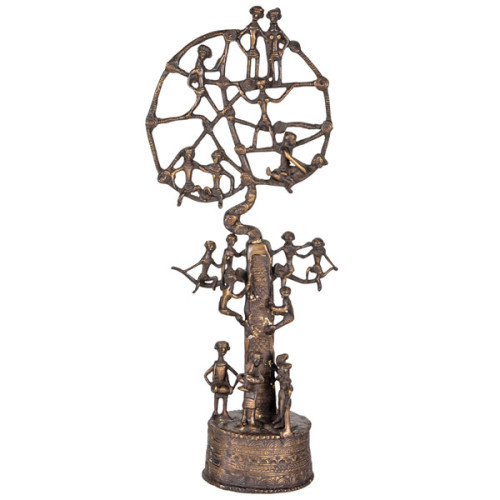
African Bronze “Tree of Life” Sculpture 20th Century
African Bronze “Tree of Life” Sculpture 20th Century
Sand cast bronze with a brown black patina with golden highlights in an open work design depicting 18 figures perched on a tree form with various intricate pattern details.
***As a Primitive / Tribal sculpture this piece visually relates to some of the sculpture and painting of the renowned French artist Jean Dubuffet.
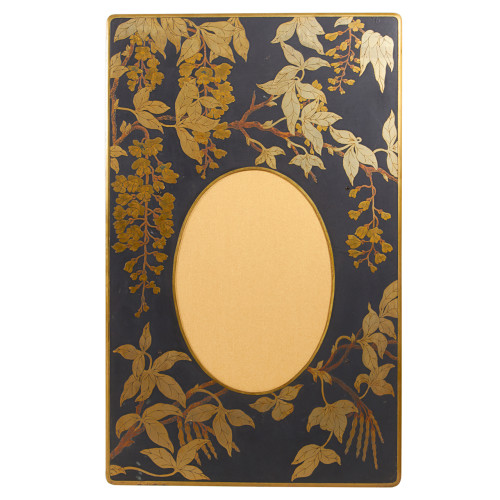
Scandinavian Art Nouveau “Wisteria” bronze photo frame c.1910
SCANDINAVIAN ART NOUVEAU
“Wisteria” bronze photo frame c.1910
Elaborately detailed, acid etched and multi-patinated bronze table top photo frame with gilt details of a cascade of wisteria blossoms, leaves and vines.
Overall Frame: H: 12” x W: 7 ½”
Oval photo window opening H: 5 ½” x W: 4”
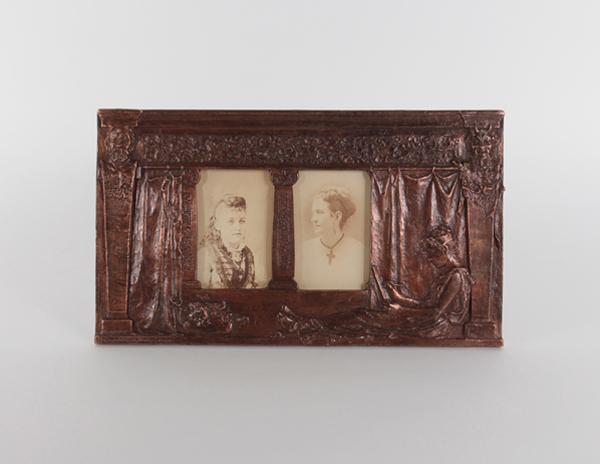
Sir William Reynold Stephens / British Arts & Crafts Bronze / Copper photo frame 1886
SIR WILLIAM REYNOLD STEPHENS (1862–1943) London, UK
BRITISH ARTS & CRAFTS
Photo frame 1886
Bronze / copper lost wax casting with an elaborate stage set with a seeded figure and two capitals with mythological telamons, easel back
Marks: 18 December 1886, W Reynold Stephens London (signature and markings in the cast, bottom left front)
H: 6 5/8″ x W: 11 1/2″
Sculptor of decorative works, portraits and monumental figures, goldsmith and painter. Born 8 August 1862 in Detroit, U.S.A., of British parents; his father’s name was Stephens. Educated in England and Germany, then studied at the R.A. Schools and won prizes for sculpture and painting 1887. Assumed the additional name of Reynolds 1890. Exhibited at the R.A. 1886–1942, solely as a sculptor after 1894. Influenced to some extent by Alfred Gilbert and Pre-Raphaelite medievalism. Made many memorials, including those to Sir William Q. Orchardson, R.A., in St Paul’s, and to Archbishop Lord Davidson in the courtyard of Lambeth Palace. In 1904 he designed the chancel screen, reredos and other decorations for the Church of St Mary the Virgin, Great Warley, Essex. F.R.B.S. 1904, P.R.B.S. 1921–33, awarded R.B.S. gold medal 1928; knighted 1931. Died at Tunbridge Wells 23 February 1943.





 @hd_jewels