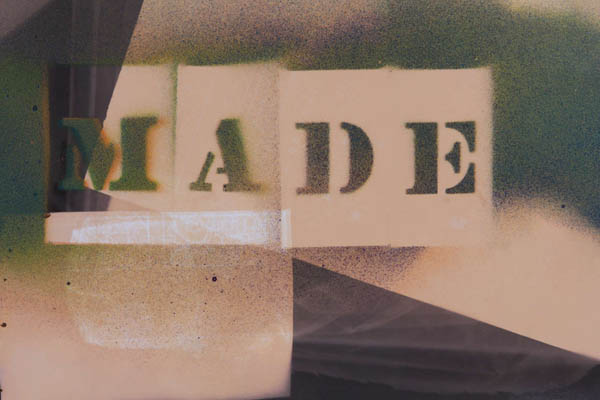
Thomas F. Barrow, Ready Made, Gelatin silver print photogram with applied spray paint, 1978
More Information
Thomas F. Barrow, Ready Made, Gelatin silver print photogram with applied spray paint, 1978
THOMAS F. BARROW (b. 1938) Kansas City, MO
Ready Made Photogram 1978
Gelatin silver print photogram with applied spray paint
Signed: Ready Made – 1978 – Thomas F. Barrow (in ink on back)
Exhibited: J.J. Brookings & Co. (San Jose, CA): Thomas F. Barrow: Inventories and Transformations, A Twenty Year Retrospective, Nov. 6 – Dec. 16, 1986. This exhibit occurred simultaneously with the following two museum shows: the San Francisco Museum of Modern Art (Nov. 6 – Jan 11, 1987) and the Los Angeles County Museum of Art (Feb. 26 – May 10, 1987).
Related photograph illustrated: Aperture: The New Vision: Forty Years of Photography, no. 87 (New York: Aperture Foundation, Inc., 1987), cover image.
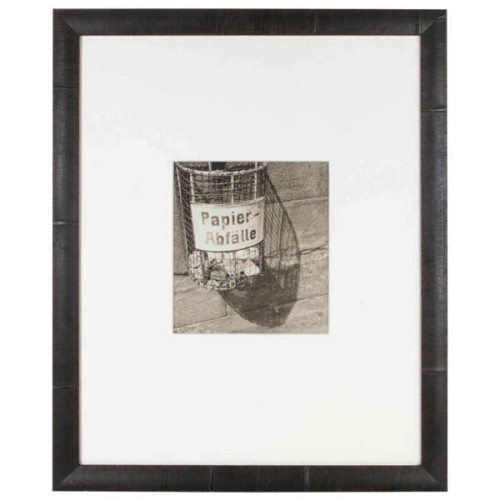
Donald Deskey, Papier-Abfälle, Gelatin silver print, c.1925-30
DONALD DESKEY (1894-1989) USA
Papier-Abfälle c.1925-30
Provenance: The Estate of Donald Deskey
H: 9 7/8” x W: 7 15/16”
Framed: H: 22” x W: 18”
Donald Deskey was a native of Blue Earth, Minnesota. He studied architecture at the University of California, but did not follow that profession, becoming instead an artist and a pioneer in the field of Industrial design. In Paris he attended the 1925 Exposition Internationale des Arts Décoratifs et Industriels Modernes, which influenced his approach to design. He established a design consulting firm in New York City, and later the firm of Deskey-Vollmer (in partnership with Phillip Vollmer) which specialized in furniture and textile design. His designs in this era progressed from Art Deco to Streamline Moderne.
He first gained note as a designer when he created window displays for the Franklin Simon Department Store in Manhattan in 1926. In the 1930's, he won the competition to design the interiors for Radio City Music Hall. In the 1940's he started the graphic design firm Donald Deskey Associates and made some of the most recognizable icons of the day. He designed the Crest toothpaste packaging, as well as the Tide bullseye. His company is still in operation in Cincinnati. A collection of his work is held by the Cooper-Hewitt, National Design Museum. He is regarded the American pioneer of industrial design, and contemporary American graphic design.
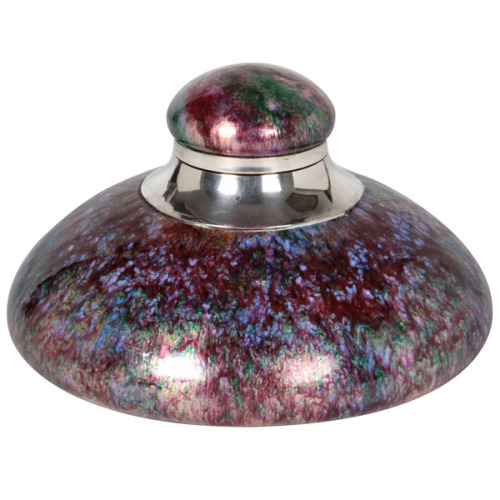
Paul Haustein Germany Rare Jugendstil enamel and silver inkwell c.1900
PAUL HAUSTEIN (1880-1944) Germany
HERMANN BEHRND (b. 1849) SILBERWARENFABRIK (silver) Dresden, Germany
JAKAB RAPOPORT (enamelist) Budapest, Hungary
Inkwell c. 1900
Multicolored burgundy, purple, blue and green enamel with silver mounts, glass insert
Marks: Moon, crown, 800, HB (Hermann Behrnd mark)
Same model with variant mount illustrated: Deutsche Goldschmiede-Zeitung, n.d. (circa 1903-05), p. 23
For related works and more information see: Art Nouveau in Munich: Masters of Jugendstil, ed. Kathryn Bloom Hiesinger (Philadelphia: Philadelphia Museum of Art, 1988) pp. 67-69; Jugendstil in Dresden, Aufbruch in die Moderne, Gisela Haase et al., exh. cat. (Dresden: Staatliche Kunstsammlungen Dresden; Wolfratshausen: Edition Minerva, 1999).
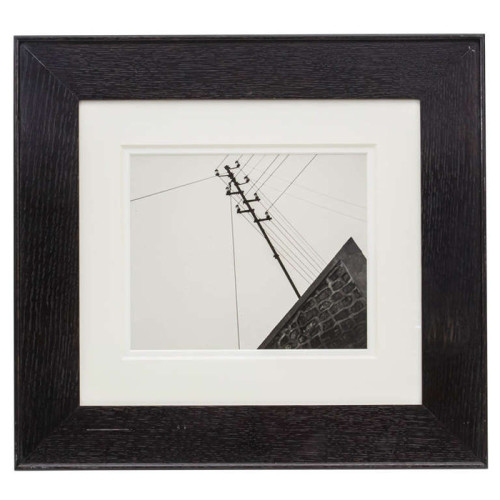
Signed: Paris 1927, A.Kertesz, Page 150 (in pencil on back); ANDRÈ KÈRTESZ (stamped on back).
Framed size: H: 16 5/8” x W: 17 13/16”
Throughout most of his career, Kertész was depicted as the “unknown soldier” who worked behind the scenes of photography, yet was rarely cited for his work, even into his death in the 1980s. His work itself is often described as predominantly utilizing light and even Kertész himself said that “I write with light”. He was never considered to “comment” on his subjects, but rather capture them – this is often cited as why his work is often overlooked; he stuck to no political agenda and offered no deeper thought to his photographs other than the simplicity of life. With his art’s intimate feeling and nostalgic tone, Kertész’s images alluded to a sense of timelessness that was inevitably only recognized after his death. Unlike other photographers, Kertész’s work gave an insight into his life, showing a chronological order of where he spent his time; for example, many of his French photographs were from cafés where he spent the majority of his time waiting for artistic inspiration. Although Kertész rarely received bad reviews, it was the lack of them that lead to the photographer feeling distant from recognition. Now however, he is often considered to be the father of photojournalism. Even other photographs cite Kertész and his photographs as being inspirational; Henri Cartier-Bresson once said of him in the early 1930s, “We all owe him a great deal”.






 @hd_jewels