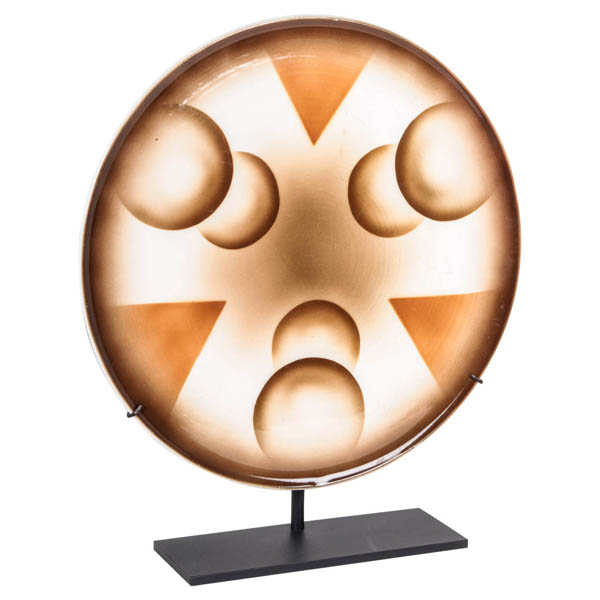
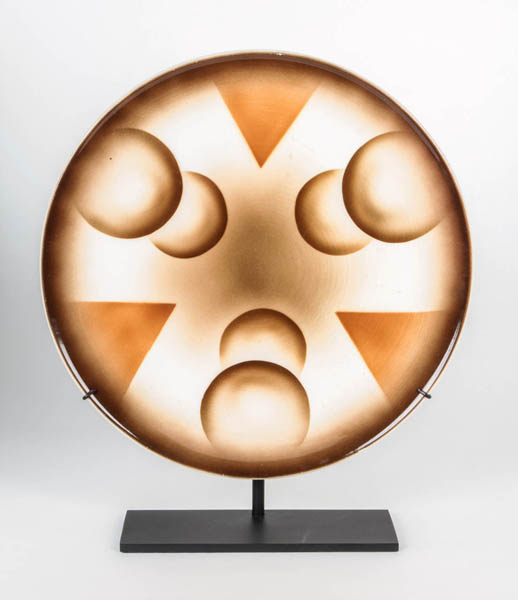
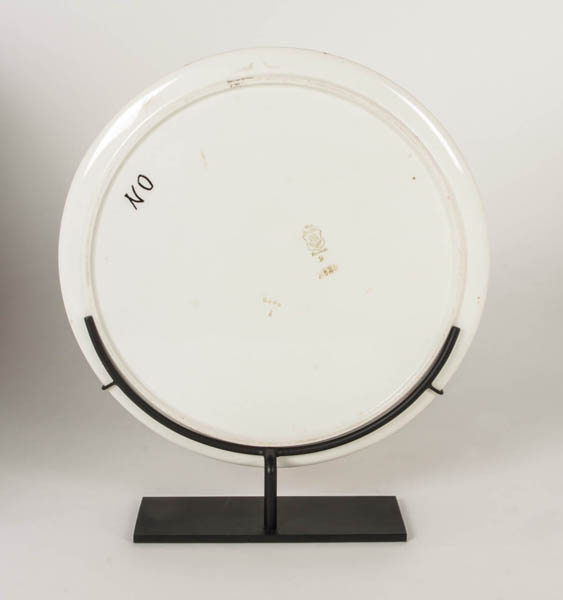
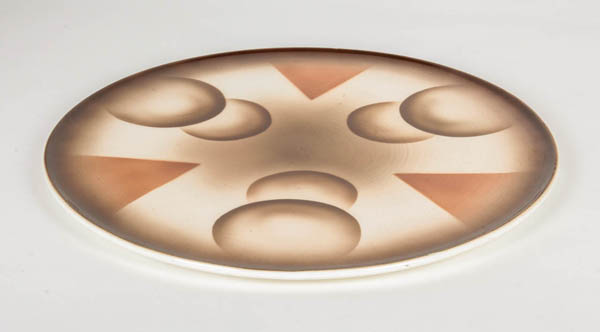
Wolfgang Kreidl / Max Roesler Jugendstil Keramik "Darmstadt" charger c. 1930
More Information
Wolfgang Kreidl / Max Roesler Jugendstil Keramik “Darmstadt” charger c. 1930
WOLFGANG KREIDL (1906-1972) Dresden, Germany
MAX ROESLER FEINSTEINGUTFABRIK A.G. Germany
“Darmstadt” charger c. 1930
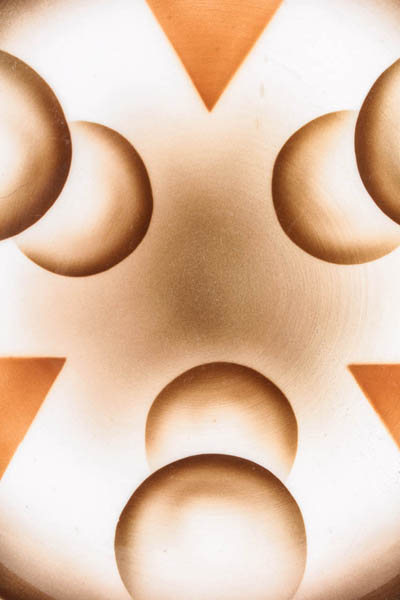
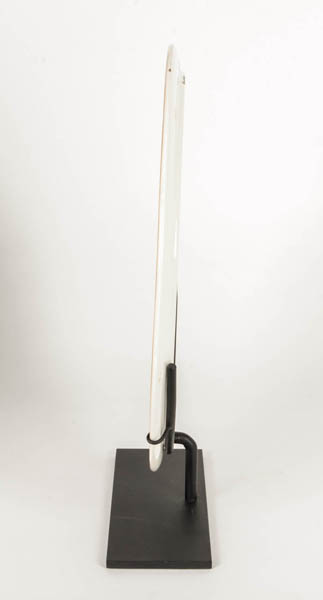
Brown, orange and cream glazed earthenware with a triangle and circle airbrush design, on stand
Marks: Max Roesler Rodach (shield mark), 9, 2925, 6239 1 (under the glaze)
Model illustrated: Keramiken der Neuen Sammlung im Internationalen Keramik-Museum Weiden, Hans Wichmann, (Munich: Staatliches Museum für angewandte Kunst, 1990), cover image and p. 65; Design Contra Art Déco: 1927-1932 Jahrfünft der Wende, Hans Wichman (Munich: Prestel Verlag, 1993), p. 101.
For more information about Wolfgang Kreidel and other models with matching air brush design see: Max Roesler, Keramik zwischen Jugendstil und Art Deco, Rolf Peters (Darmstadt: Museum Künstlerkolonie Darmstadt, 1998), p. 98-102.
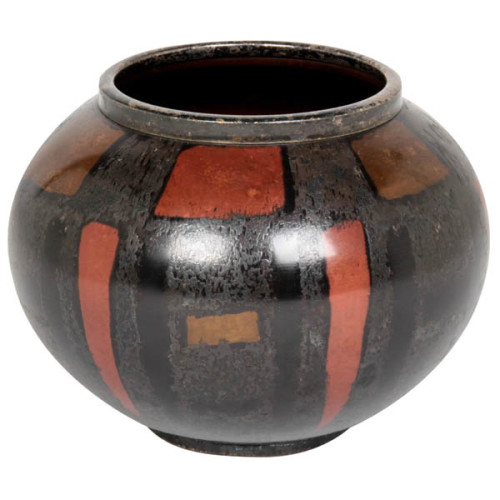
Silver-plated copper with with red patinated squares and rectangles on a black-patinated textured background
Marks: WMF castle mark, IKORA
Illustrated: WMF Ikora Metall / Metalwork, Carlo Burschel and Heinz Scheiffele (Stuttgart, Germany: ARNOLDSCHE, 2006), p. 142, 90/585.
For more information see: WMF Glas Keramik Metall 1925-1950, Jörg Schwandt, (Berlin: Kunstgewerbemuseum, Staatliche Museum Preussischer Kulturbesitz, 1981). Metallkunst, Band IV (Berlin: Bröhan-Museum, 1981) pp. 546-579.
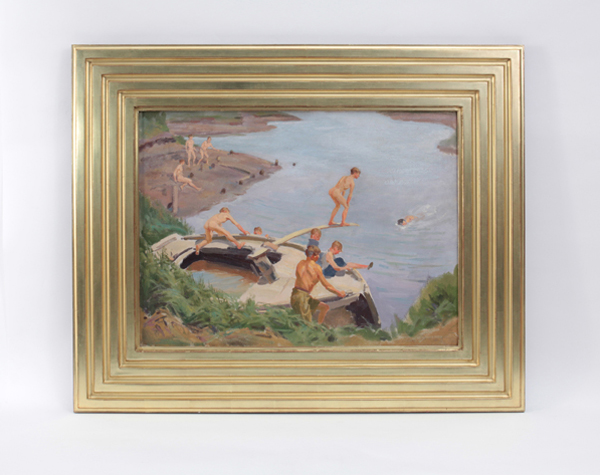
Edmund F. Ward “The Swimming Hole” Oil on canvas c. 1930
EDMUND F. WARD (b. 1892 – 1991) USA
“The Swimming Hole” c. 1930
Oil on canvas
Marks: signed Edm. F. Ward (lower right); partial labels verso:Westchester Arts and Crafts Guild; 4 Edmund F. Ward
For more information on the artist see: Who Was Who in American Art,Peter Hastings Falk, ed. (Madison, Conn.: Sound View Press, 1985), p. 658.
Canvas H: 18” x W: 24”
Framed H: 27 9/16” x W: 33 9/16”
Price: $14,000
Ward studied at the Arts Student’s League with Edward Dufner, George Bridgeman, and Thomas Fogarty. He was an illustrator for several national magazines and books. In 1925, Ward exhibited an award winning work at the Art Institute of Chicago. He is perhaps best known for his WPA mural in the Federal Building, White Plains, New York.
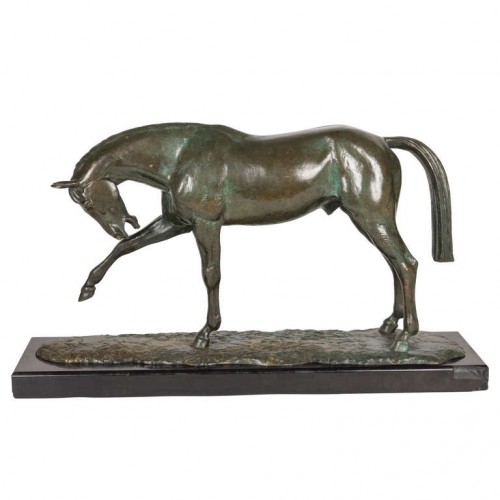
Andre Vincent Becquerel Arabian Horse bronze sculpture c. 1930
ANDRE VINCENT BECQUEREL (1893-1981) France
Arabian Horse sculpture c. 1930
Bronze with overall rich green/brown patina with intricate sculpting and details, black Belgian marble plinth base
Signed: A. Becquerel (inscribed in the bronze)
H: 12” x W: 21” x D: 6”
Price: $27,500
Andre Vincent Becquerel was born in St. Andre-Farivilliers. He studied at the l’Ecole des Beaux Arts in Paris under Hector Lemaire and Prosper Lecourtier. He specialized in fine animal sculpture and regularly exhibited at the Salon des Artistes Francais from 1914 to 1922. Becquerel worked for the Editeur Parisiens Edmond Etling in Paris and created a monumental sculpture in patinated plaster for the “Pavillon international” at the Exposition Internationale in Paris in 1937.


 @hd_jewels