


Product Description
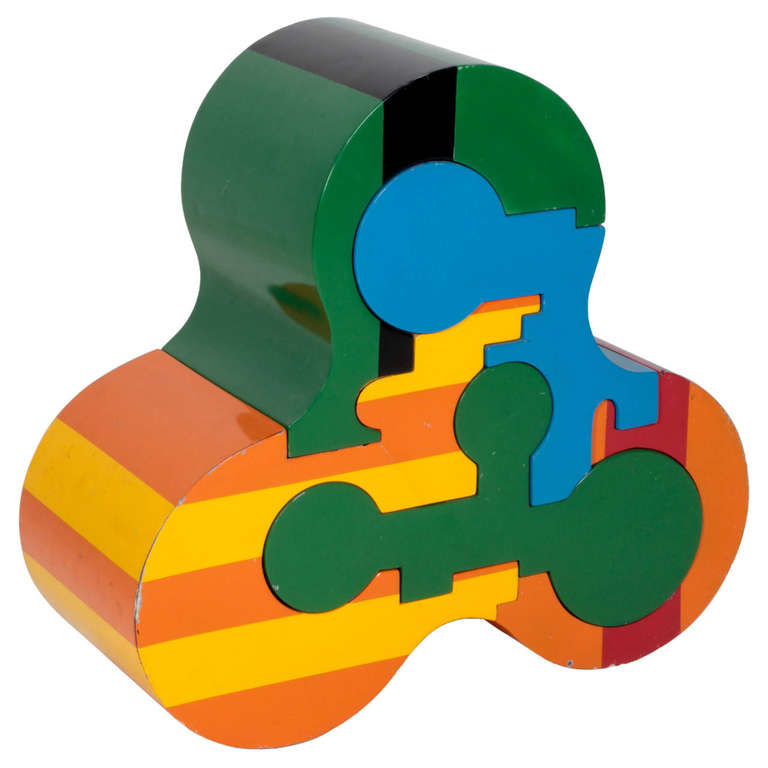
Guy de Rougemont Puzzle Sculpture c. 1970
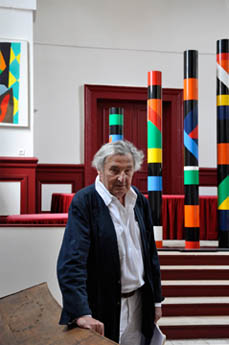
GUY DE ROUGEMONT (b. 1935) Paris, France
“Puzzle” sculpture c. 1970
Lacquered PVC in a rounded movable puzzle form with interlocking pieces.
H: 24 1/2″ x L: 26″ x D: 11″ (closed)
H: 24 1/2″ x W: 26″ x D: 11″
Price: $24,000
Guy de Rougemont is a French painter and sculptor and is famous for his use of vibrant geometric motifs. His works are a perfect blend of pop art and minimalism. In 1990, the Musée des Arts Décoratifs in Paris (Museum of Decorative Arts) presented an important retrospective about this major contemporary French artist, member of the prestigious French Académie des Beaux-Arts. ROUGEMONT, Espaces publics et Arts décoratifs, 1965-1990, Musée des Arts décoratifs, Paris, 5/22/1990 – 08/19/1990
Guy de Rougemont Puzzle Sculpture c. 1970
EMMA LUNA California
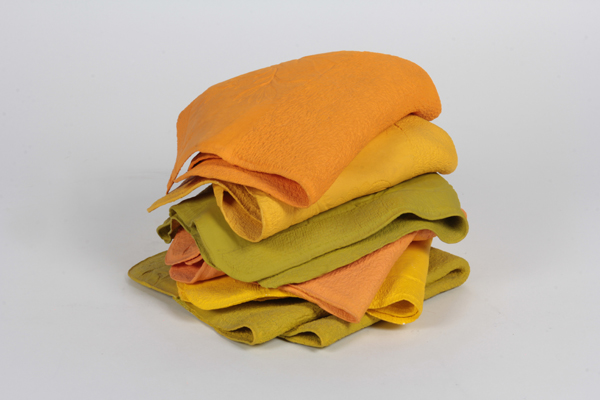
Stack of terry wash cloths
Emma Luna has become increasingly known for her work in ceramic sculpture and mixed media on paper. A native of the Dominican Republic, she has lived from age 14 in the United States. She has a B.S. degree in Art Education from the University of Minnesota. Before moving to California, she lived in Cambridge, Massachusetts, where, while working as an art teacher, she obtained a B.F.A. in painting at Massachusetts College of Art and was associated with the Radcliffe College Ceramics Studio at Harvard University. There she learned the technique of raku ceramic firing. Her ceramic sculptures have been shown at SOFA New York, SOFA Chicago, and in Los Angeles.
EMMA LUNA Statement
My sculpture reproduces everyday fabric objects such as washcloths, socks, and just about anything I can get my hands on to reproduce, utilizing the illusionist possibilities inherent in clay as a medium. However, I render this illusion so that the ordinary object simultaneously produces an impression on the extraordinary. Rows of rolled hands towels, piles of terry cloths whose positions defy gravity, a chaotic pile of laundry frozen in shapes that the fabric itself could never hold, and so forth.
Mine is a voyage of intimate exploration into a subliminal form shared by both clay and fabric: the fold. At the same time, my work de-familiarizes an anonymous and routine form of ‘women’s work’ whose aesthetic possibilities no one but a woman would be likely to apprehend.
EMMA LUNA Resumé
Selected Solo Exhibitions
2006 Mixed-media on paper, John Natsoulas Gallery, Davis, CA
2006 “Art Journey’s Back to the Long, Long Ago and Far Away,” Mixed-media on paper, The International House, Davis, CA
2004 “Corazones,” Gallery Casa de Chavón, Santo Domingo, Dominican Republic
2003 Sam Houston State University Art Gallery
2003 John Natsoulas Gallery, Davis, CA
2003 UC Davis Alumni Center Gallery, Davis, CA
1999 “Impressions,” Memorial Union Art Gallery, University of California, Davis, CA
1986 “Latin American Images,” Austin Arts Center, Trinity College, Hartford, CT
1985 Gallery 57, Cambridge Art Council, Cambridge, MA
Selected Group Exhibitions and Galleries
2013 “Black, White, Red – A Sculpture Show,” A New Leaf Gallery | Sculpturesite, Sonoma, CA
2013 “Clay & Glass National Juried Exhibition,” Association of Clay and Glass Artists of California (ACGA), City of Brea Art Gallery, Brea, CA
2013 National Art Competition, Pence Gallery, Davis, CA
2012 Christopher Hill Gallery, St. Helena, CA
2011-2012 Crocker Museum Shop, Crocker Art Museum, Sacramento, CA
2010-2012 Erin Martin Design, St. Helena, CA
2009-2012 Davis Artists’ Cooperative Gallery, Davis, CA
2007-2012 A New Leaf Gallery | Sculpturesite, Sonoma, CA
2009-2011 F Dorian, San Francisco, CA
2010 “Sculptural Objects & Functional Art (SOFA),” Navy Pier, Chicago, IL
2010 “3rd Annual Trompe L’oeil,” John Natsoulas Gallery, Davis, CA
2009 “Small Works,” John Natsoulas Gallery, Davis, CA
2009 Amoca, Pomona, CA
2009 “The Uncommon Object,” Pence Gallery, Davis, CA
2008 “Women Painting Women,” Pence Gallery, Davis, CA
2007 “Biannual Juried Art Show,” Sonoma Museum of Art, Sonoma, CA
2003-2007 Annual Auction Art Show, special invitation, Crocker Art Museum, Sacramento, CA
2000-2007 Mostly Glass, Englewood, NJ
2004-2006 “Sculptural Objects & Functional Art (SOFA),” New York City, NY
2001-2006 “Sculptural Objects & Functional Art (SOFA),” special invitation, Navy Pier, Chicago, IL
2005 “One Hundred Socks,” Sonoma Valley Museum of Art, Sonoma, CA
2006 “The Flatlanders,” special invitation regional show, University of California, Davis, CA
2006 Ceramics, John Natsoulas Gallery, Davis, CA
2006 Art Foundry Gallery Group Show, Sacramento, CA
2005 “Realism in Art Juried Art Show,” Mostly Glass, Englewood Cliffs, NJ
2005 “Sonoma County Juried Group Show,”The DiRosa Preserve, Napa, CA
2004 Amdur Gallery, Glenview, IL
2004 “Primavera ’04,” Artists-in-Residence show, Fundación Centro Cultural Altos de Chavón, La Romana, Dominican Republic
2004 “Corazones Perros,” Museo de la Cerámica Contemporánea, Santo Domingo, Dominican Republic
2003 Gallery Arte Tamburini, La Romana, Dominican Republic
2003 “Otoño 2003,” Artists-in-Residence show, Fundación Centro Cultural Altos de Chavón, La Romana, Dominican Republic
2002 “Crocker-Kingsley 73rd Invitational Group Exhibition,” Crocker Art Museum, Sacramento, CA
2001 “Reality Check,” juried art show, Ohio Craft Museum, Columbus, OH
2001 Craft Museum, City of Davis First Juried Exhibition, Davis, CA
2001 “Small Ceramics Art Show,” Academy of Design, New York City, NY
2001 “Palm Springs International,” Palms Springs, CA
2001 “Ceramics 30,” John Natsoulas Gallery, Davis, CA
2001 “Sculptural Objects & Functional Art (SOFA),” The Armory, New York City, NY
2001 “All Creatures Great and Small,” John Natsoulas Gallery, Davis, CA
2001 “Los Angeles Art Show,” UCLA, Los Angeles, CA
2001 “Two Decades,” John Natsoulas Gallery, Davis, CA
2001 California Conference on Clay Arts, John Natsoulas Gallery, Davis, CA
2001 Invitational show, Sutter Club, Sacramento, CA
1999 “Celebrate Ceramics,” Handworks Gallery, Acton, MA
1999 Blooming Art Gallery, Sacramento, CA
1999 California Association of Ceramic Artists show, Jeff’s Objets d’Art, Davis, CA
1998 Artists-in-residence show, Altos de Chavón Gallery, La Romana, Dominican Republic
1998 Oannes Gallery, Tiverton, RI
1996 Craigin-Fife Gallery, Brookline, MA
1995 Invitational show, Concord Art Association, Concord, MA
1995 “Within Gender,” invitational show at A Conference on Latin American Literature, Montclair State University, Upper Montclair, NJ
1991 “Voces Prevalecientes,” group show of Hispanic Artists, Firehouse Multicultural Arts Center, Jamaica Plain, MA
1990 “The Space,” organized by the Hispanic Office of Planning and Evaluation (HOPE) as a benefit for AIDS education, Boston, MA
1986 “Taming the Beast,” three-person show, Cambridge Multi-Cultural Arts Center, Cambridge, MA
1986 Dominican artist’s exhibit, Essex County College, Newark, NJ
1985 Group show of women’s paintings, Massachusetts College of Art, Boston, MA
Selected Collections
Museo de la Cerámica Contemporánea, Santo Domingo, Dominican Republic
Ohio Craft Museum, Columbus, OH
Hawaii State Art Museum, Honolulu, HI
Arizona State University Ceramic Museum, Tempe, AZ
The White House Christmas Tree Ornament Collection, Washington, DC
Sandy Bessen, Sante Fe, NM
Edinhurt Gallery, Don Merrill, Beverly Hills, CA
Barbara Fromm, Palm Desert, CA
Bea Larsen, Cincinnati, OH
Selected Honors & Awards
2013 Third Place Winner, ACGA’s “Clay & Glass National Juried Exhibition,” La Brea, CA
2009 Honorable Mention, Sonoma Valley Museum of Art Biennial, Sonoma, CA
2007 Second Place Winner, Sonoma Valley Museum of Art Biennial, Sonoma, CA
2003-2004 Fulbright Fellowship, Parsons School of Design, Los Altos de Chavón, La Romana, Dominican Republic
2002 Invited to create an ornament for the White House Christmas tree, now part of the White House collection
2002 Woodland Art Council Teaching Award
1999 Pollock-Krasner Foundation Artist’s Grant ($10,000)
1999 Three mixed media on paper works acquired by Canadian artistic design firm D-Zign I.P.P., Inc.
1997-1998 “Two Collection,” juried selection of arts and crafts selected for WGBH/Channel 2 Auction
1994 Three monotype prints acquired by the Fogg Art Museum, Harvard University, as part of the museum’s print lending-library
Selected Publications and Media
2013 “Clay, glass elevated in Brea,” review of ACGA show by Richard Chang, photo of sculpture “Las Toallitas de mi Abuela,” The Orange County Register, February 2. 2006 “Emerging,” book cover and article by Rita de Maeseneer, Encuentro con la Narrativa Dominicana Contemporanea, p. 230-233, Iberoamericana, Vervuert, Belgium.
2006 “Memory’s Allure,” review by Suzanne Munich, Davis Enterprise Newspaper.
2006 Wheel-throwing demonstrations for KCRA TV news, April and June.
2005 “Working Gender,” Cultural Representation of Women and Labor, Brujula University of California, Davis, Volume 4 Number 1, December.
2004 “Emma Luna’s Hearts,” article by Stephen Kaplan, Ceramics Monthly Upfront, December.
2004 “‘Corazones’ de Emma Luna,” El Caribe, Santo Domingo, Dominican Republic.
2004 “Dominican Sojourn,” article and interview by Aldrich Tan, The Davis Enterprise.
2003 “Taking Artistic Wing,” article by Marilyn Moyle, The Davis Enterprise January 30.
2002 “Illusionism without Illusions,” article by Neil Larsen and Susan Kaiser, Ceramics Art and Perception, Issue 50.
2002 Article and interview by Janine Tully, guest lecture and presentation to the Hawaii Craftsman Raku Ho’laule’a conference , Honolulu Star Bulletin, May 26.
2001 Featured on “Modern Masters” television show, Home and Garden Cable Network, May 20
2001 “Celebrating Clay,” front page photo and article by Paul Dorn, The Davis Enterprise Weekend, May 3.
1999 “‘Celebrate Ceramics’ Draws a Crowd,” photo and article by Libbie Payne, The Boston Globe, October 10.
1999 Preview of “Impressions,” Memorial Union Art Gallery, article by Steven Jenkins, Artweek, Issue 7/8.
1999 “Multi-talented Artist Displays Work at MU,” feature article by Beth Rose Middleton, The California Aggie, UC Davis, August 2.
1999 Faculty Show, Davis Art Center, reviewed by Kimi Julian, Sacramento News and Review, January 14; By Melissa Leavitt, The California Aggie, January 14; By Marilyn Moyle, The Davis Enterprise, January 28.
1998 Group Sculpture show, Oannes Gallery, Tiverton, RI, reviewed in Art New England Magazine.
1998 “Notas Culturales,” taped interview with Luz Vicioso, Channel 19, La Romana, Dominican Republic, August 24.
1998 “Caña TV,” live interview for the Luisa María Ortiz Show, La Romana, Dominican Republic, Aug. 15.
1998 “Las Huellas del Caribe en Altos de Chavón,” article by José Bautista, El Siglo, Santo Domingo, Dominican Republic, July 23.
1996 Artist’s Profile in Ceramics Monthly Magazine, June-August.
1995 “The Arts and Craft of Emma Luna,” feature article by art critic Christine Temin, The Boston Globe, March 1.
1990 “Centro,” interview by the Boston NBC affiliate’s Spanish language public affairs program.
Academic History and Professional Experience
Private Art Instruction, home studio (present)
1998-2013 Research Specialist, Printmaking Lab, University of California, Davis, CA
2009 Guest speaker and presenter at ceramics workshop at the Crocker Museum of Fine Art
2005-2006 Freelance Art Teacher, Merryhill School, Davis, CA
2006 Guest speaker and presenter on KVIE Television Guest Artist Series, Sacramento< CA
2006 Guest speaker and presenter at the California Association of Ceramic Art Conference, John Natsoulas Gallery, Davis, CA
1999-2003 Freelance Art Teacher, Davis Art Center, Davis< CA
2003 Invited to lecture and conduct a three-day ceramic sculpture workshop at Sam Houston State University Art Gallery, Houston, TX
2002 Presentation and lecture at the Honolulu Academy of Art
2002 Clay demonstration at the University of Hawaii Windward
2001 Guest speaker and presenter at the California Association of Ceramic Art Conference, John Natsoulas Gallery, Davis, CA
1985-1998 Art Teacher (Full-time), Boston Unified School Department, Boston, MA
1998 Visiting Artist, University of California Davis Craft Center, Davis, CA
1998 Artist-in-Residence (ceramics and sculpture), Parson’s School of Design, Los Altos de Chavón, La Romana, Dominican Republic, June-August
1997 Workshop on saggar-firing and terra sigillata techniques, Radcliffe College ceramics studio
Education
1986 Massachusetts College of Art, BFA, Painting
1983 University of Minnesota, BS, Art Education
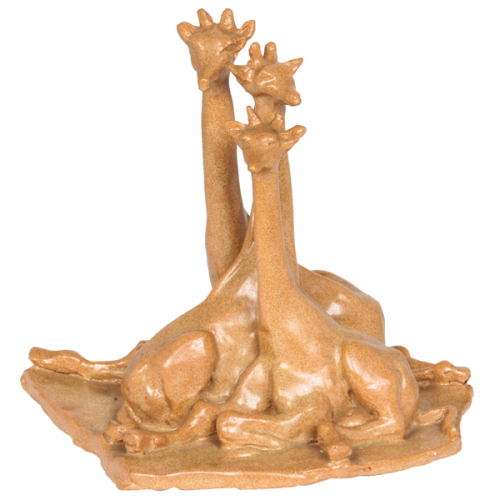
HULDA ROTIER FISCHER (1893 – 1982) Milwaukee, WI
Three-resting giraffes sculpture 1936
Handbuilt earthenware sculpture with a golden light brown glaze.
Marks: Hulda Rotier Fischer 36 (hand incised)
H: 6 1/2″ x W: 7″ x D: 5 1/2″
Price: $2,300
Hulda Rotier Fisched studied at the Milwaukee Normal School and was a student of Robert von Neumann Sr. In 1921 she also studied with Carl Holty. She worked as an Art Instructor at Shorewood Opportunity School for 30 years. Rotier Fischer was a Member of the Milwaukee Art institute.
She is the recipient of many Milwaukeee Journal Awards.
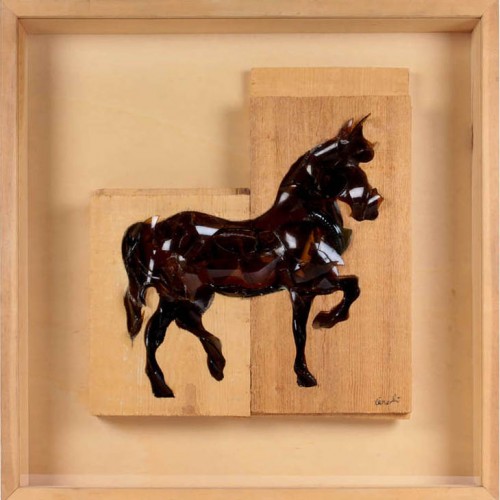
MARIO CEROLI (b. 1938) Italy
“Cavallino” 2004
Brown bottle glass in the shape of a horse with wood composition and framing
Signed: Ceroli
H: 21” x W: 21” x D: 2 3/4″
Price: $30,000
Mario Ceroli has been universally acclaimed at the age of 27, when he was awarded in 1966 wih the Sculpture Prize at the Venice Biennale for his wooden «Cassa Sistina» (a tribute to the Sixtine Chapel). Ceroli has realised important works for several prestigious institutions (such as the equestrian sculpture for the RAI, which has become the national broadcasting channel trademark; the central square, the Church and the theater in Porto Rotondo; a monumental sculpture in FIumicino Airport Rome…), prominent collectors (Agnelli and Barilla among the others), and he has been responsible for the conception of the stage sets of world renowned theaters such as la Fenice-Venice, La Scala-Milan, the Bolchoi-Moscow, the Arenas of Verona and the Opera of Rome in the last thirty years. Since the 1960’s Ceroli’s work has made its mark by using natural wood in particular Russian pinewood, that he assembles with a variety of materials; burnt wood, lead glass, in line with the philosophy of the Arte Povera. In the 1960’s while the artists of Pop Art were reinterpreting the daily life images, Mario Ceroli paid homage to the great classics of the history of art ( Homage to Leonardo da Vinci, Sixtine Chapel, Paolo Uccello, Piero della Francesca, Andrea Mantegna) and reinterpreted his contemporaries like Giorgio De Chirico. The term Arte Povera was used for the first time in September 1967, one year after Mario Ceroli received his prize at the Venice Biennale. One can find nevertheless, the roots of the principal aspects of this movement during the group show that took place at la Tartaruga gallery in Rome in 1965 that included Ceroli, Boetti, Pascali and other artists then all renamed as poveristi.
 @hd_jewels