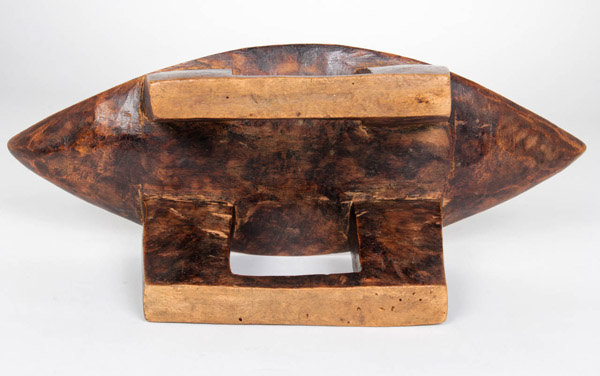
Somalia African Tribal Wood Headrest, Early to mid 20th Century
More Information
Somalia African Tribal Wood Headrest, Early to mid 20th Century
SOMALIA
Head rest early to mid 20th Century
Carved wood with rich natural patina
H: 4 3/4″ x W: 13″
Headrests are used by both Somali men and women while resting or sleeping. It is popularly believed that the headrest serves a protective function by elevating the head off the ground during sleep, thereby preventing any possible attack by snakes or scorpions. Men’s headrests, such as this one, generally feature a smaller base that makes them somewhat unstable to sleep on, while the rectangular bases of women’s headrests are usually more stable. Scholars suggest that this instability is purposeful as it prevents the user from falling into a deep sleep while guarding the herds at night. It is in this sense that the headrest itself has become a symbol of vigilance among Somali nomads. Headrests also play an important role in the nuptial ceremonies of Somali nomads. On his wedding night, the groom places the tubash (a sum of money) under the bride’s headrest. The morning after the marriage is consummated, the bride will use this money to purchase an amber necklace, the symbol of her new status.
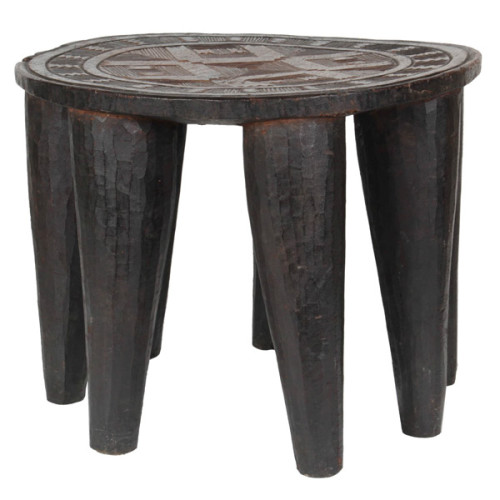
African Tribal Nupe stool Nigeria, early to mid 20th Century
NUPE TRIBE, Nigeria
Nupe stool, Nigeria early to mid 20th Century
Hand carved and decorated wood with a rich developed brown black patina.
This finely hand carved African stool was created by the Nupe tribe of Nigeria. The stool is carved from one piece of wood with intricate refined geometric patterns carved into the top and has seven tapered legs.
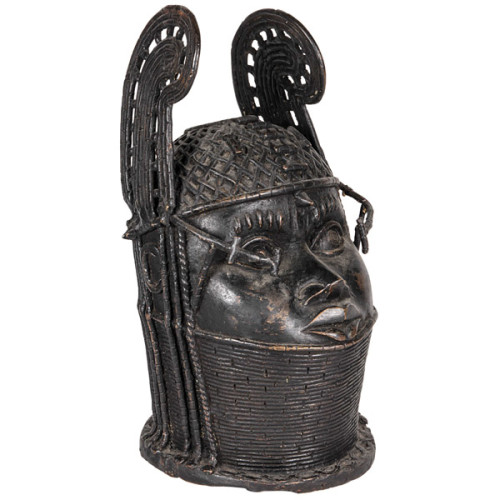
Benin Bronze Head of King Oba, African, Nigeria 20th Century
NIGERIA
Benin Head of King Oba, c. early to mid-20th Century
Lost wax cast bronze with a rich brown and black patina with light desert sand patina in some of the recessed areas.
The art of Benin is the product of an urban royal court, and is meant to symbolize and to extol the power, mystique, grandeur, continuity, and endurance of the ruling dynasty and its governing institutions. From the 14th century until its fall in 1897, Benin was ruled by the Oba, a divine ruler at the head of the political system of titled chiefs. Under royal support, a number of craftsman’s guilds produced bronze, brass, and wood sculptures and embroidered cloth, all of which have become prized by museums and collectors.
These heads were typically placed on altars dedicated to each of the past Oba’s of Benin. The altars are semicircular mud platforms that have been packed hard and rubbed smooth and are located in open courtyards of the palace. The royal altars are the settings for one of the two most important rites of divine kingship in Benin, Ugie Erha Oba, when the Oba honors the spirit of his late father and performs sacrifices to the royal ancestors and to the earth in which they are buried. Acknowledging his role as his fathers’ successor, the chiefs pay homage to the king and greet him in order of seniority. The rite expresses the continuity of divine kingship, and the altar before which it takes place provides the means by which the connection between the living king and his predecessors was established and made.




 @hd_jewels