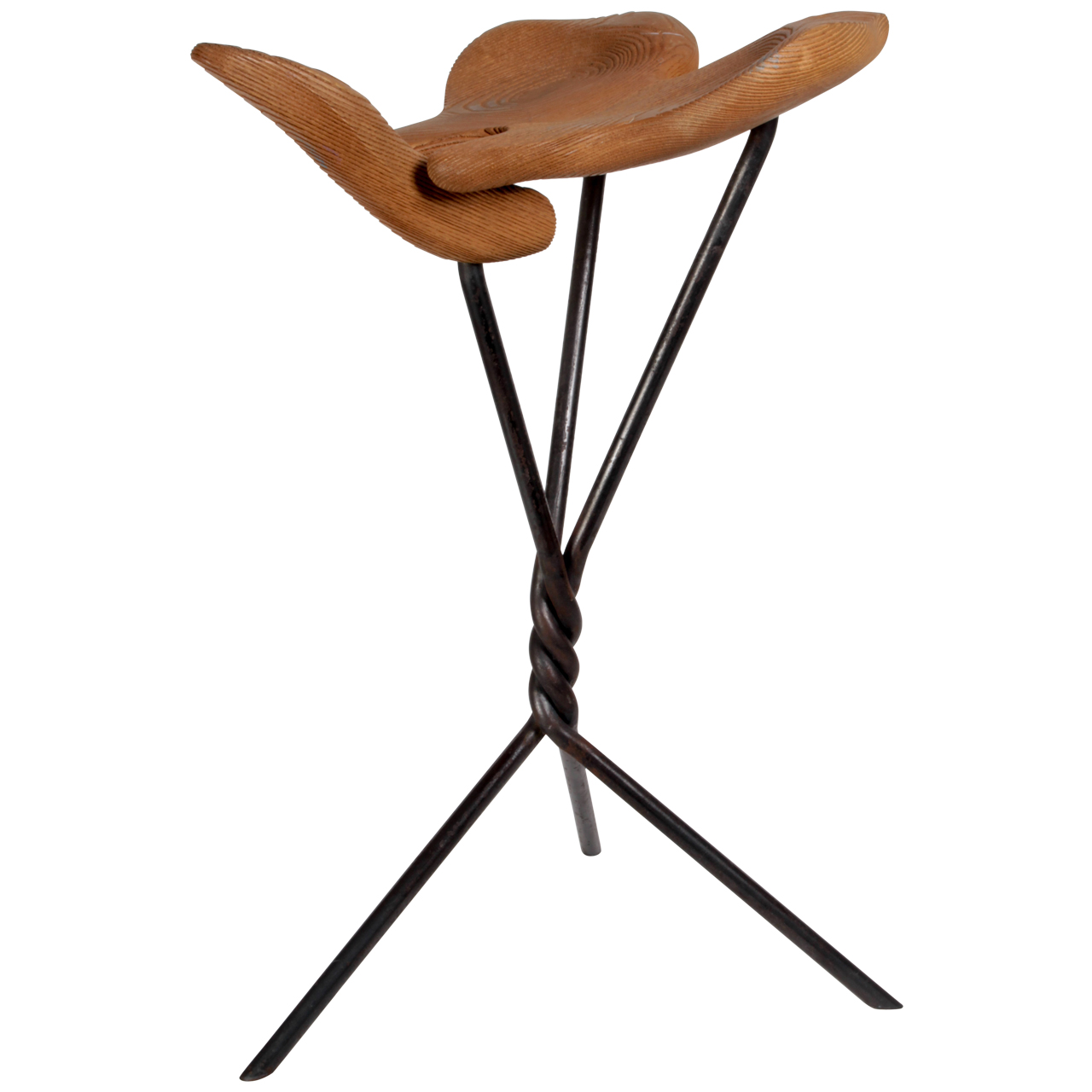
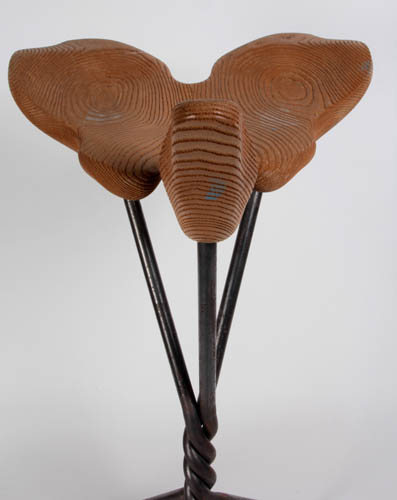
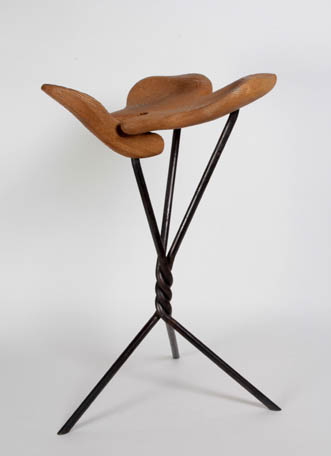
Nigel Coates, Rare, Early and Iconic "Genie" stool 1988
More Information
Nigel Coates, Rare, Early and Iconic Genie stool 1988
NIGEL COATES (b. 1949) England
BRANSON COATES ARCHITECTURE London
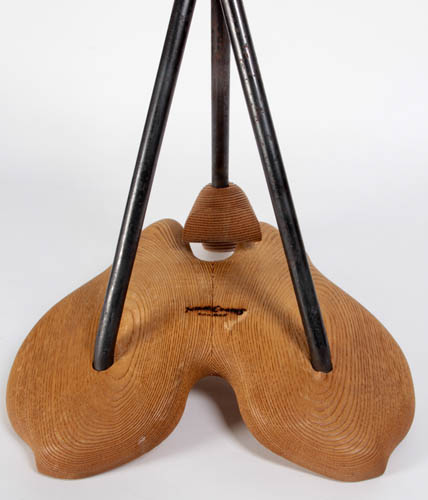
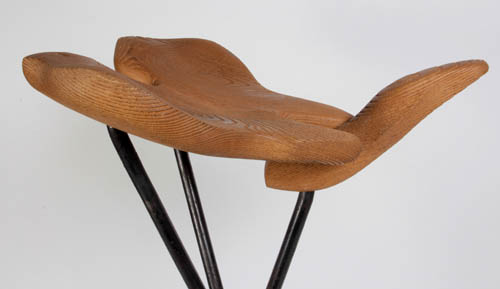
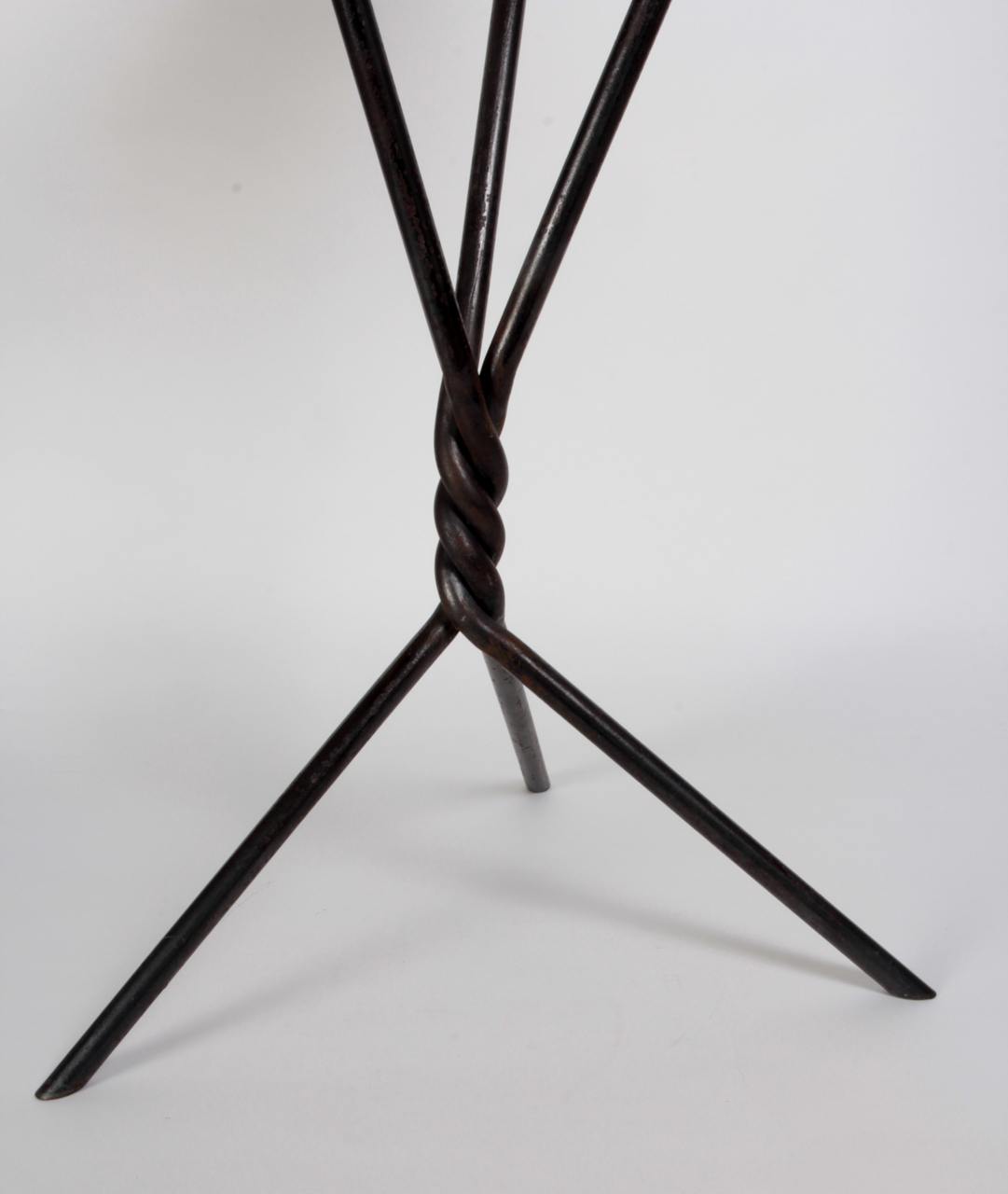
“Genie” stool 1988
Carved and sandblasted solid ash seat on twisted mild steel legs
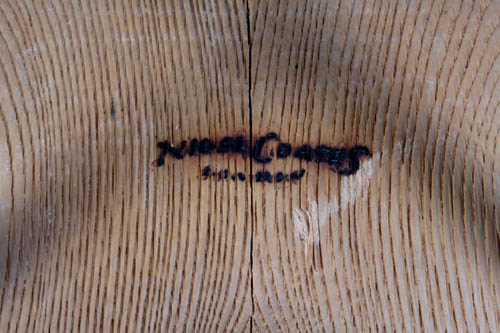
Marks: NIGEL COATES GENIE STOOL
Illustrated: 1000 chairs, Charlotte & Peter Fiell (Cologne: Taschen Verlag, 1997), p. 615.
H: 26: x D: 13 1/2″
Price: $9,500
British architect and designer. He studied at Nottingham University and the Architectural Association, London, where he graduated in 1974 and subsequently taught until 1989. In 1983 he formed the group NATO (Narrative Architecture Today) with a group of former students and began to practice independently; two years later he went into partnership with Doug Branson (b 1951). Coates became known for his fluid and lively graphic style and the overt theatricality of his designs. His proposals for the redevelopment of London, involving sophisticated allegories of popular culture, were shown in two exhibitions: ArkAlbion (1984), with drawings of new development areas such as County Hall and the Isle of Dogs, and Ecstacity (1992), with computer simulations and video clips. In the renovation (1980) of his own flat in London he juxtaposed the original, ornate late 19th-century interior with ‘found’ furniture and decorative objects. The publication of this project brought Coates to the attention of Japanese clients who were seeking fashionable Western designers, and he carried out several projects in Japan that became increasingly theatrical: in Tokyo the Metropole Restaurant (1985) evokes a European café, while the Parco Café Bongo (1986) juxtaposes classical English furniture with an imitation aeroplane wing mounted on the ceiling; and the Arca di Noè (1988), Sapporo, is an eclectic mixture of classical motifs and a concrete boat. Coates’s radical approach was dissipated in later British works, such as a series of London shops: one for Katharine Hamnett in Sloane Street (1988) has a shop front formed of aquaria, and one for Jigsaw in Knightsbridge (1992) has its shop front formed of a two-storey copper column in the shape of a phallus. In 1992 he began designing an extension to the Geffrye Museum, London.
Coates was an influential teacher at the Architectural Association from 78- 86, and has lectured extensively abroad. In 1995 he was appointed Professor of Architectural Design at the Royal College of Art and now divides his time equally between the college and his office. Nigel Coates furniture is represented in the Modern Furniture Collection of the Victoria & Albert Museum, London.
“I go for architecture that overlays and enhances. By blending observation and wit with reason, I want my work to generate a sense of the unexpected, and the seemingly spontaneous.”
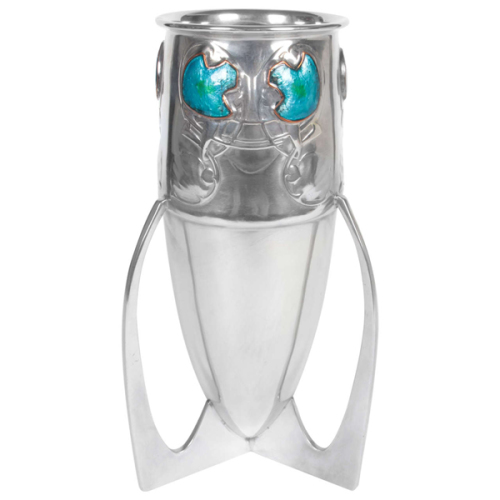
Archibald Knox / Liberty & Co. Tri-footed pewter vase with blue enamel c. 1902-05
ARCHIBALD KNOX (1864-1933) UK
LIBERTY & CO. London
Tri-footed vase c.1902-05
Pewter with blue enamel
Marks: Liberty & Co., ENGLISH PEWTER, 0927
Model illustrated: Liberty’s 1875-1975, An Exhibition to mark the Firm’s Centenary (London: Victoria & Albert Museum, 1975) p. 76; The Liberty Style, introduction by Victor Arwas (NY: Rizzoli, 1979) cat. no. 36
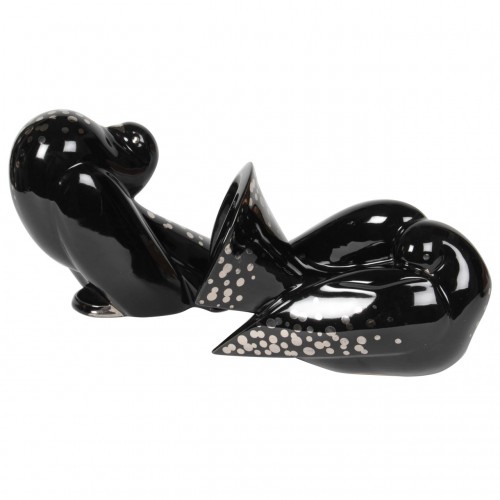
Jan et Joel Martel / Primavera French Art Deco Courting Fantail Pigeon Sculptures c.1930
JAN ET JOËL MARTEL (1896-1966) France
PRIMAVERA Paris
Pair of courting Faintail Pigeon Sculptures c.1925-30
Black glazed earthenware with silver / platinum decorative dot motif.
Marks: PRIMAVERA FRANCE, 12684
For related model: The Art Deco Style in Household Objects, Architecture, Scupture, Graphics, Jewelry, Theodore Menten (New York: Dover, 1972), p. 179.
For more information see: Joël et Jan Martel: sculpteurs 1896-1966, Christophe Vital, et al. (Paris: Gallimard / Electa, 1996), pp. 127-9
H: 8 1/16” x L: 9” x D at tail: 5 1/4”
H: 7 1/8” x L: 10” x D at tail: 5 1/4”
Jan & Joël Martel (the Martel Brothers/Twins, born in Nantes on 5 April 1896, both died in 1966)
The twin Martel sculptors were among the founding members of Union des Artistes Modernes, and their original works include ornamental sculptures, statues, monuments and fountains displaying characteristics typical of the Art Déco and Cubist periods. The brothers took part in a number of Paris exhibitions including the Salon des Indépendants, Salon d’Automne, Salon des Tuileries and the Exposition des Arts Décoratifs in 1925. In 1932, they created the Claude Debussy monument which sits on the boulevard Lannes in Paris. Between 1924-1926, Robert Mallet-Stevens designed a studio for the Martel twins at 10 Rue Mallet-Stevens in Paris’ 16th Arrondissement.
Illustrated: Domestic Animals: The Neoprimative Style Andrea and Nicoletta Branzi, (London, 1987) n.p.; Designed by Architects in the 1980s, Julie Capella and Quim Larrea, Barcelona, 1987, p. 37; Anne Bony, Paris Les années 80, 1995, p. 520; Charlotte and Peter Fiell, 1000 Chairs, Cologne, 2000, p. 588
H: 42 3/4″ x W: 19 3/4″ x D: 24″
Price: $19,000
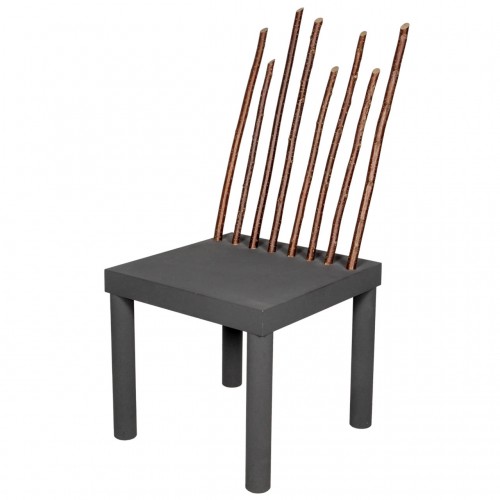
The “Cucus” chair was part of the “Domestic Animals” series
designed in 1985/86 by Andrea Branzi for Zabro.
Andrea Branzi's “Domestic Animals” series was designed in 1985 and 1986 for the Italian firm Zabro. Designs were later also manufactured by Zanotta. Andrea Branzi created “Domestic Animals” in collaboration with Nicoletta Branzi, who produced limited edition art clothing for this series. The “Neoprimitive” style in which this collection has been rendered utilizes natural materials such as sticks to create an object that brings archetypal symbols into the home to produce emotional effects. These objects combine technology and nature and the symbols and codes that these entail demonstrating that “a hybrid love between different creatures is possible.” (Branzi, Domestic Animals, 1987, n.p.) With these objects Branzi aims to “domesticate” technological inventions so as to make them a positive presence in man's life.
“The difference between a domestic animal and a trained (or tamed) one lies in the fact that the latter is the outcome of an unnatural and violent attitude, while the domestic animal establishes the dream of a loving relationship with man.” (Branzi, Domestic Animals, 1987, n.p.)
Andrea Branzi, architect and designer, born in Florence in 1938, where he graduated in 1967, lives and works in Milano. From 1964 to 1974 he was a partner of Archizoom Associati, first vanguard group internationally known, whose projects are preserved at Centro Studi e Archivio della Comunicazione in Parma and at Centre Georges Pompidou in Paris.
Since 1967 he works in the fields of industrial and research design, architecture, urban planning, education and cultural promotion.He is Professor at the Third Faculty of Architecture and Industrial Design of Politecnico di Milano.



 @hd_jewels
Reviews
There are no reviews yet, would you like to submit yours?